

Furniture, electronics, and clothing/accessories are the top Facebook Marketplace profitable categories in 2026, leading in both search volume and sales velocity. These three categories share a common advantage: they move fast locally, carry strong margins, and benefit from Facebook Marketplace's zero-fee local pickup structure. Whether you source from thrift stores, garage sales, or estate sales, knowing which categories to focus on is the difference between a slow side hustle and a real income stream. This guide breaks down each category with specific items, pricing strategies, and sourcing tips so you can start selling smarter today.
1. Why furniture dominates Facebook Marketplace profits
Furniture is the single most profitable category for local resellers on Facebook Marketplace. A sofa bought for $50 at a garage sale can resell locally for $200–$400, representing a 3x to 5x return on your investment. No other category consistently delivers that kind of spread at that volume.
The reason furniture works so well comes down to one word: bulk. Heavy, large items are impractical to ship, which means buyers turn to Facebook Marketplace specifically to find them locally. That local focus plays directly into your hands as a seller, because local pickup carries 0% selling fees on Facebook Marketplace. Every dollar of margin stays in your pocket.
The best furniture items to flip include:
- Sofas and sectionals (high demand from renters and first-time homeowners)
- Dressers and bedroom sets (consistent demand year-round)
- Office chairs and desks (especially strong since remote work normalized)
- Dining tables and chairs (popular during moving season, spring through fall)
- Bookshelves and storage units (low buy-in, fast turnover)
Demand spikes around moving season, college move-in periods, and post-holiday redecorating. Timing your listings to these windows accelerates sell-through.
Pro Tip: Clean or lightly refurbish furniture before listing. A $10 can of spray paint or a quick steam clean can add $50–$100 to your asking price and cut your time to sale significantly. Refurbishing before listing is one of the highest-ROI moves in furniture flipping.
2. Electronics and tech accessories: high turnover, steady demand
Electronics represent the second most reliable category for profitable listings on Facebook Marketplace. Phones, laptops, gaming consoles, and smart-home gadgets like Amazon Echo and Google Nest devices move consistently because buyers always need replacements or upgrades.

Pricing is the key variable in electronics. Items priced between $10 and $50 move fastest and typically carry margins above 25% after sourcing costs. Higher-ticket items like gaming consoles or unlocked smartphones can yield larger dollar profits per sale, but they take longer to move and attract more negotiation.
Here is how Facebook Marketplace compares to eBay for electronics:
| Item type | Best platform | Reason |
|---|---|---|
| Bulky electronics under $300 | Facebook Marketplace | Zero local fees, fast local sale |
| Rare or niche gadgets | eBay | Global buyer pool increases sale price |
| Gaming consoles | Both | Cross-list for maximum exposure |
| Smartphones under $200 | Facebook Marketplace | Local buyers prefer in-person verification |
| Vintage or collectible tech | eBay | Niche buyers pay premiums globally |
Condition transparency is non-negotiable in electronics. Buyers cannot test items before pickup, so your listing description does the selling. State the exact condition, list any defects, and include clear photos. Honest listings build your seller reputation and reduce no-shows.
Pro Tip: Use the shipping fee calculator from Dealflip AI to compare your net profit on local versus shipped electronics before you decide where to list.
3. Clothing and accessories that sell profitably
Clothing is a high-volume, fast-turnover category when you focus on the right niches. Not all apparel sells equally. Generic fast-fashion pieces sit unsold for weeks, while name brands and kids' clothing move in days.
Kids' clothing is the most reliable sub-niche. Children outgrow clothes quickly, which means parents constantly need replacements and are happy to buy secondhand at a fraction of retail. Baby and kid gear sell reliably on Facebook Marketplace because parents prioritize local transactions for convenience and safety. Bundle items by size to increase your average sale value.
Name brands hold their resale value far better than generic labels. Focus your sourcing on:
- Nike, Adidas, and Under Armour (athletic wear with consistent demand)
- Levi's (denim retains value across all ages)
- The North Face and Patagonia (outerwear commands strong resale prices)
- Vintage pieces from the 1980s–2000s (trending strongly in 2026 among younger buyers)
- Seasonal items (winter coats in October, swimwear in April)
Facebook Marketplace has a distinct advantage over Poshmark and eBay for clothing: no shipping required on local sales. Poshmark charges a flat commission on every sale. eBay charges final value fees plus shipping. On Facebook Marketplace, a local clothing sale costs you nothing in fees. That difference adds up fast when you are moving 20 to 30 items per month.
The thrift-flip approach works especially well here. Buy branded items at Goodwill, Salvation Army, or ThredUp for $2–$8, then resell locally for $20–$60. Your sourcing cost is low, your margin is high, and your inventory turns over quickly.
4. Other profitable niches and overlooked opportunities
Beyond the top three categories, several niches consistently produce strong returns for resellers willing to specialize. These are the best categories for resale in 2026 that most casual sellers overlook.
Tools and workshop gear perform exceptionally well. Power tools like drills, saws, and sanders are bulky, expensive new, and in constant demand from contractors and DIYers. Local pickup is the natural fit, and zero local fees mean your margins stay intact. Source from estate sales and tool auctions for the best buy-in prices.
Fitness equipment is another strong performer. Treadmills, weight sets, and exercise bikes are difficult to ship and expensive to buy new. Buyers actively search Facebook Marketplace for these items. The key is pricing them competitively against gym memberships, which many buyers are trying to avoid.
Collectibles require niche knowledge but reward it generously. Sports cards, vintage toys, and signed memorabilia can yield margins of 200% or more when you know what to look for. The risk is higher, but so is the ceiling.
Seasonal products offer well-timed profit surges around holidays and local events. Patio furniture in spring, holiday decorations in November, and back-to-school supplies in August all follow predictable demand cycles you can plan around.
Pro Tip: Baby gear like strollers and car seats sells best when you include detailed condition notes and photos of safety labels. Condition transparency builds buyer trust and speeds up the sale, especially for safety-sensitive items.
5. How to choose the right category for your market
Picking the right category is not just about what sells nationally. It is about what sells in your zip code, with your sourcing access, and at your available time investment. Here is a practical framework for making that decision.
- Research local demand. Search Facebook Marketplace in your area for each category. Look at how many active listings exist and how quickly items are marked as sold. High competition with fast sell-through means strong demand.
- Match category to your sourcing access. If you live near estate sales and thrift stores, furniture and clothing make sense. If you have access to tech liquidation lots, electronics are your lane.
- Balance margin with turnover speed. A $300 sofa flip is great, but it might take two weeks to sell. A $30 clothing bundle might sell in two days. Sustainable profitability comes from building repeatable sourcing patterns, not chasing one-off wins.
- Consider item size and logistics. Bulky items favor Facebook Marketplace's local pickup model. Smaller, shippable items may perform better cross-listed on eBay or Mercari.
- Build listing templates per category. Sellers who develop clear listing templates for their chosen categories adapt faster to market shifts and spend less time on each listing.
- Track your sell-through rate. Correctly priced local listings typically sell within 1–7 days. If your items sit longer, adjust your price or photos before relisting.
Use the Facebook Marketplace deal finder from Dealflip AI to spot undervalued listings in your target categories before other resellers do.
Key takeaways
The most profitable Facebook Marketplace categories in 2026 are furniture, electronics, and clothing/accessories because they combine zero local fees, fast sell-through, and strong sourcing availability.
| Point | Details |
|---|---|
| Furniture leads in margins | Sofas and dressers bought cheaply can resell locally at 3x to 5x your cost. |
| Local pickup eliminates fees | Facebook Marketplace charges 0% on local sales, keeping your full margin intact. |
| Electronics need honest listings | Clear condition descriptions build trust and reduce no-shows on tech items. |
| Kids' clothing turns fast | Bundle by size and focus on name brands to maximize value per transaction. |
| Category choice drives results | Match your category to local demand, sourcing access, and your available time. |
Why I focus on practical demand over trending items
I have watched resellers burn out chasing viral products. One month it is air fryers, the next it is standing desks. The sellers who build real income on Facebook Marketplace are the ones who pick two or three practical demand categories and get very good at them.
Furniture and tools do not trend. They do not go viral. But people always need a couch when they move, and contractors always need a drill. That consistency is worth more than any short-term spike. Focusing on practical demand rather than hype is the single most reliable path to sustainable reselling income.
The other thing I would push back on is the idea that you need to be everywhere. Cross-listing has its place, especially for electronics. But for bulky items, Facebook Marketplace's local model is genuinely superior. Zero fees, faster sales, and no shipping headaches. Learn to use that advantage instead of fighting it.
Condition transparency is the one thing most new sellers underestimate. A single honest listing with clear photos outperforms five vague listings every time. Buyers on Facebook Marketplace are local. They will show up, inspect the item, and walk away if your listing misled them. Save everyone the time and describe exactly what you are selling.
The 2026 market rewards sellers who are consistent, honest, and strategic about their category focus. Pick your lane, source well, and price based on data rather than guesswork.
— Walsh Pex
Take your reselling further with Dealflip AI
Knowing the right categories is only half the equation. Pricing accurately and spotting undervalued listings before other resellers is where real profits are made.
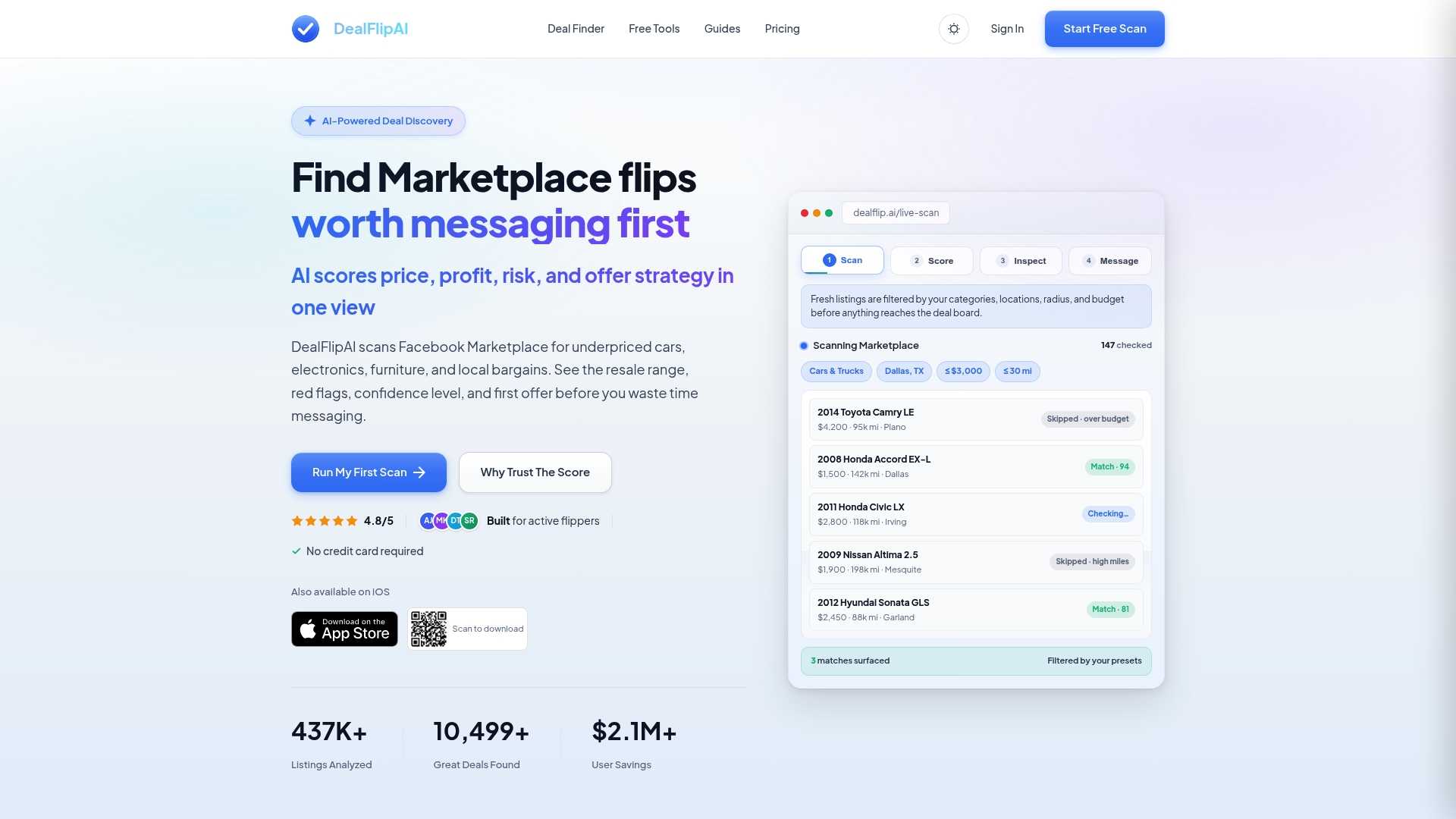
Dealflip AI is built specifically for Facebook Marketplace resellers. Its AI scores listings by price, profit potential, and risk factors so you can make faster, smarter sourcing decisions. Use the Flip Profit Calculator to calculate your exact margin before you commit to a purchase. Use the cross-listing profit calculator to compare your net return across Facebook Marketplace, eBay, and Mercari in seconds. Dealflip AI also flags scam listings in real time, so you never waste a trip on a fraudulent deal. If you are serious about building a profitable reselling operation in 2026, these tools belong in your workflow.
FAQ
What are the most profitable categories on Facebook Marketplace in 2026?
Furniture, electronics, and clothing/accessories are the top three categories based on search volume and sales velocity. These categories benefit from zero local fees, consistent buyer demand, and strong sourcing availability.
Why does local pickup matter so much for profitability?
Local pickup on Facebook Marketplace carries 0% selling fees, which means your full margin stays intact. Correctly priced local listings also typically sell within 1–7 days, making them faster than most shipping-based sales.
Is Facebook Marketplace better than eBay for resellers?
Facebook Marketplace is better for bulky, sub-$300 items where local pickup is practical. eBay outperforms for rare, niche, or high-value electronics where a global buyer pool increases the final sale price. Cross-listing both platforms is the best strategy for electronics.
How do I find undervalued listings to flip?
Search your target category daily, filter by recently listed, and compare asking prices against recent sold listings. Tools like the Dealflip AI listing analyzer automate this process by scoring listings for profit potential before you reach out.
What is the fastest way to increase my selling price on used items?
Clean or lightly refurbish items before listing, especially furniture. Write honest, detailed condition descriptions with clear photos. These two steps consistently reduce time to sale and increase buyer willingness to pay your asking price.