

Not every thrift store find is worth your time. The real challenge for resellers is separating the examples of high-margin secondhand goods from the low-profit clutter that fills most bins and shelves. Your actual profit is what's left after platform fees, shipping, and sourcing costs. Get that math wrong and a $40 sale can net you $6. Get it right and a $10 thrift store pickup can clear $80. This article breaks down the specific categories and items where real margins live, so you can source smarter and sell faster.
Table of Contents
- Key takeaways
- 1. How to evaluate examples of high-margin secondhand goods
- 2. Vintage and designer clothing
- 3. Sneakers and limited edition footwear
- 4. Collectibles, trading cards, and vintage gaming
- 5. Furniture and bulky local items
- 6. Luxury handbags, power tools, and hidden gems
- 7. Matching items to your selling strategy
- My honest take on finding high-margin secondhand goods
- Use Dealflip to find and price high-margin deals faster
- FAQ
Key takeaways
| Point | Details |
|---|---|
| Target 30–50%+ margins | Aim for at least 30–50% profit after all fees and shipping before committing to any item. |
| Furniture is underrated | Local bulky items like sofas avoid shipping costs entirely, making margins far higher than most shipped goods. |
| Brand and condition matter most | Resale value depends heavily on the specific brand, era, and condition, not just the general category. |
| Authentication drives premium prices | Verified authenticity on luxury goods and collectibles reduces buyer risk and supports higher asking prices. |
| Match items to your platform | Facebook Marketplace suits local bulky items; eBay and Poshmark work better for shipped clothing and collectibles. |
1. How to evaluate examples of high-margin secondhand goods
Before you spend a dollar sourcing, you need a clear framework for what actually makes a secondhand item worth flipping. The number on the price tag is just the start.
The goal is to target 30–50% margin after every cost is accounted for. That means subtracting your sourcing price, platform fees, shipping, packaging, and any cleaning or repair costs from your expected sale price. If the math doesn't hold up, move on.
Here's what to check before you commit to sourcing any item:
- Sourcing cost vs. resale price. Look up completed sales on eBay or Facebook Marketplace before buying. Not listed prices. Sold prices.
- Platform fees. eBay takes roughly 13%, Poshmark takes 20% on items over $15, and Facebook Marketplace charges nothing for local sales.
- Shipping weight and dimensions. Heavy or bulky items shipped nationally can wipe out your margin fast.
- Condition and authenticity risk. Damaged or unverifiable items can sit unsold or trigger returns.
- Demand signals. Check how many similar items sold recently and how fast they moved.
The category you choose also shapes your strategy. Local bulky items like furniture work best on Facebook Marketplace where there are no fees and no shipping. Smaller goods like sneakers or trading cards travel well and suit eBay or Poshmark. Data-driven sourcing means actively monitoring marketplace patterns instead of guessing what sells.
Pro Tip: Before buying a category in volume, search completed sales on eBay filtered by "Sold Items" for the past 30 days. If fewer than 10 units sold at your target price, the demand may not support regular inventory.
2. Vintage and designer clothing
Clothing is one of the most accessible entry points for new resellers, and it's also one of the highest-margin categories when you know what to look for. The gap between thrift store prices and resale prices can be staggering.
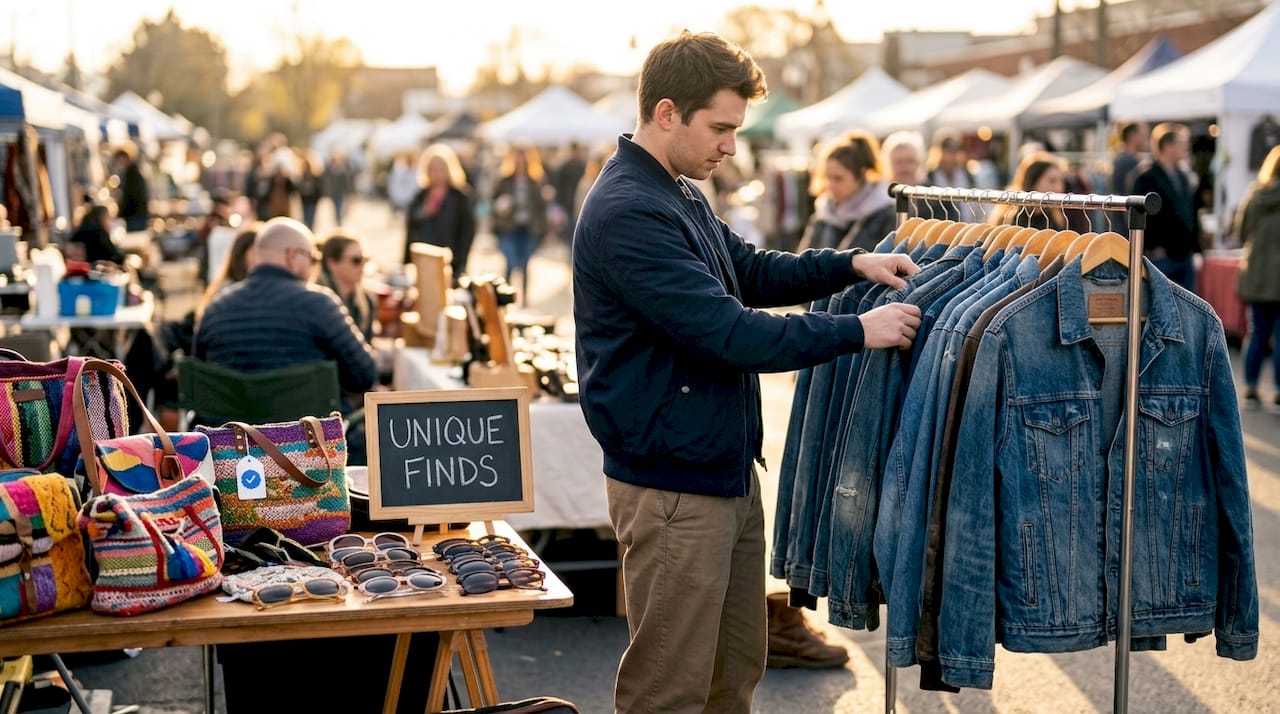
A $4 thrift-store find can resell for $80 to $300 if it's the right brand, era, and condition. That's a gross multiple of 20x to 75x before fees. Even after fees and shipping, margins stay strong.
The best clothing categories to target include:
- Vintage band and graphic tees. 1980s and 1990s concert tees from recognizable artists regularly sell for $60 to $200 on eBay and Depop.
- Designer labels. Polo Ralph Lauren, Carhartt, Tommy Hilfiger, and Nautica from the 1990s carry strong resale demand. A $6 Carhartt jacket at Goodwill can sell for $80 to $120.
- Y2K fashion. Low-rise jeans, velour tracksuits, and branded windbreakers are in high demand among younger buyers right now.
- Luxury brands. Gucci, Louis Vuitton, and Burberry pieces with clear authenticity markers command premium prices, especially on platforms like Vestiaire Collective or eBay.
Poshmark and eBay are the go-to platforms for clothing. Poshmark's social features help move trendy items fast. eBay's search volume makes it better for rare vintage pieces where buyers are actively searching.
Pro Tip: Search a brand name plus "vintage" on eBay's sold listings before you buy. The specific decade and colorway matter more than you'd expect. A blue 1994 Starter jacket and a red one can differ by $40 in resale value.
3. Sneakers and limited edition footwear
Sneakers are one of the most lucrative secondhand market examples you'll find. The resale market for footwear is enormous, and the margins on the right pairs are consistently strong.
Nike, Adidas, Jordan Brand, and New Balance dominate the high-margin end. Specific models matter far more than the brand alone. A standard Nike running shoe might resell at retail. An Air Jordan 1 in the right colorway can sell for two to five times its original price.
Collectibles and branded sneakers are consistently cited as top margin drivers, with fashion and sneaker resale margins running 30 to 60% after fees. The key is knowing which models are in demand right now.
What to look for at thrift stores and garage sales:
- Nike Air Jordan 1s, 3s, and 4s in any condition worth cleaning
- Adidas Yeezys, especially older releases
- New Balance 990 series and 550 models
- Vintage Nike from the 1980s and 1990s in wearable condition
eBay is the strongest platform for sneaker resale due to its buyer base and authentication program. StockX is also worth considering for verified pairs.
4. Collectibles, trading cards, and vintage gaming
This category rewards research more than almost any other. The margin ceiling is higher here than in clothing or furniture, but so is the knowledge requirement.
Collectibles can yield 40 to 100% margins after costs, making them some of the highest-profit used goods available. The key drivers are scarcity, condition, and collector demand.
Here are the top subcategories worth your attention:
- Pokémon and sports trading cards. First edition Pokémon cards, rookie cards of major athletes, and graded PSA cards command serious prices. A card bought for $5 at an estate sale can grade at PSA 9 and sell for $150 or more.
- Vintage video games. Complete-in-box Nintendo, Super Nintendo, and Sega Genesis games have appreciated significantly. A loose copy of EarthBound found for $20 can sell for $150 to $200.
- Vintage gaming consoles. Original Game Boys, Nintendo 64 units, and early PlayStation consoles in working condition sell well, especially with original controllers and cables.
- Vintage cameras. Film cameras from brands like Canon, Nikon, and Minolta have surged in popularity with younger photographers. A Canon AE-1 bought for $15 at a thrift store can sell for $80 to $150.
- Vintage iPods. Refurbished iPod Classics and Minis are selling for $100 to $300 due to nostalgia and their use as dedicated music players.
Authentication and grading are critical in this category. A graded card or authenticated item sells for significantly more than an unverified one. Reducing buyer risk through authentication is the primary driver of premium pricing in collectibles.
One caution: electronics carry higher return and failure risks, which can erode margins. Test everything before listing and describe condition accurately.
5. Furniture and bulky local items
Furniture is the most underrated category in reselling. Most new flippers overlook it because it's heavy and inconvenient. That inconvenience is exactly why the margins are so good.
A sofa bought for $50 can sell for $200 to $400 on Facebook Marketplace. That's a 300% to 700% gross return. Because local pickup eliminates shipping costs entirely, your effective margin is far higher than almost any shipped item category.
Here's a quick look at typical furniture sourcing and resale ranges:
| Item | Typical sourcing cost | Typical resale price | Estimated margin |
|---|---|---|---|
| Sofa or sectional | $30–$80 | $150–$400 | 65–75% |
| Mid-century modern dresser | $20–$60 | $120–$300 | 60–75% |
| Solid wood dining table | $40–$100 | $200–$500 | 65–80% |
| Vintage accent chair | $15–$40 | $80–$200 | 60–75% |
| Wooden bookshelf | $10–$30 | $60–$150 | 65–75% |
Style matters a lot. Mid-century modern pieces, solid wood construction, and vintage industrial styles all sell faster and at higher prices than generic laminate furniture. Facebook Marketplace is the right platform here since it's best suited for bulky local sales with zero fees on local transactions.
Pro Tip: Post furniture listings Thursday through Saturday morning. Buyers planning weekend pickups browse heavily on Thursday nights. Good lighting and a clean background in your photos can add $30 to $50 to what buyers are willing to pay.
6. Luxury handbags, power tools, and hidden gems
Some of the best high-margin thrift store finds don't fit neatly into one category. These items show up less often, but when you find them, the payoff is significant.
Luxury handbags are among the highest-margin items you can resell. Authenticated vintage Chanel bags have sold for thousands, and even mid-tier designer bags from Coach, Kate Spade, and Michael Kors can yield strong returns. The challenge is authentication. Use a reputable authentication service before listing, and your asking price can reflect that verified status.
Power tools are a reliable high-margin category that many resellers overlook. Milwaukee, DeWalt, and Makita tools hold their value well. A used Milwaukee drill kit bought for $30 at an estate sale can sell for $80 to $120 on Facebook Marketplace or eBay.
Other hidden gems worth sourcing:
- Stand mixers and espresso machines. KitchenAid mixers bought for $20 to $40 at thrift stores regularly sell for $80 to $150. Breville and De'Longhi espresso machines follow similar patterns.
- Outdoor and fitness equipment. Treadmills, weight benches, and kayaks sell well locally. Buyers are motivated because new prices are high and shipping is impractical.
- Musical instruments. Acoustic guitars, keyboards, and brass instruments from recognizable brands hold resale value well and show up at garage sales regularly.
The common thread across these categories is that buyers are motivated by the gap between new retail prices and your asking price. Price relative to new retail, not relative to what you paid.
7. Matching items to your selling strategy
Knowing which items have high margins is only half the equation. The other half is matching those items to how you actually want to work.
Here's a direct comparison to help you decide where to focus:
| Category | Margin range | Sourcing difficulty | Sales speed | Best platform |
|---|---|---|---|---|
| Furniture | 60–80% | Low to medium | Medium | Facebook Marketplace |
| Vintage clothing | 50–75% | Low | Fast | Poshmark, eBay |
| Sneakers | 30–60% | Medium | Fast | eBay, StockX |
| Collectibles and cards | 40–100% | High | Variable | eBay |
| Luxury handbags | 40–70% | High | Medium | eBay, Vestiaire |
| Power tools | 30–50% | Low | Medium | Facebook Marketplace, eBay |
| Kitchen appliances | 30–55% | Low | Medium | Facebook Marketplace |
If you're just starting out, furniture and power tools offer the lowest barrier to entry with strong margins. You don't need deep brand knowledge, and Facebook Marketplace's zero-fee local model means your profit goes straight to you.
If you're willing to invest time in research, collectibles and vintage clothing offer the highest ceiling. The resale value is highly sensitive to brand, era, and exact model, so specificity pays off. A generic "vintage jacket" listing underperforms a listing that names the brand, year, and exact style.
Before buying inventory in volume, test a single item in each new category. Track how fast it sells and at what price. Comparing current and near-future demand signals on marketplaces helps you identify which categories are worth scaling.
My honest take on finding high-margin secondhand goods
I've spent a lot of time watching resellers chase the "hottest" category instead of doing the boring math first. The biggest mistake I see is confusing gross profit with real profit. Someone buys a jacket for $8, sells it for $40, and thinks they made $32. After Poshmark's cut, shipping materials, and the time spent photographing and communicating, the real number is closer to $18. That's still good, but it changes how many items you need to move to hit your income goals.
What I've found actually works is starting local. Furniture and bulky items on Facebook Marketplace taught me more about margin than any other category, because the math is simple. No shipping, no platform fees, and buyers show up in person. You see the whole transaction clearly.
I've also learned that overspecializing too early limits you. Resellers who only do sneakers miss great furniture deals. The ones who only do furniture miss a $4 Carhartt jacket worth $90. The best approach is building competence in two or three categories and staying curious about the rest.
The other thing I'd push back on is the idea that you need rare finds to make money. Consistent sourcing of reliable categories beats hunting for unicorns. A reseller who moves five solid-wood dressers a month at $150 profit each is doing better than someone who waits for a $500 score that comes twice a year.
— Apex
Use Dealflip to find and price high-margin deals faster
Finding the right items is only part of the work. Knowing exactly what they're worth and what to offer is where most resellers leave money on the table.

Dealflip is built specifically for resellers working Facebook Marketplace. The AI scores listings by profit potential, flags risk factors, and suggests your first offer based on real market data. You can use the listing analyzer tool to evaluate any deal before you commit, and the furniture deal finder to surface high-margin local pieces before other buyers see them. If you're selling shipped items, the shipping fee calculator shows your real margin after every cost. Stop guessing and start sourcing with numbers you can trust.
FAQ
What are the highest-margin secondhand goods to resell?
Collectibles, vintage clothing, furniture, and luxury handbags consistently deliver the strongest margins. Collectibles can yield 40 to 100% margins, while furniture often clears 60 to 80% due to zero shipping costs on local sales.
How much margin should I target when flipping used goods?
Aim for at least 30 to 50% profit after all fees, shipping, and sourcing costs. Items that don't hit that threshold after realistic cost estimates are generally not worth your time.
Is Facebook Marketplace good for reselling high-margin items?
Facebook Marketplace is ideal for bulky local items like furniture and power tools because it charges no fees on local transactions and eliminates shipping costs entirely, which dramatically improves your effective margin.
Do I need to authenticate luxury items before reselling?
Yes, especially for handbags, sneakers, and collectibles. Authentication reduces buyer risk and directly supports higher asking prices. Unverified luxury items often sit unsold or attract lowball offers.
How do I research demand before sourcing a new category?
Search completed and sold listings on eBay for your target items filtered by the past 30 days. If fewer than 10 units sold at your target price point, the category may not turn over fast enough to justify building inventory.