
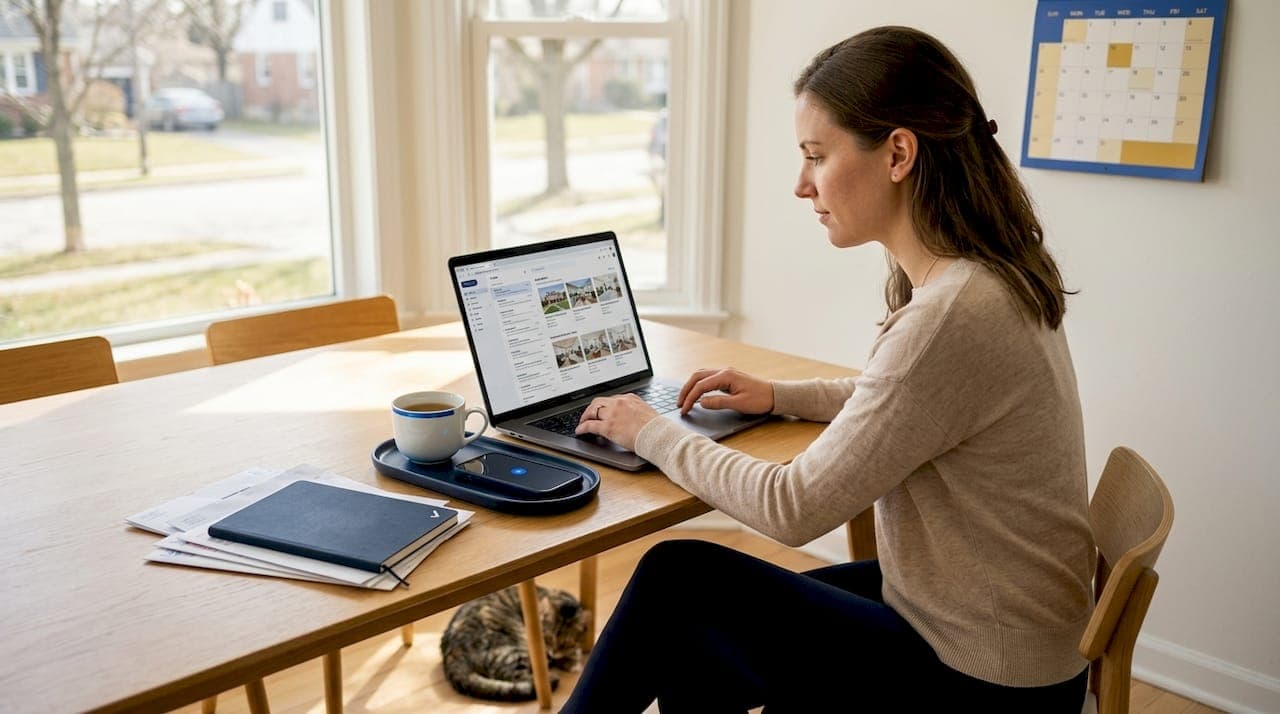
If you're flipping items on Facebook Marketplace or eBay, you already know how deal alerts reduce manual searching and replace hours of exhausting browsing with instant, targeted notifications. Manual deal hunting is slow, inconsistent, and riddled with missed opportunities. You can't check every listing every hour. Price drops disappear in minutes. And the mental load of tracking dozens of products across multiple platforms adds up fast. Automated deal alerts, the practice of setting up real-time price or listing notifications, let you stay ahead of the market without being glued to your screen all day.
Table of Contents
- Key Takeaways
- How deal alerts reduce manual searching
- Manual searching vs. automated alerts: efficiency comparison
- Setting up effective deal alerts for resellers
- Real-world benefits for resellers who use deal alerts
- My take on what most flippers get wrong about alerts
- Put Dealflip's alert tools to work for you
- FAQ
Key Takeaways
| Point | Details |
|---|---|
| Alerts replace manual browsing | Automated notifications monitor listings 24/7 so you never miss a price drop or new listing. |
| Alert quality beats alert quantity | Keeping active alerts to 10 to 15 items prevents notification fatigue and keeps your focus sharp. |
| Price history validates deals | Tracking past prices alongside alerts helps you confirm a deal is real before committing to a purchase. |
| Setup specificity matters | Targeting exact product variants and setting percentage-based thresholds produces far more useful alerts. |
| AI tools multiply the advantage | Platforms like Dealflip layer AI scoring on top of alerts so you act only on high-profit opportunities. |
How deal alerts reduce manual searching
Price alert systems, the technical term for what most resellers call deal alerts, work by continuously monitoring a product page or listing feed and triggering a notification the moment a predefined condition is met. That condition could be a price drop below your target number, a new listing matching your search, or a change in product availability.
Here is what happens under the hood on most platforms:
- Automated page monitoring: Tools like PageCrawl track product pages around the clock, including JavaScript-rendered prices that simple scrapers miss, and fire alerts the instant something changes.
- Price history tracking: Alexa for Shopping shows price history over 30, 90, and 365 days, so you can verify whether today's "deal" is actually below the historical average or just a marketing trick.
- Passive notifications: Instead of you actively refreshing pages, the system sends a push notification, email, or message app alert to you. You go from polling to receiving. That shift alone removes a massive amount of cognitive load.
- Trigger customization: Most tools let you set a specific dollar amount or percentage drop as your threshold before an alert fires.
The behavioral change here is bigger than it sounds. Manual searching requires you to remember to check, find time to browse, process everything you see, and then decide. Automated alerts offload the first three steps entirely. You only step in at the decision point, which is where your expertise as a flipper actually matters.
Pro Tip: Use price history data alongside your alerts. A product dropping from $80 to $60 looks great until you see it was $50 last month. Price history turns a gut reaction into an informed decision.
Dashboards that combine alert triggers with price history and cash-back monitoring catch price changes multiple times a day that manual browsing simply cannot match. This is the foundation of any serious reseller workflow.
Manual searching vs. automated alerts: efficiency comparison
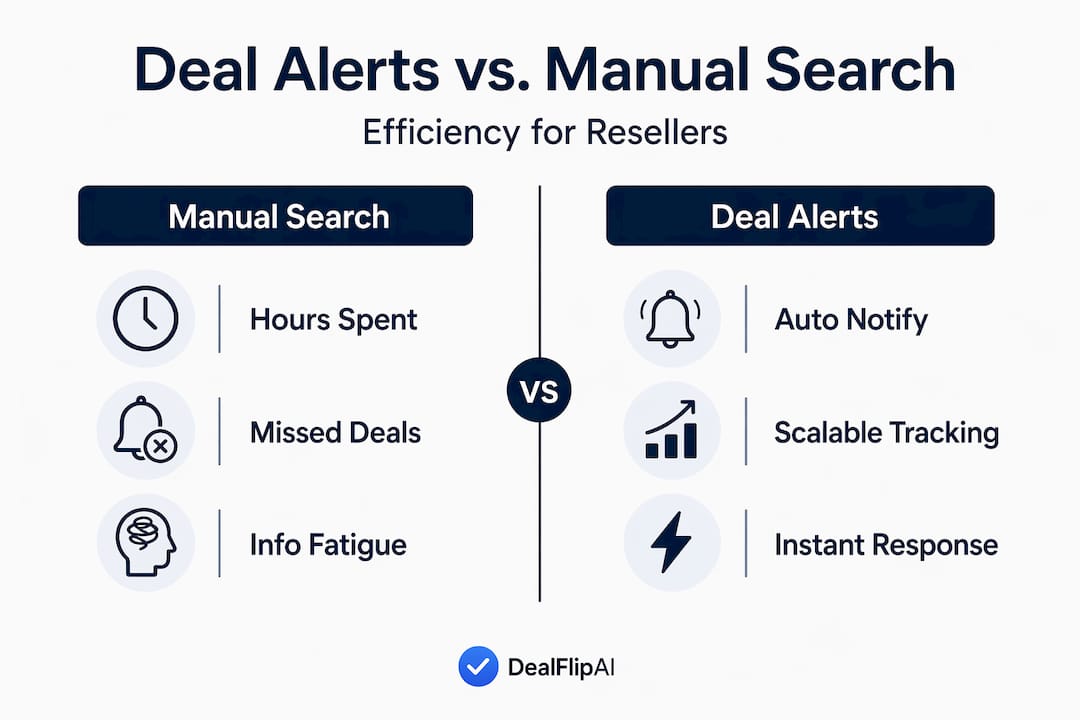
To understand the real value here, it helps to map out what manual searching actually looks like in practice. Most resellers doing this without automation rely on a combination of browser bookmarks, saved searches, spreadsheets, and calendar reminders to stay on top of listings. That approach works, but it has real failure points.
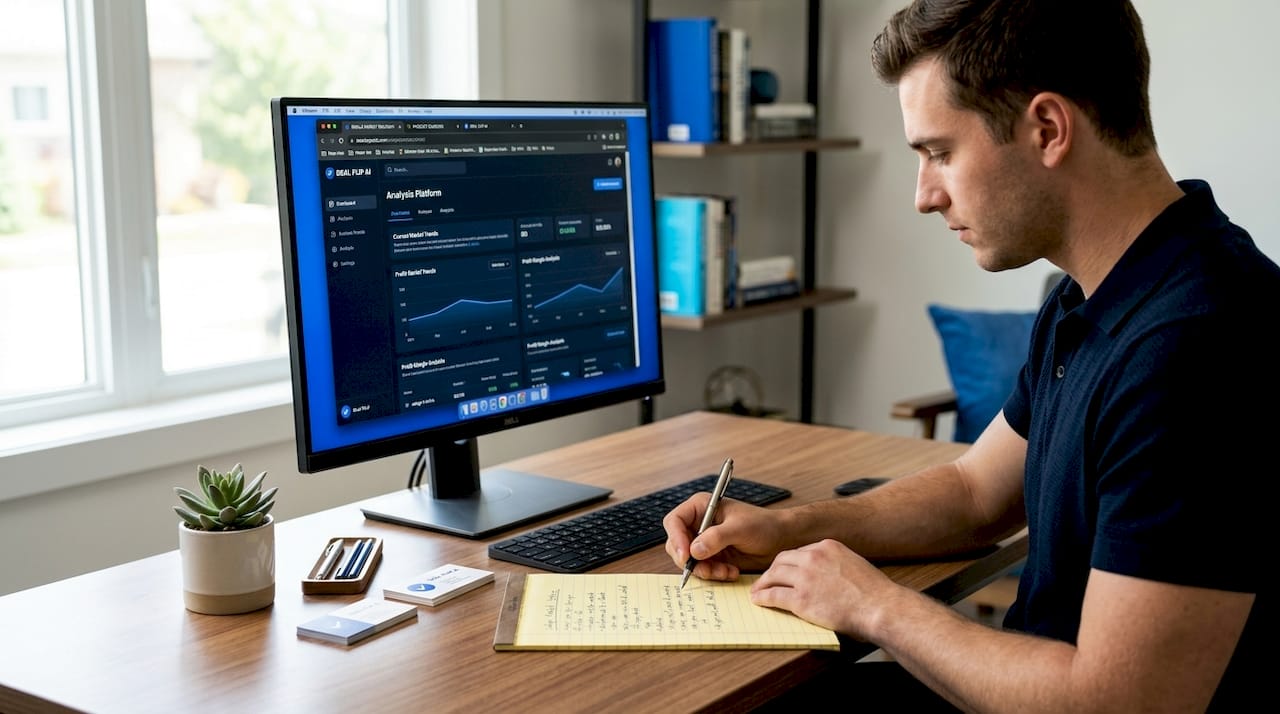
Manual deal checking is unreliable because human memory and scheduling cannot keep pace with live marketplace changes. A limited-time price drop on a gaming console might last 20 minutes before someone else grabs it. Your calendar reminder for 3 PM didn't help you.
The comparison below makes the difference concrete:
| Factor | Manual searching | Automated deal alerts |
|---|---|---|
| Time spent daily | 1 to 3 hours of active browsing | Minutes reviewing triggered alerts |
| Risk of missing deals | High, especially fleeting price drops | Low, monitoring runs 24/7 |
| Cognitive effort | High, requires active attention | Low, only triggered items need review |
| Accuracy | Varies with consistency | Consistent, threshold-based |
| Scalability | Hard to track more than 5 to 10 items | Easily tracks dozens of products |
The scalability point is the one most resellers underestimate. When you're doing this manually, tracking 15 products feels manageable. Tracking 40 feels impossible. With automated alerts, the number you monitor doesn't dramatically increase your workload because the system filters everything down to only what matters.
Alerts also reduce a subtle but real problem: information fatigue. When you spend an hour browsing, you see hundreds of listings. Most are irrelevant. By the time you find something worth considering, your attention and judgment are already degraded. Alerts present you with one item at a time, at the moment it meets your criteria, when your decision-making is fresh.
Setting up effective deal alerts for resellers
Getting alerts set up correctly is what separates flippers who benefit from them and those who turn them off after a week because they got flooded with useless notifications. Here is a step-by-step approach that actually works:
-
List your target products specifically. Don't set an alert for "headphones." Set it for a specific model and configuration. Alerts that are too broad generate noise. Alerts targeting the exact product you want to flip generate profit.
-
Set percentage-based thresholds, not just dollar amounts. Keeping thresholds at 10 to 20% price drops filters out minor fluctuations and surfaces only meaningful deals worth acting on.
-
Limit your active alerts. Research consistently shows that 10 to 15 active alerts is the sweet spot. Beyond that, alert fatigue sets in and you start ignoring notifications, which defeats the entire purpose.
-
Monitor specific product pages, not category feeds. Tools that track exact page states including dynamic pricing are far more reliable than feed-based scrapers that miss JavaScript-loaded content.
-
Choose your notification channel deliberately. Email is fine for non-urgent deals. Mobile push notifications work best when timing matters. Some flippers route high-priority alerts to messaging apps so they never get buried.
-
Review and clean up monthly. Remove alerts for items you've already flipped or no longer want to track. A monthly cleanup keeps your alert list focused and your notifications meaningful.
Pro Tip: When building your alert list, start with the 5 to 10 products you flip most consistently. Master those alerts before expanding. A tight, well-managed alert system beats a wide, noisy one every time.
Centralizing everything through a tool that combines alerts with AI-driven deal scoring, like Dealflip, takes this a step further. Instead of managing alerts across multiple apps, you get one place where deal discovery, price alerts on Facebook Marketplace, and profit scoring all work together.
Real-world benefits for resellers who use deal alerts
The practical payoff of automated notifications shows up in three distinct ways for active flippers: time savings, better buying decisions, and higher margins.
On time savings: resellers who switch from manual browsing to alert-based monitoring commonly reclaim one to two hours per day. That's not a small number. Over a month, that's 30 to 60 hours you can redirect toward sourcing, refurbishing, listing, or simply not burning out.
The profit benefits are equally real:
- Catching limited-time deals: Flash sales and price errors on marketplaces like Facebook Marketplace often last under an hour. Alerts mean you see them immediately, not after someone else already bought the item.
- Buying at confirmed lows: Price history tools combined with alerts confirm you're buying at or near a true price low, not just a relative dip. That directly improves your resale margin.
- Better discipline, fewer mistakes: Automated alerts reduce impulsive buying by replacing the urge to constantly refresh with a system that tells you exactly when to act. That "cooldown" effect leads to more disciplined purchases and better long-term profits.
- Scaling your product range: Once your alert system is running, adding a new product category doesn't require extra browsing time. You extend your monitoring without extending your hours.
The psychological effect of relying on alerts rather than constant manual refreshes also improves budgeting. You stop buying because something looks interesting and start buying because your criteria were met. That shift alone accounts for significant profit improvement over a flipping season.
For resellers learning how to find deals on Facebook Marketplace, building an alert system early is one of the highest-leverage habits you can develop.
My take on what most flippers get wrong about alerts
I've worked with resellers at every level, and the most common mistake I see isn't using too few alerts. It's using too many, set too loosely, with no system behind them. People set up 40 alerts in the first week, get bombarded with notifications that barely qualify as deals, and conclude that alerts don't work. The tool isn't the problem. The setup is.
What I've learned is that alert quality and quantity are inversely related up to a point. Your tenth alert, well-targeted, makes you money. Your fortieth alert, broadly set, just makes noise. Too many alerts cause fatigue that causes you to ignore even the good ones.
There's also an underappreciated benefit that nobody talks about: automation builds discipline. When you stop manually browsing and start waiting for alerts, you stop making impulse purchases. You stop buying things because they're "pretty good." You buy because your threshold was met. That mental shift is worth more than any single deal you'll ever catch.
My advice is to treat your alert system like an investment portfolio. Start small, track performance, and expand only what's working. Don't automate your way into the same chaos you had manually.
— Apex
Put Dealflip's alert tools to work for you
If you're ready to stop searching manually and start profiting smarter, Dealflip was built for exactly this.
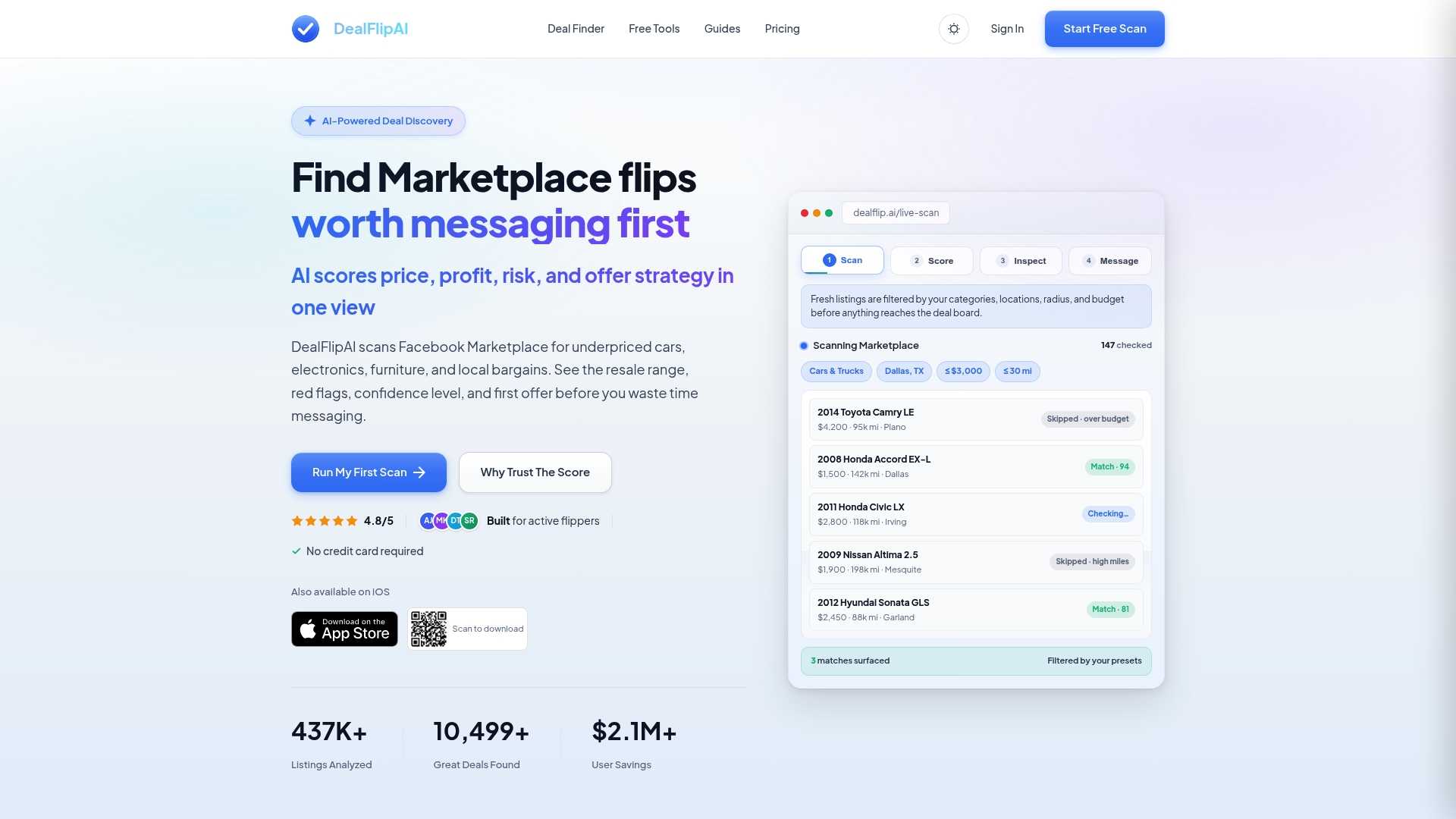
Dealflip combines AI-powered deal scoring with real-time listing analysis so you don't just get notified when a deal appears. You get told whether it's actually worth your time and money. The platform covers Facebook Marketplace with features like scam detection, automated profit scoring, and offer suggestions grounded in real market data. You can try the free Listing Analyzer right now to see how it evaluates any live listing for profit potential, price accuracy, and risk factors. Pair that with the Flip Profit Calculator to confirm your margin before you commit. Less browsing. Better decisions. More profit.
FAQ
What are deal alerts and how do they work?
Deal alerts, also called price alert systems, are automated notifications that trigger when a product meets a predefined condition like a price drop or new listing. They monitor pages continuously so you don't have to.
How many deal alerts should a reseller set up?
Research suggests keeping active alerts between 10 and 15 items to prevent notification fatigue. Too many alerts leads to ignoring them entirely, which eliminates their value.
Can deal alerts help me find deals on Facebook Marketplace?
Yes. Tools designed for marketplace flipping, like Dealflip, send real-time notifications for new listings matching your criteria, helping you act before other buyers see the same item.
Do deal alerts actually reduce manual search effort?
Significantly. Manual monitoring fails due to human forgetfulness and time cost. Automated alerts run 24/7 and only surface items that meet your exact thresholds, cutting active browsing time to minutes per day.
What is alert fatigue and how do I avoid it?
Alert fatigue happens when you receive too many notifications and start ignoring them. Avoid it by setting specific thresholds, limiting total active alerts, and doing a monthly review to remove outdated items from your tracking list.