
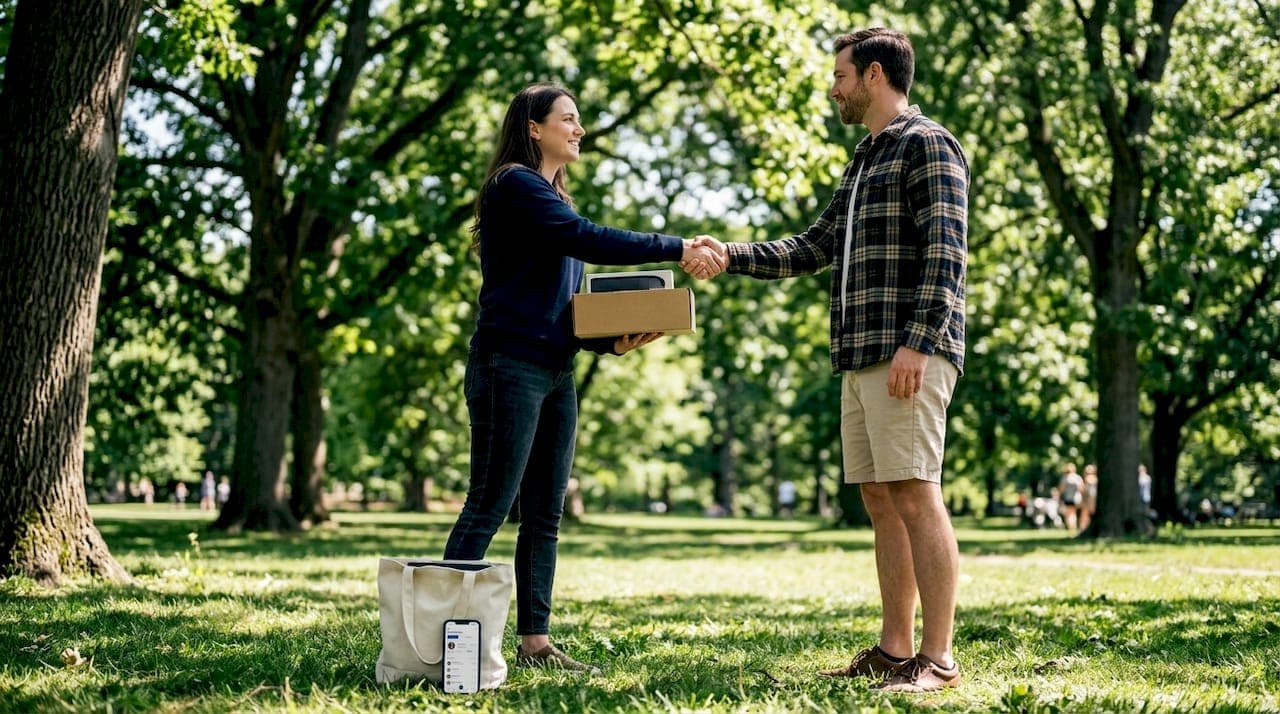
If you've been reselling on Facebook Marketplace or similar platforms, you already know that shipping can quietly destroy your margins. Why local pickup eliminates shipping risk isn't just a talking point. It's a practical reality that experienced flippers have been taking advantage of for years. When you hand off an item directly to a buyer, you skip the costs, the damage claims, the fake tracking disputes, and the "item not as described" headaches that come with every shipped package. This guide breaks down exactly how that works and how you can use it to your advantage.
Table of Contents
- Key takeaways
- Why local pickup eliminates shipping risk financially
- Damage and fraud protection through face-to-face exchange
- Logistics and operations: pickup vs. shipping
- How local pickup builds buyer trust and resale satisfaction
- Practical tips for safe and efficient local pickup
- My honest take on local pickup after years in resale
- Dealflip tools that make local pickup decisions easy
- FAQ
Key takeaways
| Point | Details |
|---|---|
| Shipping costs cut into profits | Shipping fees consume 37–62% of a small item's sale price, which local pickup avoids entirely. |
| Physical inspection kills disputes | Buyers confirm condition on the spot, eliminating "item not as described" claims before they start. |
| Fraud prevention is built in | Local pickup stops fake tracking scams and empty box returns by creating direct proof of handoff. |
| Responsibility transfers instantly | Once a buyer inspects and accepts the item in person, carrier liability disputes are off the table. |
| Safe meetups are non-negotiable | Public locations during daylight hours protect both parties and make transactions go smoothly. |
Why local pickup eliminates shipping risk financially
Shipping feels like a minor line item until you actually run the numbers. Shipping fees of $5 to $25 per package can consume anywhere from 37 to 62 percent of the final sale price on lower-priced items. When you're flipping a $30 item, even an $8 flat rate envelope eats over 25 percent of your revenue before you account for platform fees.
The costs don't stop at postage. Packaging materials run $0.50 to $3.00 per item, and preparing a shipment takes 5 to 15 minutes of your time per order. For a high-volume reseller, that adds up fast.
Here's a side-by-side look at what shipping actually costs you versus local pickup:
| Cost Factor | Shipping | Local Pickup |
|---|---|---|
| Postage | $5–$25+ | $0 |
| Packaging materials | $0.50–$3.00 | $0 |
| Labor time | 5–15 min per item | Minimal |
| Return shipping risk | Present | Eliminated |
| Hidden fee exposure | High | Very low |
Beyond the direct costs, there are hidden expenses most resellers ignore. Return shipping, damaged goods replacement, and refund processing all add up when items ship. Local pickup cuts all of these to near zero.
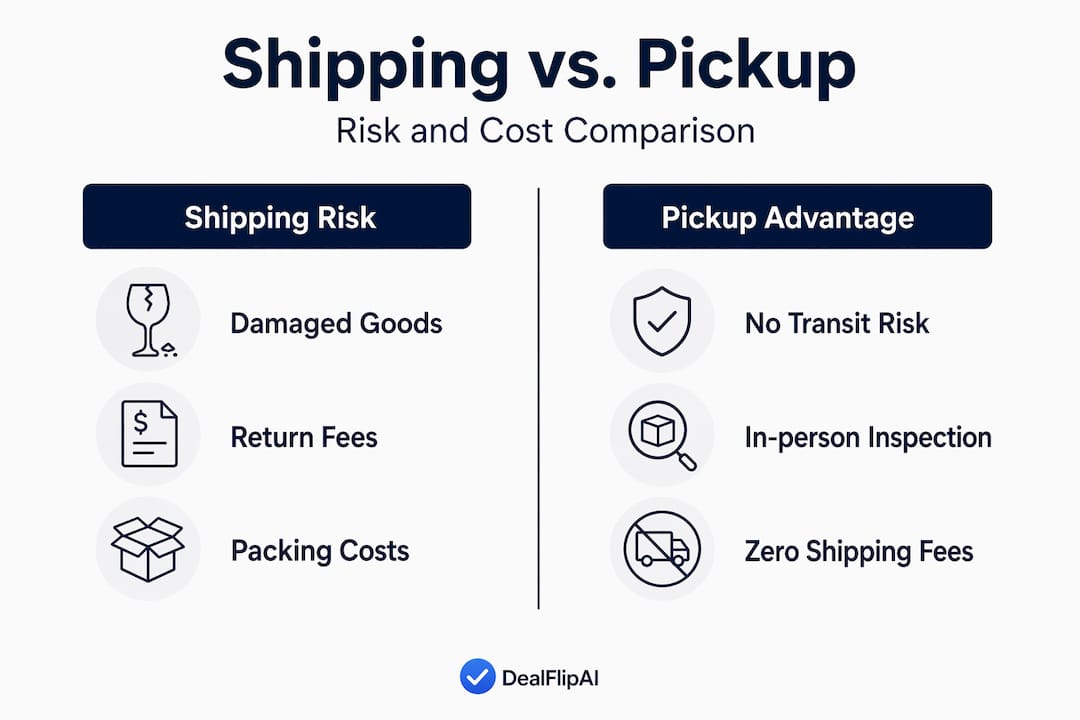
The advantages of local collection go beyond the obvious too. 48% of online shoppers abandon carts because of unexpected shipping costs. As a reseller offering local pickup, you remove that friction entirely. Buyers know the price upfront, there are no surprise fees, and deals close faster.
The financial case for choosing local pickup is strongest on these types of items:
- Small and light items where shipping costs exceed 30 percent of the sale price
- Fragile goods that would require expensive packaging or insurance
- Bulky furniture or appliances where freight shipping is prohibitively costly
- Lower margin flips where every dollar saved directly improves your return
Damage and fraud protection through face-to-face exchange
Shipping damage is not rare. Fragile goods like glass, ceramics, and electronics are vulnerable to transit damage even when packed carefully and insured. When damage happens, you're stuck waiting on carrier investigations, processing claims, and often issuing refunds out of pocket before any reimbursement arrives.
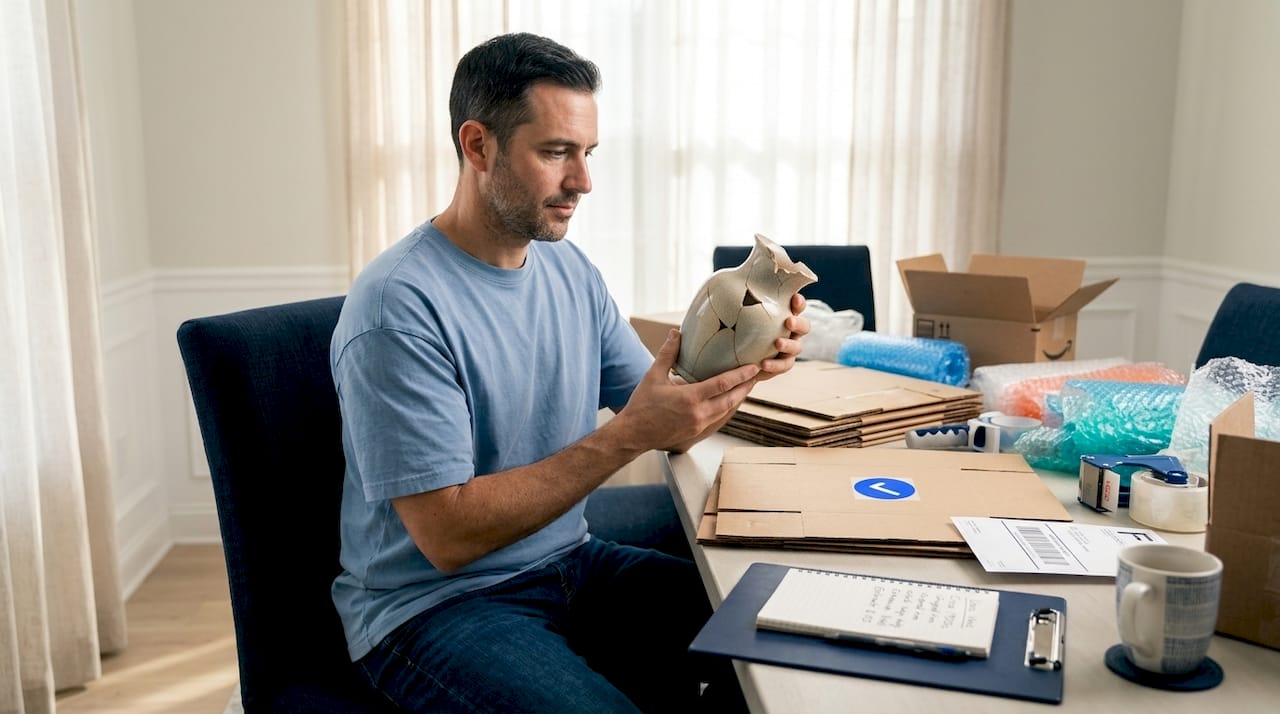
Local pickup eliminates this completely. The buyer inspects the item in person before money changes hands. If they see a crack or a missing part, they say so right there. No dispute filed days later. No photos of alleged damage you can't verify. The transaction is clean.
Fraud is an even bigger concern, and this is where the local pickup benefits really stand out. Fake tracking scams are among the most common tactics used by bad actors in peer-to-peer selling. A fraudulent buyer claims they never received the package, files a dispute, and walks away with both the item and a refund. Local pickup creates irrefutable proof of physical handoff, making this type of fraud impossible.
Here's a quick rundown of the scam types that local pickup stops:
- Fake delivery claims: The buyer claims they never received the item. Not possible with in-person exchange.
- Empty box returns: The buyer swaps out the item, ships back an empty box, and files a return. Local pickup has no return shipping step.
- Tracking manipulation scams: Fraudulent sellers ship to the wrong address but mark as delivered. You are the seller in pickup, and you hand the item directly.
- "Item not as described" disputes: The buyer sees and approves the item on the spot, removing grounds for later complaints.
You also protect yourself from the last-mile delivery risks that make shipping the most volatile part of any transaction. Porch theft, missed deliveries, and courier delays all disappear when you meet the buyer directly.
Pro Tip: Always use a Dealflip scam detection tool before agreeing to a local pickup to verify that the buyer's profile and offer don't show red flags. Screening before you meet is just as important as the meetup itself.
Logistics and operations: pickup vs. shipping
One of the biggest shifts when you choose local pickup is understanding how responsibility transfers. When you ship an item, the carrier holds liability during transit. With local pickup, responsibility transfers instantly to the buyer the moment they accept the item in person. There is no middle party. No claim process. No waiting.
That's a real advantage, but it requires you to manage the handoff well. Here's how the two approaches compare across key operational factors:
| Factor | Shipping | Local Pickup |
|---|---|---|
| Transit time | 2–7 days typical | Same day or next day |
| Dispute resolution | Platform/carrier dependent | Settled at point of exchange |
| Inventory sync needed | Moderate | Critical |
| No-show risk | None | Moderate |
| Geographic reach | National/global | Local radius |
Managing local pickup logistics well requires a few deliberate steps:
- Confirm availability before listing: Only list items you have ready to hand off. Phantom inventory is one of the fastest ways to get negative feedback.
- Use inventory alerts: Real-time inventory management and "ready for pickup" notifications prevent the frustrating experience of buyers arriving for items that are already sold.
- Set clear pickup windows: Give buyers a two-hour window, not an all-day vague arrangement. Specifics reduce no-shows dramatically.
- Confirm the day before: A quick message the evening before your scheduled meetup cuts the no-show rate significantly.
- Have a backup plan: If a no-show happens, relist immediately rather than holding inventory off-market while waiting.
The trade-off is reach. Shipping gets your items in front of buyers nationwide. Local pickup limits you to people within a reasonable driving distance. For most everyday resale categories, this is not a problem. For rare or highly specific items, you may need to weigh whether shipping to a motivated buyer makes more sense.
How local pickup builds buyer trust and resale satisfaction
There's a psychological dimension to local pickup that most resellers underestimate. When a buyer can see, hold, and test an item before paying, their hesitation drops significantly. Physical product evaluation reduces buyer hesitation in ways that photos and descriptions simply cannot.
This matters most for high-value or fragile items. Think vintage electronics, musical instruments, furniture, and collectibles. These are categories where buyers want to touch the product and verify its condition. Offering local pickup on these items signals confidence in what you're selling. It tells the buyer you have nothing to hide.
"Combining online purchase discovery with local physical pickup builds a trusted hybrid experience that buyers prefer for complex or expensive goods." — Bringing a Global Mall into the Neighborhood
The community trust factor also matters here. Buyers who pick up locally are more likely to leave positive reviews, refer you to neighbors, and return as repeat buyers. You're not just completing a transaction. You're building a local reputation, which is one of the most underrated assets a reseller can have.
For large items like couches, appliances, or exercise equipment, offering a furniture pickup option can make or break the sale. Shipping these items is usually cost-prohibitive, and buyers know it. Local pickup is often the only realistic option, and positioning it well turns that into a selling point rather than a limitation.
Practical tips for safe and efficient local pickup
Knowing why local pickup is better is only half the equation. The other half is executing it well. Here's what experienced resellers consistently do to keep local pickups smooth, safe, and profitable.
- Choose a public meeting spot: Police station parking lots, busy coffee shops, and shopping center parking areas are all solid choices. Avoid home addresses unless you know the buyer well.
- Meet during daylight hours: Safety precautions like choosing daylight meetups and bringing someone along reduce the small but real personal risk in face-to-face transactions.
- Accept cash or verified digital payment: Confirm payment before handing over the item. Cash is clearest. For digital payments, wait for the confirmation screen before releasing the goods.
- Bring the item ready to inspect: Don't make the buyer wait while you dig through a box. Have everything out, tested if applicable, and ready to hand off.
- Document the exchange: A quick photo of the buyer with the item, or a short video showing the item's condition at handoff, protects you if any dispute arises later.
Pro Tip: Use the Dealflip shipping fee calculator before listing any item to determine whether local pickup or shipping makes more financial sense for that specific product. Items under $40 almost always favor pickup.
When deciding between local pickup and shipping, weigh three factors: the item's sale price, its fragility, and your local demand. High-fragility plus low margin almost always points to pickup. High-demand niche items with a national buyer pool might justify shipping even with the added cost.
My honest take on local pickup after years in resale
I've spent years watching resellers make the same mistake: defaulting to shipping because it feels more professional or because they want the widest possible buyer pool. In my experience, that instinct costs them more than they realize.
The fraud protection alone is worth it on anything under $100. I've seen too many sellers lose both their item and their money because they shipped to an account that turned out to be fraudulent. Local pickup removes that risk entirely. You hand over the item, you get paid. Done.
That said, I'll be honest about the trade-offs. Local pickup is not always the right call. If you're selling a niche collectible and your local market has zero buyers for it, shipping to the one person in the country who wants it is the right move. The mistake is treating shipping as the default and pickup as the fallback. It should be the other way around, especially for anything fragile, heavy, or under $50.
The no-show problem is real too. I've had buyers ghost me at the last minute more times than I'd like to count. The fix is communication: confirm the meetup, set a clear time, and don't hold the item off-market for more than 24 hours without a deposit. Treat your inventory like the business asset it is.
My bottom line: local pickup is the smarter default for most resellers, most of the time. Use it strategically, screen your buyers, and meet safely. The financial and fraud-related advantages are too significant to ignore.
— Apex
Dealflip tools that make local pickup decisions easy
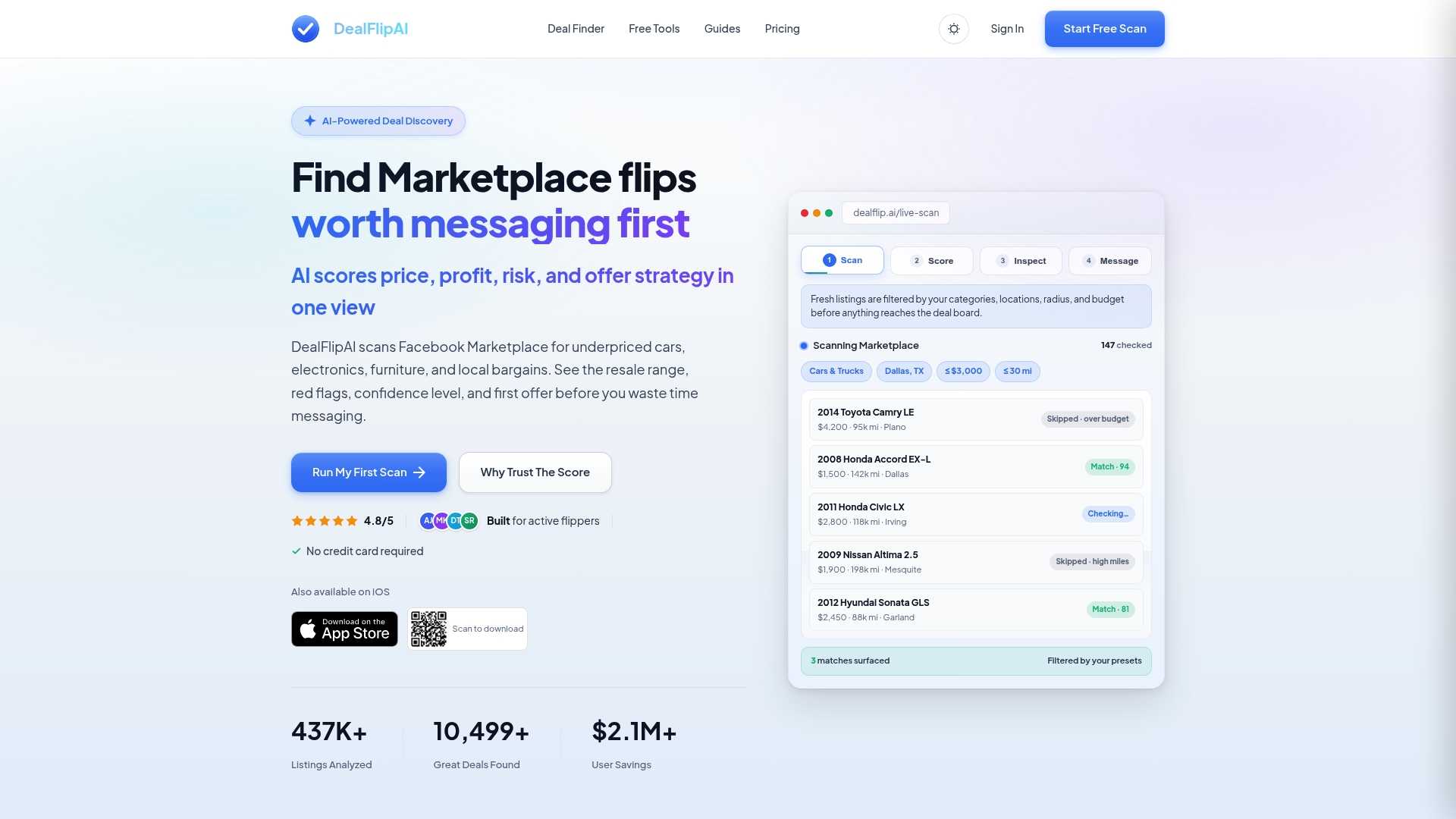
Deciding whether to offer local pickup or ship an item shouldn't be a guessing game. Dealflip gives you the tools to run the numbers before you list. The flip profit calculator lets you factor in shipping costs, platform fees, and profit margins side by side so you can see exactly how much more you keep with a local handoff versus a shipped sale.
For resellers working across multiple platforms, the cross-platform profit comparison tool helps you evaluate where a given item performs best, accounting for both shipping costs and local pickup availability by platform. Pair that with Dealflip's AI-powered scam detection and real-time deal alerts, and you have a full system for identifying strong deals and closing them safely. Try it free and see how much more you can protect on your next flip.
FAQ
What does local pickup mean in peer-to-peer resale?
Local pickup means the buyer meets the seller in person to collect the item directly, skipping all shipping and carrier involvement. It's common on platforms like Facebook Marketplace and Craigslist for items where shipping is costly or risky.
How does local pickup reduce shipping risks for resellers?
Local pickup eliminates transit damage, fake delivery claims, empty box returns, and tracking fraud. The buyer inspects the item on the spot, and responsibility transfers instantly at the point of exchange.
Is local pickup safer than shipping for high-value items?
Yes, for most high-value or fragile goods, local pickup is safer because it allows physical inspection before payment and eliminates carrier liability disputes. Meeting in a public location during daylight hours reduces personal safety risks to a minimum.
What items benefit most from local pickup?
Items that benefit most include furniture, electronics, fragile goods, and anything priced under $50 where shipping fees would consume a significant share of the sale price. Bulky or heavy items almost always favor local pickup due to freight cost savings.
How do I handle no-shows during local pickup?
Confirm the meetup the day before with a message, set a specific two-hour window rather than an all-day arrangement, and avoid holding inventory for more than 24 hours without a deposit. If a buyer no-shows, relist immediately.