

Most resellers focus on price. They hunt for the lowest ask, negotiate hard, and assume the margin is locked in. But the sellers who consistently flip faster and profit more have figured out something different: why timing matters marketplace deals is a question of strategy, not luck. The right listing window can double your visibility. The wrong one can leave a great item sitting for weeks. This guide breaks down exactly how timing affects your Facebook Marketplace results and what you can do about it today.
Table of Contents
- Key Takeaways
- How the Facebook Marketplace algorithm rewards timing
- External timing factors that affect your margins
- Timing strategies that trigger buyer urgency
- Local pickup vs. shipped deals: timing trade-offs
- My take on timing as a reseller advantage
- Let Dealflip help you time every deal right
- FAQ
Key Takeaways
| Point | Details |
|---|---|
| Algorithm rewards freshness | Post during peak hours to capture the critical first 60–120 minutes of visibility that drive ranking. |
| Seasonal sourcing beats random buying | Time your purchases around clearance events to source at lower cost and sell at full price later. |
| Local vs. shipped timing differs | Local deals pay instantly but carry no-show risk; shipped deals have payout delays but broader reach. |
| Renewal beats relisting | Renewing a listing preserves engagement history, which the algorithm values over a fresh start. |
| Urgency closes deals faster | Scarcity signals and limited-time framing push buyers to decide within 24 hours instead of ghosting. |
How the Facebook Marketplace algorithm rewards timing
Facebook Marketplace does not show all listings equally. The algorithm prioritizes fresh content with early engagement, which means the moment you post matters as much as what you post.
Research shows that listing freshness is one of the strongest ranking signals on the platform. Your listing gets its biggest visibility push in the first 60 to 120 minutes after going live. During that window, every message, like, and share tells the algorithm your listing is worth surfacing to more buyers. If you post at 2 AM when no one is browsing, you burn that window on an empty audience.
Here is what this means for your practice:
- Post during peak hours. The best posting windows are morning (7 to 9 AM), midday (12 to 2 PM), and evening (6 to 10 PM). Thursday evenings are particularly strong.
- Respond fast. Quick replies during the early engagement window signal activity to the algorithm and keep your listing ranked higher.
- Renew strategically. Renewing a listing preserves accumulated engagement metrics. Deleting and relisting resets those metrics to zero, which can hurt you if the listing already had traction.
- Avoid over-churning. Constant relisting adds hidden costs and dilutes your signal. The algorithm rewards consistency, not chaos.
The nuance between renewing and relisting is worth understanding deeply. Renewing maintains your engagement history, which the algorithm generally favors. Relisting starts fresh and may reach a slightly different audience pool, but you lose everything you built. For most items, renew first and only relist if the listing has gone completely cold after two or three renewal cycles.
Pro Tip: Set a calendar reminder to renew active listings every seven days. This keeps your items in the fresh feed without resetting your engagement score.
External timing factors that affect your margins
The importance of timing in deals goes beyond the platform itself. What happens outside Facebook Marketplace, specifically in the retail calendar and fee structure, shapes your profit just as much as your posting schedule.
Seasonal sourcing windows
Retail clearance cycles create predictable sourcing opportunities. Seasonal events like Memorial Day, Labor Day, and Black Friday generate 20 to 35% price drops on major appliances and electronics. If you buy during those windows and list on Marketplace two to four weeks later at normalized prices, you capture a margin that has nothing to do with negotiation skill. It is pure timing.

Consistent sourcing around predictable inventory clearance cycles is one of the most underused strategies in reselling. Most buyers shop retail clearance for personal use. Resellers who shop it for inventory are playing a different game entirely.
Fee and payout timing
Understanding Facebook's fee structure is critical for planning your cash flow. Here is a quick breakdown:
| Sale Method | Fee | Payout Timeline | Best For |
|---|---|---|---|
| Local pickup | No fee | Immediate (cash or instant transfer) | Bulky items, fast cash needs |
| Shipped sale | ~10% of sale price | 1 to 5 days after delivery | Smaller items, wider buyer pool |
The 10% shipping fee on sold items is not just a cost. It is a timing cost. That money sits in Facebook's hands for up to five days after delivery confirmation. If you are flipping quickly and need cash to reinvest in the next deal, that delay can stall your whole operation. Local pickup solves the cash flow problem but introduces coordination overhead and no-show risk.
Pro Tip: For items under $30, the 10% fee often makes shipped sales unprofitable after packaging costs. Stick to local pickup for low-value items and save shipped sales for higher-margin flips where the broader audience justifies the fee and wait.
Timing strategies that trigger buyer urgency
Getting a listing in front of buyers is only half the job. The other half is getting them to act before they scroll away and forget about it. This is where timing strategies for online sales shift from passive to active.
Here is a practical sequence that works:
- Post during peak evening hours. Thursday and Friday evenings between 6 and 10 PM have the highest buyer activity. Your listing lands in front of people who are relaxed, browsing, and ready to spend.
- Use scarcity framing in your description. Phrases like "selling this weekend only" or "first person to confirm gets it" create real urgency. Limited-time offers push 60% of consumers to make reactive purchases within 24 hours.
- Make a small price edit after 48 hours. Even a $5 reduction refreshes your listing's position in the feed and signals activity to the algorithm. You do not need to drop your price significantly. You just need movement.
- Set clear response expectations upfront. Include something like "I respond within two hours and hold for confirmed pickups only" in your listing. This filters out low-intent buyers and reduces the back-and-forth that kills deal momentum.
- Avoid over-listing the same item. Frequent listing changes increase transaction costs and reduce net returns. Pick your window, commit to it, and adjust with renewals rather than constant relisting.
Timing your communication matters as much as timing your post. Delays in buyer response increase deal uncertainty and lower perceived value. When a buyer messages you and you reply within minutes, you signal reliability. That alone closes more deals than a lower price.
Pro Tip: Turn on Facebook Marketplace notifications during your active selling hours. A fast reply in the first hour after posting can be the difference between a sale and a ghost.
Local pickup vs. shipped deals: timing trade-offs
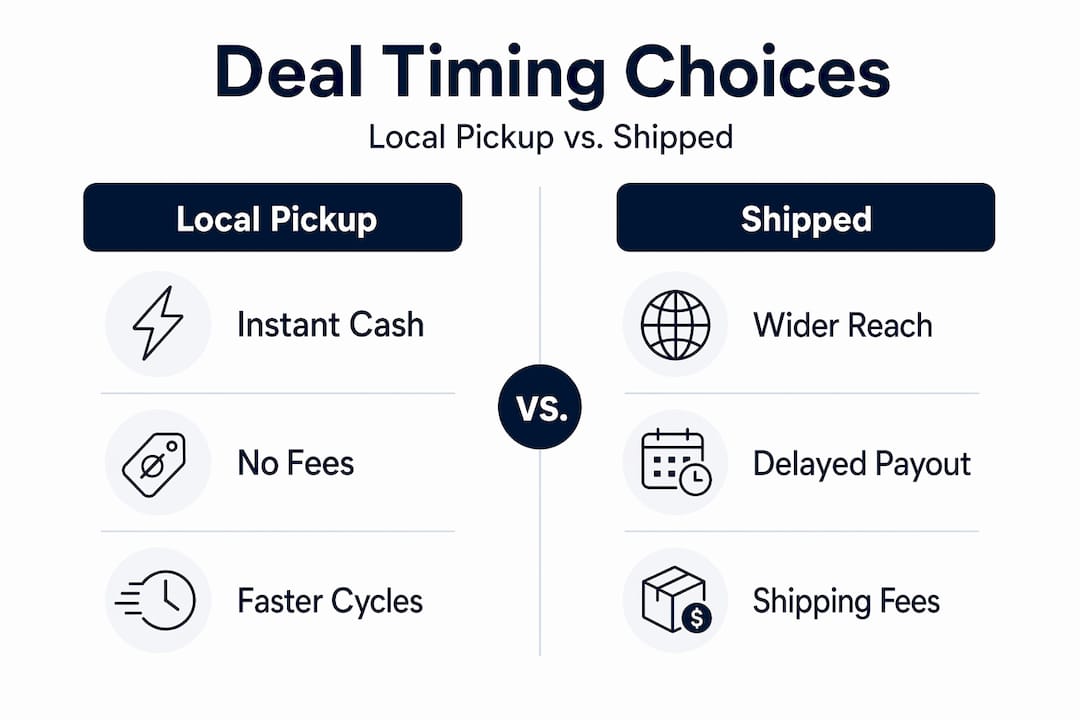
Choosing between local and shipped sales is not just a logistics decision. It is a timing and cash flow decision that shapes how fast you can flip and reinvest.
When local pickup wins
Local pickup is the faster cash cycle. You sell, you collect, you reinvest. No waiting on Facebook's payout schedule. For bulky or heavy items, it also avoids the shipping fee entirely, which protects your margin. The downside is real: local sales carry a 15 to 30% no-show rate, which costs you time and sometimes the deal itself.
To manage this, always confirm the pickup time the morning of the meeting and require a firm commitment before holding the item. Buyers who ghost rarely confirm twice. This small timing habit filters out the tire-kickers and keeps your schedule clean.
When shipped sales make more sense
Shipped sales open your listing to buyers outside your local area, which matters a lot for niche or collectible items with a small local audience. The trade-off is the 10% seller fee and the one to five day payout delay. If your cash flow can absorb that wait, shipped sales often yield higher final prices because you are reaching a motivated buyer who specifically searched for your item.
The smart approach is to match your sale method to your item type. Heavy furniture and appliances go local. Small electronics, collectibles, and branded clothing go shipped. Aligning your timing strategy to the right channel from the start saves you from repricing, relisting, and losing momentum mid-sale.
My take on timing as a reseller advantage
I have watched a lot of resellers burn out chasing volume. They list everything constantly, relist when things do not sell in two days, and end up running a treadmill that produces thin margins and a lot of frustration.
What I have learned is that timing is the one variable that costs nothing to improve. You do not need more inventory. You do not need to undercut everyone on price. You just need to post the right item at the right moment, respond fast, and create a clear path to purchase for the buyer.
In my experience, the resellers who build real income from Facebook Marketplace are not the ones with the most listings. They are the ones who understand that turnaround speed depends on aligning fast responses with buyer peak activity more than on finding the absolute lowest buy price. A $10 better buy price means nothing if the item sits for three weeks because you listed it at the wrong time.
Start tracking when your listings get the most messages. You will find a pattern within two weeks. Then build your posting schedule around that data. Timing strategies build sustainable reselling habits. Price wars just race everyone to the bottom.
— Apex
Let Dealflip help you time every deal right
Knowing when to list is powerful. Knowing which deals are worth listing in the first place is even better. Dealflip combines both into one tool built specifically for Facebook Marketplace resellers.
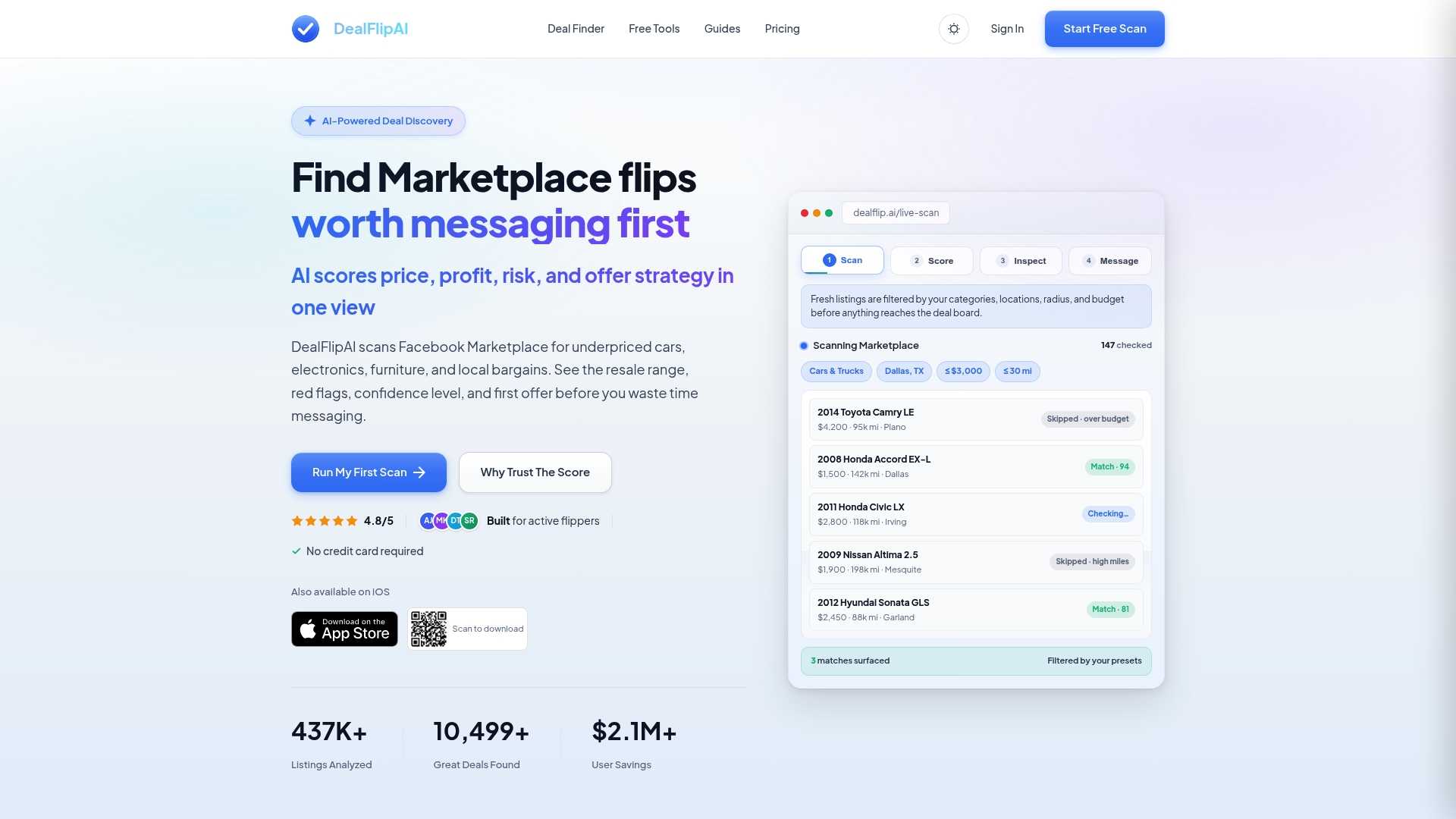
With Dealflip's real-time deal alerts, you get notified the moment a fresh, high-potential listing goes live, so you can act inside that critical early engagement window before other buyers even see it. The listing analyzer evaluates price, profit potential, and timing signals so you know whether to move fast or pass. And the shipping fee calculator helps you decide upfront whether local or shipped is the right call for your cash flow. Start applying these timing strategies with Dealflip's free tools at dealflip.ai/how-to-find-good-deals-on-facebook-marketplace.
FAQ
Why does timing matter so much for marketplace deals?
Timing affects both algorithm visibility and buyer behavior. Listings posted during peak hours gain more engagement in the critical first two hours, which directly boosts their ranking and sale speed.
What are the best times to post on Facebook Marketplace?
The strongest posting windows are mornings from 7 to 9 AM, middays from 12 to 2 PM, and evenings from 6 to 10 PM, with Thursday evenings being especially effective for fast responses.
Should I renew or relist my Facebook Marketplace listing?
Renewing is usually the better choice because it preserves your listing's engagement history. Relisting resets all metrics to zero, which can reduce your algorithm ranking unless the listing has gone completely cold.
How does the 10% shipping fee affect my timing strategy?
The fee plus a one to five day payout delay means shipped sales slow your cash cycle. For fast reinvestment, prioritize local pickup on lower-value or bulky items and reserve shipped sales for high-margin products where the broader audience justifies the wait.
How can I reduce buyer no-shows on local deals?
Confirm the pickup time the morning of the meeting and only hold items for buyers who give a firm commitment. This simple timing habit filters out low-intent buyers and keeps your deals moving.