

You open Facebook Marketplace, search for a product you know sells for $300 on eBay, and find it listed for $80. Sounds great. But by the time you message the seller, it's already gone. This is the core frustration every reseller faces, and it happens because Facebook's built-in alerts delay notifications by 2 to 6 hours, letting faster buyers swoop in first. The good news is that a systematic approach, combining smart search tactics, automation tools, and sharp negotiation, lets you reliably find undervalued Facebook Marketplace listings before the competition does.
Table of Contents
- Key takeaways
- Setting up before you search for undervalued listings
- Manual search tactics that surface hidden deals
- Using third-party tools for a speed advantage
- Safety and negotiation strategies for securing deals
- Validating a deal before you commit to buying
- My take on what actually separates profitable flippers
- How Dealflip helps you find and flip smarter
- FAQ
Key takeaways
| Point | Details |
|---|---|
| Native alerts are unreliable | Facebook's notifications lag by hours, so relying on them alone means losing deals to faster buyers. |
| Niche prep wins deals | Define your categories, price thresholds, and condition filters before you start searching to save time. |
| Misspellings reveal hidden gems | Searching common typos uncovers listings with less competition and lower prices. |
| Speed beats browsing | Popular items priced below market sell within minutes, so faster contact is the real edge. |
| Validate before you buy | Cross-reference market prices and use analysis tools to confirm profit margins before committing. |
Setting up before you search for undervalued listings
Most resellers skip preparation and go straight to browsing. That's a mistake. Preparation is what separates a profitable flip from an impulse buy you later regret.
Start by picking your niche. Power tools, vintage electronics, brand-name sneakers, gym equipment — each category has its own pricing patterns and demand cycles. The more specialized you get, the faster you recognize a genuinely undervalued item. If you're just starting out, choose one or two categories and learn them well before expanding.
Next, research market values. Pull up completed sales on eBay, check Amazon pricing, and look at what similar items sell for locally. This gives you your undervaluation threshold, which is the price point below which an item becomes worth your attention. For example, if a KitchenAid stand mixer consistently sells for $200 used on eBay, any Facebook listing under $100 in good condition is a candidate.
Once you know what you're looking for, configure your filters on Facebook's desktop version. The desktop interface gives you significantly more control than the mobile app:
- Category: Narrow to specific product types rather than browsing broadly
- Price range: Set a max price based on your undervaluation threshold
- Condition: Filter for "Used: Like New" or "Used: Good" to target high-quality items at low prices. Advanced condition filters like these help zero in on the best flip candidates
- Location radius: Start with 25 to 30 miles. Wider radiuses flood results with noise; too narrow and you miss volume
Pro Tip: Set your maximum price 10 to 20% below your target threshold so the feed only shows items with real margin. You can always expand later.
Manual search tactics that surface hidden deals
Once your setup is solid, the real skill-building begins. Manual searching is not just typing keywords and scrolling. It's a process of exploiting gaps in how sellers list their items.
The most overlooked tactic is searching for misspellings. Thousands of listings contain typos, and because most buyers never think to search those terms, competition is almost zero. A "Dyosin" vacuum or a "Corcair" keyboard might have no competing offers. Build a short list of common misspellings for the products in your niche and search them weekly.
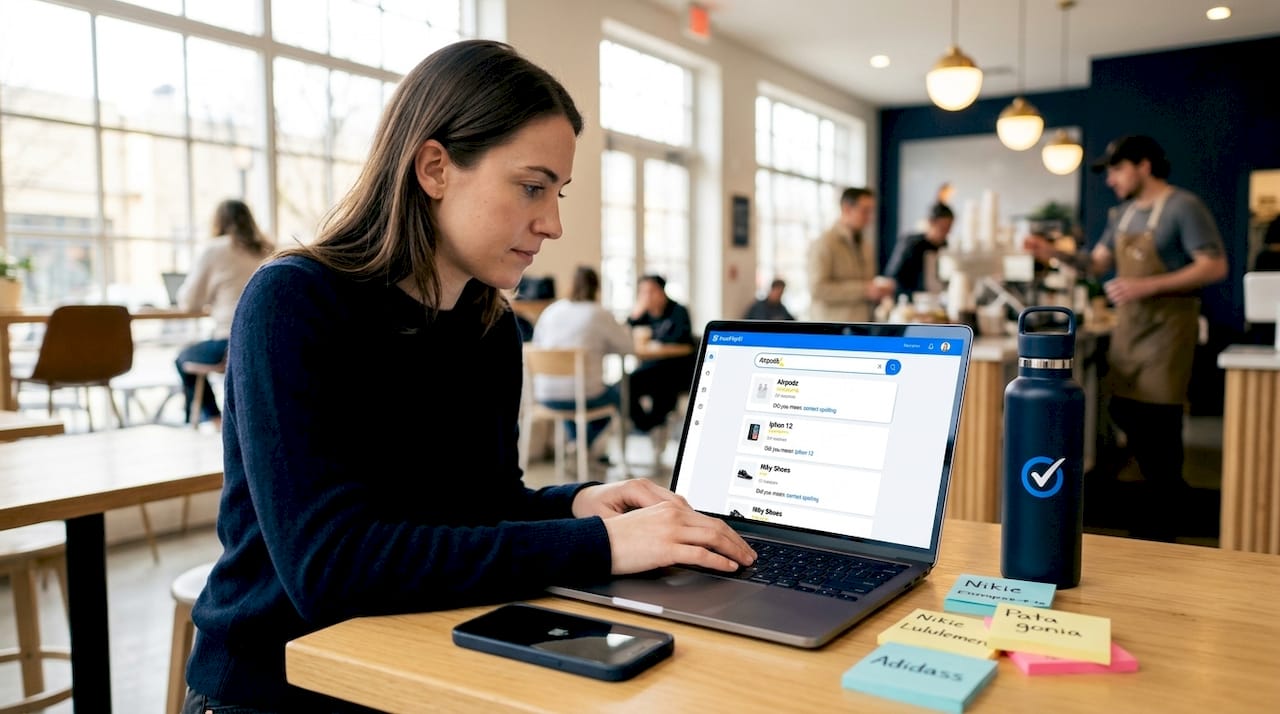
Beyond typos, search with synonyms and model number variations. A seller might list a Sony WH-1000XM5 as "Sony noise canceling headphones" rather than the full model name. Searching both versions doubles your coverage. Also try broader category terms periodically. Browsing "electronics" instead of just "headphones" sometimes surfaces mislabeled listings at undermarket prices.
Here's a tactic most resellers overlook: save searches and favorite listings you don't buy. Facebook's algorithm learns from your engagement and starts surfacing more similar items over time. Think of it as training the feed to work for you.
When you do find a promising listing, check the seller's profile before messaging. Look for:
- Profile age: Older accounts with consistent activity are lower risk
- Previous listings: A pattern of selling personal items is a good sign
- Reviews: Read recent ones; patterns of complaints are red flags
- Response rate: High response rates mean faster communication
Pro Tip: If a listing has been up for more than a week without a price drop, the seller is often open to negotiation. Message them directly and you may get the item for 15 to 20% below asking.
Using third-party tools for a speed advantage
Manual searching is valuable, but relying solely on Facebook's internal notifications is not enough for consistent deal discovery. Successful resellers use third-party tools that poll Marketplace listings far more frequently, sometimes every few minutes, to surface fresh listings before the competition.
Tools like Apify's Marketplace Arbitrage Radar let you set detailed parameters including keywords, price bands, item condition, and how many days a listing has been posted. Setting "daysListed=1` is particularly powerful because it isolates fresh listings where undervaluation is highest before other buyers pile in.
Here's how the main approaches compare:
| Method | Speed | Customization | Best For |
|---|---|---|---|
| Facebook native search | Slow (2 to 6 hour delay) | Basic filters only | Casual browsing |
| Saved search alerts | Unreliable, often miss listings | Limited | Light deal hunting |
| Third-party scrapers | Near real-time | Keyword, price, condition, date | Active resellers |
| AI-powered deal finders | Real-time with scoring | Full analysis + profit signals | Serious flippers |
The biggest advantage third-party tools give you is notification routing. Instead of waiting for a Facebook alert that may never come, many tools send updates directly to Telegram or email the moment a matching listing appears. That speed difference often determines whether you get the deal or lose it.
Using AI-powered tools effectively turns Facebook Marketplace from a casual browsing experience into a systematic reselling process. The platform becomes predictable rather than random.
Pro Tip: Pair deal alert tools with a pre-written message template. The moment you get notified of a strong listing, you can respond in under 60 seconds. Sellers consistently favor the first serious buyer who messages them.
Safety and negotiation strategies for securing deals
Finding the deal is only half the job. Securing it safely and at the right price is where your margin is made or lost.
Start with seller verification. Duplicate listings, stock photos, and requests for payment before viewing are all warning signs. Never hand over money without seeing the item first, and always meet in a public, well-lit location with CCTV coverage when possible. Police station parking lots are an underrated exchange location. Many stations now officially designate safe trade zones.
Once you're confident the listing is legitimate, your message matters enormously. Generic "is this still available?" messages get lost in the crowd. Instead, write something specific:
- Reference a detail from the listing to show you actually read it
- Mention that you can pick up quickly (today or tomorrow works best)
- State you're paying cash and ready to move fast
Experienced flippers consistently emphasize that polite, specific, and prompt messages show seriousness and dramatically increase response rates.
On negotiation: don't open with a lowball offer. Sellers who feel insulted simply stop responding. A better approach is to offer 10 to 15% below asking as your first bid, framed around your ability to pick up quickly. If the item has been listed for more than a week, you have more room to negotiate. If it's fresh and priced well, consider paying close to asking to lock it in before someone else does.
Ask yourself before every offer: "Would I rather save $20 or lose the deal entirely?" Most of the time, the $20 is not worth it.
Validating a deal before you commit to buying
Speed matters, but buying the wrong item at any price is a bad flip. Before you confirm a purchase, run a quick validation to verify you're actually getting a good deal.
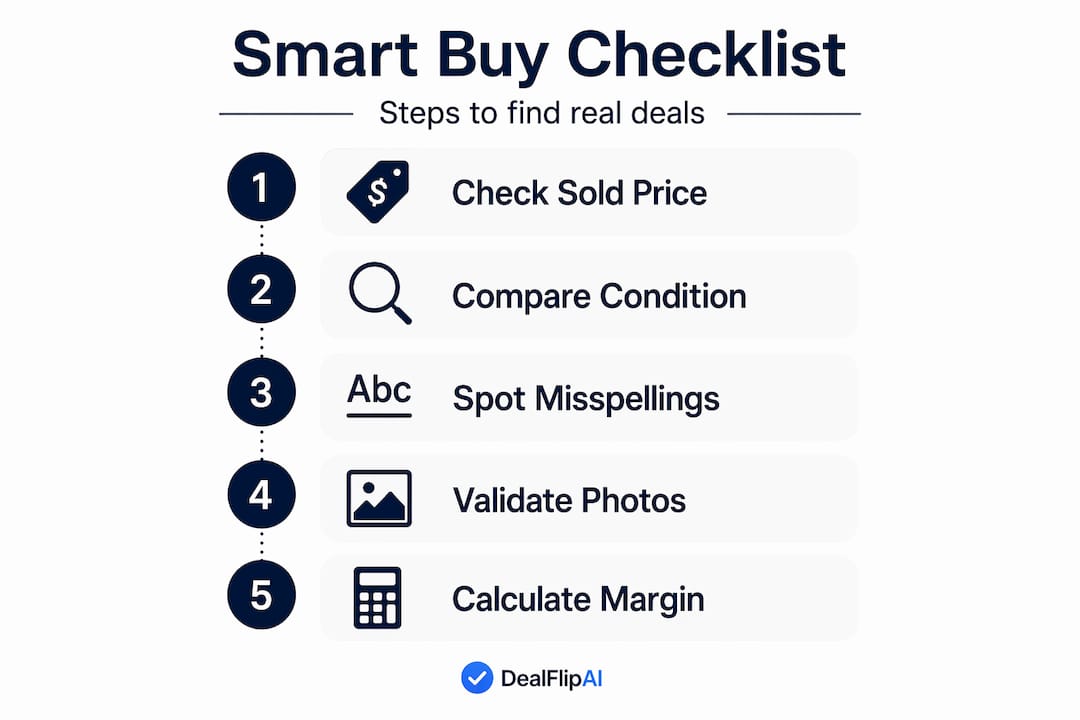
The simplest check is a reverse image search on the listing photos. Scammers often reuse images from other listings or product pages. If the same image shows up in dozens of listings or on a retail site, walk away. For legitimacy-confirmed listings, ask the seller specific questions about the item's condition, any repairs, and whether accessories are included. Sellers with nothing to hide answer quickly and clearly.
For pricing validation, cross-reference at least two or three platforms:
| Platform | What to check | Use for |
|---|---|---|
| eBay sold listings | Recent sale prices for identical items | Accurate resale value |
| Amazon | Current retail price | Original value benchmark |
| Facebook Marketplace | Active listings in your region | Local supply and demand |
| Dealflip Value Estimator | AI-powered fair market value | Quick undervaluation check |
Once you have a resale price, calculate your margin. A basic flip profit formula looks like this: Resale price minus purchase price minus platform fees minus any cleaning or repair costs. If the result is at least 30% of your buy-in price, the deal is generally worth pursuing. Anything below 20% margin leaves too little room for error.
My take on what actually separates profitable flippers
I've spent a lot of time watching how resellers approach Facebook Marketplace, and the most consistent pattern I've noticed is this: the people who win are not the most knowledgeable about products. They're the fastest and the most systematic.
Manual searching catches deals. Real-time alerts catch more. But what actually separates consistently profitable flippers is their willingness to combine both without leaning too hard on either. I've seen resellers get burned by over-relying on automation and missing obvious red flags. I've also seen others spend three hours a day manually browsing when a $10 per month tool could do it in minutes.
What I've learned from real failures is equally instructive. Under-negotiating cost me a few hundred dollars early on. Over-negotiating cost me several deals that sold to someone else within the hour. The uncomfortable truth is that on a hot listing, the asking price is often correct. Accepting that and moving fast beats being right and losing the item.
The best setup I've seen is a tiered approach: automation handles discovery through custom deal alerts, manual review handles verification, and a clear margin threshold handles the buy decision. Keep it simple, keep it repeatable, and the results compound quickly.
— Apex
How Dealflip helps you find and flip smarter
If the system above sounds like a lot to manage manually, that's exactly the problem Dealflip was built to solve. Dealflip's Facebook Marketplace Deal Finder scans listings in real time, scores each one for price, profit potential, and risk, and sends you alerts before casual browsers even see the listing.
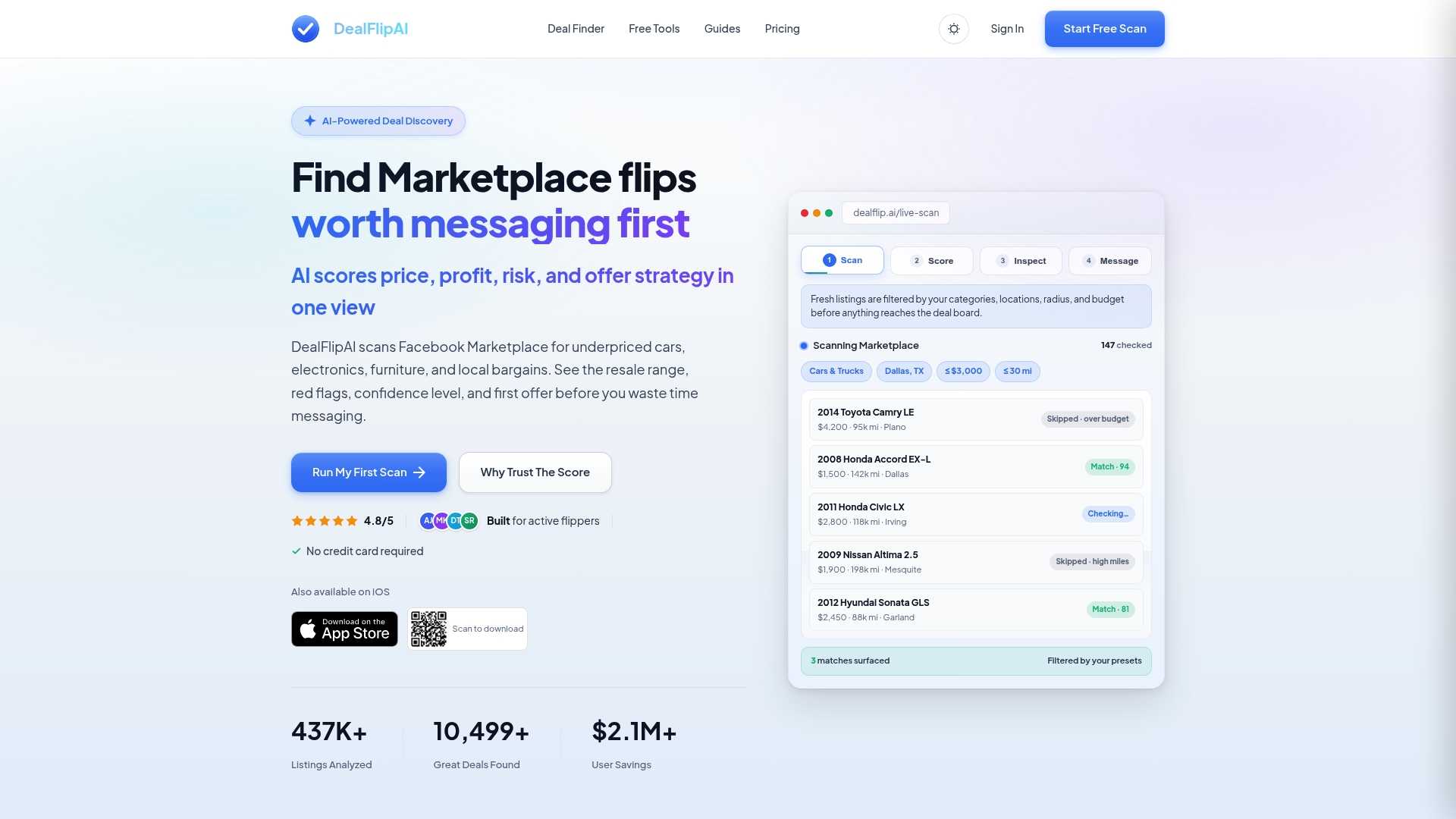
The Listing Analyzer tool gives you a full profitability breakdown in seconds, including margin estimates and seller signals. The built-in scam checker flags suspicious listings before you waste time or money. And the AI Offer Suggestion Tool calculates your optimal first offer based on current market data, so you never have to guess. You can also run every potential buy through the Flip Profit Calculator to confirm your ROI before you commit. Whether you're flipping part-time or building a serious reselling operation, Dealflip gives you the precision and speed to act on the best deals first.
FAQ
Why do I keep missing great deals on Facebook Marketplace?
Facebook's saved search alerts are often delayed by 2 to 6 hours and sometimes fail to trigger at all, meaning well-priced listings sell before you ever see them. Using third-party tools with real-time polling solves this problem directly.
What are the best search terms to find undervalued items?
Search the exact product name, common abbreviations, and known misspellings. Misspelled listings attract far less competition, which often keeps prices low even when the item's condition is excellent.
How do I know if a Facebook Marketplace listing is a good flip?
Check the item's resale value on eBay sold listings, subtract your buy price and fees, and confirm you have at least a 30% margin. Tools like Dealflip's listing analysis tool automate this calculation so you can validate deals in seconds.
How do I avoid scams when buying on Facebook Marketplace?
Never pay before inspecting the item in person, meet in a well-lit public location, and run a reverse image search on listing photos to catch recycled images. Dealflip's scam checker adds an extra layer of protection before you commit.
When should I accept the asking price instead of negotiating?
If a listing is fresh, priced 10 to 15% below market, and has strong demand, pay close to asking and move fast. Hot listings receive multiple inquiries within the first hour, so saving a few dollars is rarely worth the risk of losing the deal entirely.