

What are the best alternatives to marketplace.today.com?
The top marketplace.today.com alternatives for deal hunters in the US are eBay, Amazon, Etsy, Poshmark, OfferUp, and Craigslist. Each one serves a different shopping style, so the right pick depends on what you're looking for and how much you trust peer-to-peer transactions.
Before comparing them, one thing is worth clarifying. Marketplace.today.com, operated by NBCUniversal Media, LLC, works as a curated affiliate deals platform rather than a true transactional marketplace. You browse vetted discounts, not individual sellers. Most of the alternatives below work very differently, so knowing which model fits your needs will save you time.
Here's a quick look at each platform before the full comparison:
- eBay: Global auction and fixed-price marketplace, new and used goods, strong buyer protections
- Amazon: Massive retail catalog, verified sellers, fast shipping, trusted dispute resolution
- Etsy: Handmade, vintage, and artisan goods with personalized seller storefronts
- Poshmark: Fashion and apparel resale, national reach, integrated seller ratings
- OfferUp: Local peer-to-peer buying and selling, in-person exchange options
- Craigslist: Free local classifieds, direct person-to-person trades, minimal platform oversight
| Platform | Type | Best for | Geographic scope | Buyer protections | Inventory type | Scam/risk safeguards |
|---|---|---|---|---|---|---|
| eBay | Peer-to-peer + auction | Broad new and used goods | 190+ markets | Strong (Money Back Guarantee) | Almost everything | Seller ratings, dispute system |
| Amazon | Curated retail | New retail purchases | Global | Strong (A-to-z Guarantee) | New goods, some used | Platform moderation, verified sellers |
| Etsy | Curated artisan | Handmade and vintage | Global | Moderate (Purchase Protection) | Handmade, vintage, craft | Seller reviews, buyer protection program |
| Poshmark | Peer-to-peer | Fashion resale | National | Moderate (Posh Protect) | Apparel and accessories | Seller ratings, authentication on luxury items |
| OfferUp | Peer-to-peer local | Secondhand local deals | US local | Limited (TruYou verification) | Used goods | User profiles, in-app ratings |
| Craigslist | Classifieds | Local direct trades | US local | Minimal | Anything local | Buyer vigilance required |
How do these platforms compare on fees, trust, and user experience?
Understanding the differences between these platforms goes beyond just what they sell. Fees, trust signals, and mobile experience all affect whether you actually get a good deal.
Platform types and what they mean for you
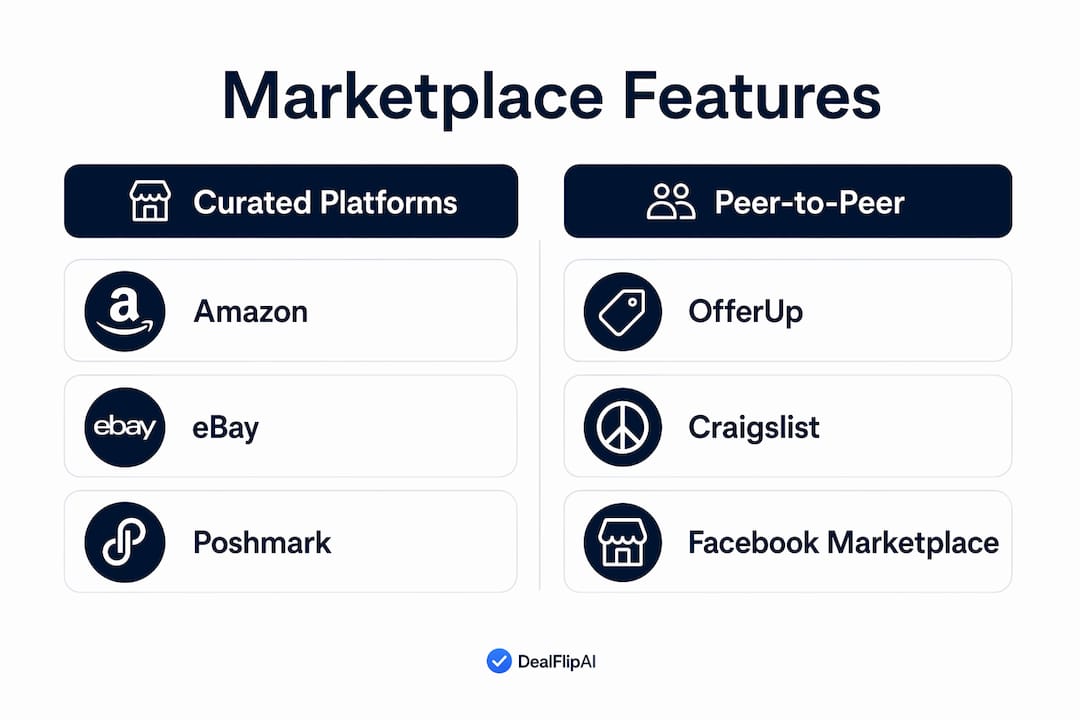
Amazon and Etsy operate as curated marketplaces where the platform vets sellers and sets quality standards. That structure means fewer surprises but also less room to negotiate. eBay and Poshmark are peer-to-peer but with strong platform oversight, sitting in the middle ground. OfferUp and Craigslist are the most open, with local transactions that rely heavily on your own judgment to manage trust.
Fee structures at a glance
- eBay: Final value fees typically range by category; listing is free up to a monthly limit
- Amazon: Referral fees vary by category; sellers also pay fulfillment or monthly subscription fees
- Etsy: Charges a listing fee per item plus a transaction fee on each sale
- Poshmark: Takes a flat commission on sales; buyers pay a fixed shipping rate
- OfferUp: Free for local sales; charges a fee for shipped transactions
- Craigslist: Free for most categories in most US cities
If you're a buyer hunting deals rather than selling, fees matter less directly. But high seller fees on platforms like Amazon and Etsy get baked into prices, so you often pay more there for the same item.
Buyer and seller protections
Active platform moderation and buyer protections are the clearest signal of marketplace reliability, more than brand name or traffic alone. Amazon's A-to-z Guarantee and eBay's Money Back Guarantee both cover you when items don't arrive or don't match the listing. Etsy's Purchase Protection program handles eligible disputes. Poshmark holds payment until the buyer confirms receipt, which protects both sides.
OfferUp offers TruYou identity verification for some sellers, but coverage is inconsistent. Craigslist has no centralized protection at all. The primary safeguard there is buyer vigilance, using seller feedback, meeting in safe public locations, and never paying off-platform.
Mobile apps and user experience
Amazon and eBay lead on mobile, with well-designed apps that make deal hunting fast and easy. Poshmark's app is built specifically for mobile-first browsing, which suits fashion shoppers. OfferUp is also app-centric and works well for local searches. Craigslist's mobile experience is noticeably limited compared to the others, which can slow down your search.

Pro Tip: Before buying on any peer-to-peer platform, check the seller's rating history and read recent reviews, not just the overall score. A seller with 50 reviews from two years ago and nothing recent is a yellow flag.
For resellers comparing profit margins across platforms, a cross-listing profit calculator can show you exactly where your margins land on eBay, Poshmark, and others before you commit.
How to choose the right online marketplace for deals
Picking the right platform comes down to matching what you want to buy with how each marketplace is built. Here's how to think through it.
Match the marketplace type to your shopping goal
Marketplace.today.com curates lifestyle discounts from vetted brands. If that's what you liked, Amazon's deal sections and Etsy's curated storefronts come closest in feel. If you want to negotiate prices or find undervalued items, eBay's auction format or OfferUp's direct messaging model gives you that flexibility.
Different marketplaces suit different buyer intents, and forcing a peer-to-peer platform to replace a curated deal site usually leads to frustration. Know which model you actually want before you start.
Key selection criteria
- Inventory type: Does the platform carry what you're looking for? Etsy for handmade goods, Poshmark for fashion, eBay for almost anything
- Geographic reach: Need local pickup? OfferUp and Craigslist. Want national or global shipping? eBay, Amazon, or Etsy
- Buyer protections: If you're spending more than a few dollars, prioritize platforms with formal dispute resolution
- Scam safeguards: Peer-to-peer platforms require more caution. Stick to verified sellers and avoid ghost sellers by checking account age and review patterns
- Fee impact on deal value: A "deal" with high shipping fees or platform markups may not be a deal at all
- Mobile experience: If you shop on your phone, prioritize platforms with strong apps
Users shifting from curated deal sites to peer-to-peer marketplaces should adopt stricter verification habits and lean on seller ratings to manage the added risk. The open nature of platforms like Craigslist and OfferUp puts more responsibility on you as the buyer.
Pro Tip: For niche categories like vintage clothing or handmade crafts, check out digital art marketplace alternatives that use tech-enabled curation to surface quality items faster than browsing manually.
Dealflip AI gives resellers an edge on Facebook Marketplace
If you're not just shopping for deals but actively flipping items for profit, the platforms above are where you sell. The harder problem is finding the right listings before anyone else does.
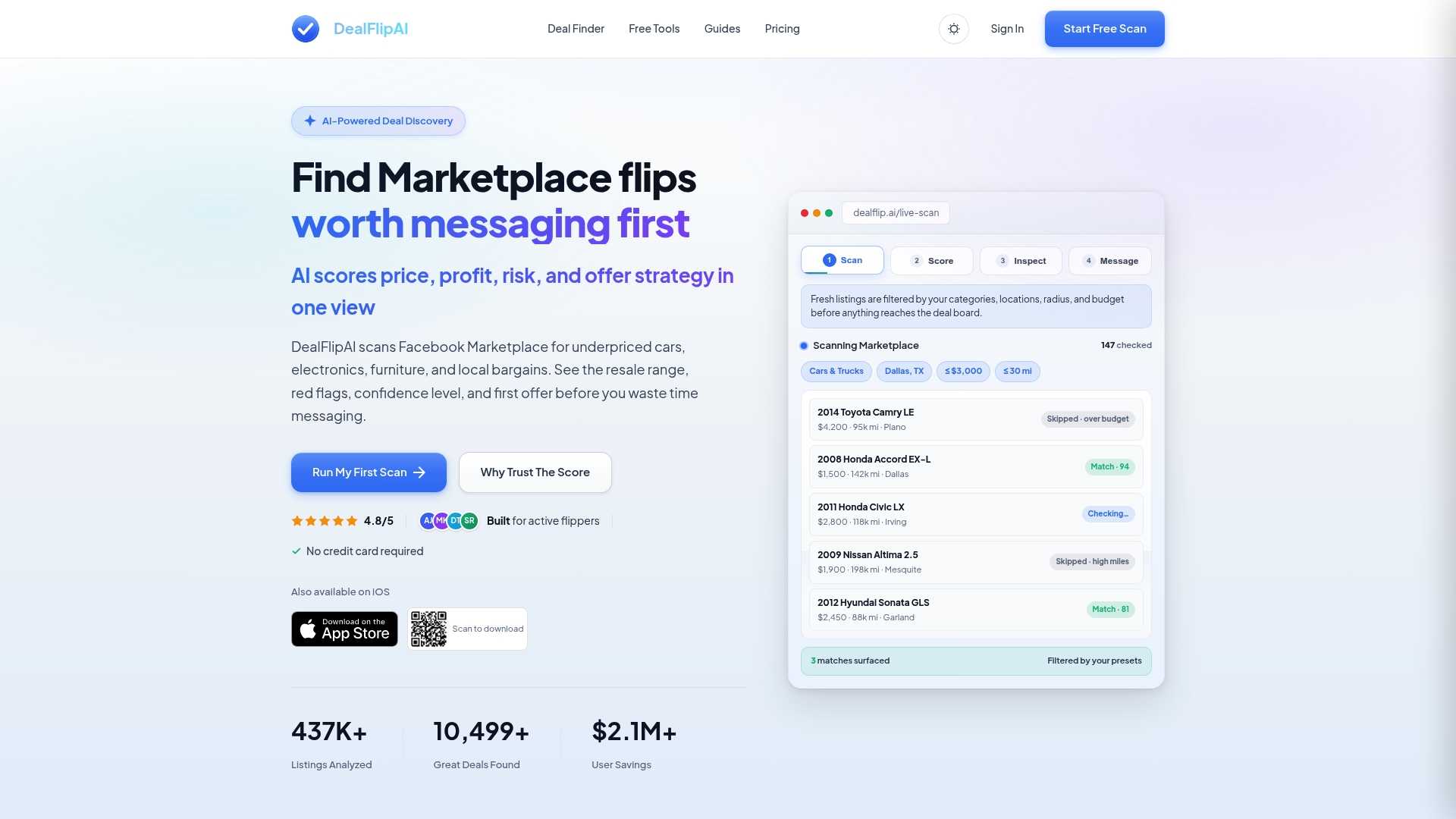
Dealflip AI is built specifically for that problem. It uses AI to score Facebook Marketplace listings based on price, profit potential, and risk factors, so you spend less time guessing and more time acting on real opportunities. Instead of scrolling through hundreds of listings manually, you get scored results with transparent valuations and suggested opening offers based on market data and seller signals.
The platform also includes scam detection and real-time alerts for fresh listings, which matters on Facebook Marketplace where the best deals disappear fast. Users report finding deals with strong resale margins that they would have missed without the scoring system.
Dealflip AI isn't a direct substitute for eBay or Amazon as a selling venue. Think of it as the tool you use before you list: find an undervalued item on Facebook Marketplace, assess it with AI, then find good deals worth flipping to the platform where your buyers already are.
Key Takeaways
The best marketplace.today.com alternative depends on your deal-hunting style: curated platforms like Amazon suit retail buyers, while peer-to-peer options like eBay and OfferUp reward active deal seekers willing to verify sellers themselves.
| Point | Details |
|---|---|
| Know your marketplace type | Curated platforms offer vetted deals; peer-to-peer platforms require more buyer vigilance but offer more negotiation room. |
| Buyer protections vary widely | Amazon and eBay offer formal dispute resolution; Craigslist and OfferUp put most of the risk management on you. |
| Fees affect real deal value | Seller fees on platforms like Etsy and Amazon get passed to buyers, so factor them into any price comparison. |
| Mobile experience matters | Amazon, eBay, and Poshmark have strong apps; Craigslist's limited mobile experience can slow your deal hunting. |
| Dealflip AI for active flippers | Dealflip AI scores Facebook Marketplace listings by profit potential and flags scams, helping resellers act fast on the best finds. |