

Reselling local marketplace items is the practice of buying undervalued goods within your community and selling them for profit without shipping, platform fees, or payment delays. Facebook Marketplace is the dominant platform for this activity, connecting millions of local buyers and sellers daily. The core reason to resell locally is simple: you keep every dollar. Local pickup sales are completely fee-free, while shipped transactions on the same platform carry a 10% fee. That difference alone changes your margin on every flip.
Why resell local marketplace items: the core financial case
The financial argument for reselling goods locally is direct and measurable. You eliminate the two biggest profit killers in reselling: platform fees and shipping costs.
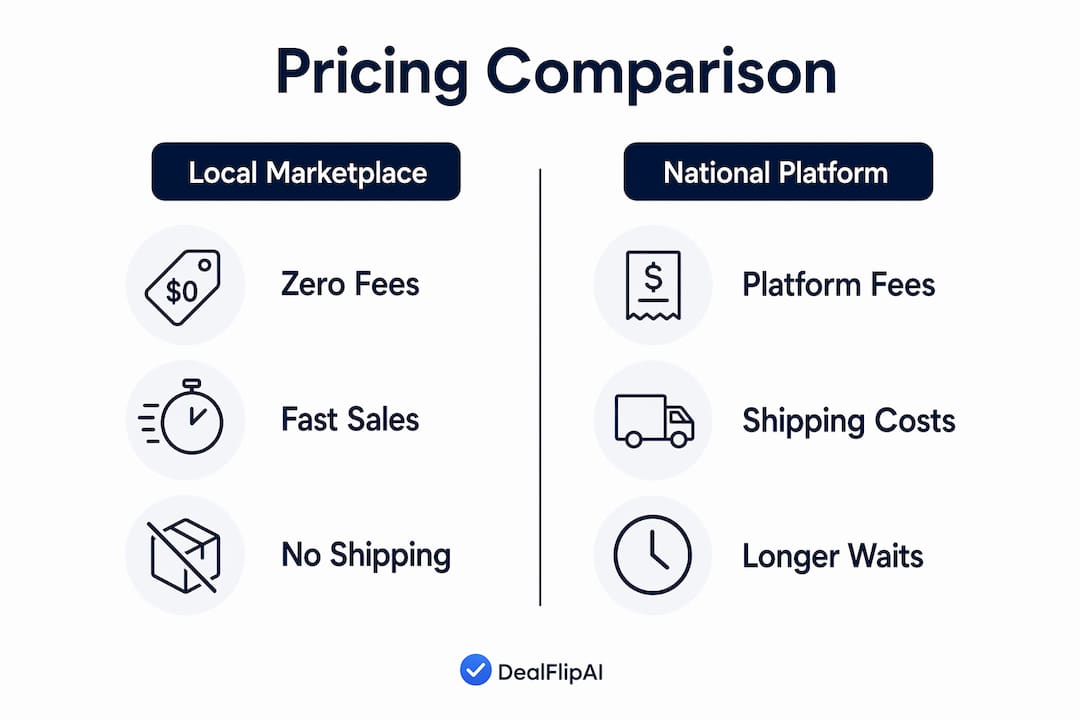
- Zero fees on local pickup. Facebook Marketplace charges no fees on local pickup sales, so you keep 100% of the sale price. On a $200 item, that is $20 back in your pocket compared to a shipped transaction.
- Fast cash flow. Well-priced local items sell within 72 hours on average, versus weeks for shipped transactions on platforms like eBay or Mercari. Speed matters when you are reinvesting profits into the next flip.
- No packaging or returns. Buyers inspect items in person before purchase. That eliminates return requests, damaged-in-transit claims, and the time spent boxing and labeling shipments.
- Eco-friendly upside. Reselling a single garment saves approximately 3 kg of CO2 compared to producing a new one. If sustainability matters to your brand or personal values, local reselling delivers a measurable environmental benefit.
Pro Tip: Track your net profit per flip in a simple spreadsheet. Include gas, your time, and any cleaning costs. You will quickly see which categories and price points actually pay off.
Avoiding shipping is the single biggest structural advantage of local reselling. Shipping and packaging overhead is the costliest and most unpredictable expense in ecommerce. Removing it entirely changes the math on items that would otherwise be unprofitable to flip online.

How does local pricing differ from national platforms?
Local marketplaces require a completely different pricing mindset than national platforms. You are not competing with thousands of sellers across the country. You are competing with 10–50 local buyers in your area, which means demand is smaller but more immediate.
Here is how to price and source effectively for local flips:
- Apply the 3x rule. Only source items you can sell for at least triple your total cost, including purchase price and travel. This rule accounts for hidden costs and time, keeping every flip profitable.
- Price in the $100–$300 sweet spot. Marketplace local sales convert best in this price range, with expected negotiation margins of 10–20%. Pricing here attracts serious buyers while leaving room to negotiate without losing money.
- Undercut retail by 18–22%. Buyers on local platforms expect a deal. Pricing 18–22% below retail signals value and moves items fast without giving away your margin.
- Source from wealthy suburbs. Targeting neighborhoods 30–50 miles away yields high-quality goods at favorable prices because reseller competition is lower and sellers are motivated to clear space rather than maximize price.
- Batch your pickups. Scheduling 3–5 pickups per route cuts fuel and time costs significantly. One well-planned Saturday morning can stock your inventory for the week.
Pro Tip: Post listings on Thursday evenings and renew them weekly. Thursday evening listings consistently outperform other posting times for visibility and buyer engagement.
| Pricing Factor | Local Marketplace | National Shipping Platform |
|---|---|---|
| Platform fee | 0% (local pickup) | 10% (Facebook) or 12.9% (eBay) |
| Time to sell | 24–72 hours | 7–21 days |
| Buyer pool | 10–50 local buyers | Millions nationwide |
| Shipping cost | $0 | $8–$40+ per item |
| Return risk | Very low | Moderate to high |
What categories of items perform best for local reselling?
The best items to flip locally share one trait: they are difficult or impractical to ship. Best-selling categories on local marketplaces include furniture, electronics, clothing, household items, and baby products. Each category has a specific reason it thrives locally.
- Furniture and appliances. A sectional sofa or a refrigerator costs $80–$150 to ship freight. Locally, you load it in a truck and deliver it yourself or have the buyer pick it up. Avoiding logistics overhead on bulky items like these is where local resellers make their biggest margins.
- Electronics. Smartphones, gaming consoles, and laptops sell fast locally because buyers want to test them before paying. A PlayStation 5 or an iPhone 14 that a buyer can inspect in person sells faster and at a higher price than the same item listed online with photos only.
- Tools and sporting equipment. Power tools, bicycles, and gym equipment hold value well and attract buyers who know exactly what they want. These items are heavy, making shipping expensive and local pickup the obvious choice.
- Baby and kids products. Strollers, car seats, and children's clothing move quickly in local markets. Parents want to inspect safety items in person, and the turnover rate is high because kids outgrow things fast.
"The best local flips are items that weigh more than 20 pounds or cost more than $50 to ship. If it is cheaper to drive across town than to box it up and drop it at UPS, you are in the right category."
Use the Dealflip AI listing analyzer to evaluate whether a specific item in your area is priced below market value before you commit to a pickup.
How to safely conduct local marketplace transactions
Safety is the one area where new resellers cut corners and regret it. The Better Business Bureau advises meeting buyers in public, high-traffic locations and never meeting alone for high-value transactions. Follow these practices on every deal.
- Choose public meeting spots. Police station parking lots, coffee shops, and bank lobbies are ideal. Many police departments now designate official "safe exchange zones" specifically for marketplace transactions.
- Never meet alone for high-value items. Bring a friend or family member when exchanging items worth $200 or more. Preparatory communication and choosing meeting times carefully are standard safety practices recommended by the BBB.
- Accept cash or verified app payments only. Venmo, Cash App, and Zelle are acceptable for verified buyers. Avoid personal checks, wire transfers, or any payment method you cannot confirm instantly.
- Recognize scam signals early. Prices that seem too good to be true, requests to communicate off-platform, and buyers who push for unusual payment methods are all red flags. Use a scam detection tool before meeting anyone for a high-value transaction.
Pro Tip: Screenshot every conversation before meeting a buyer or seller. If something goes wrong, you have a record. It takes five seconds and has saved resellers from disputes more times than you would expect.
Scam awareness is not just about protecting yourself. It protects your time. A fraudulent buyer who ghosts you after you drive 30 minutes costs you real money in gas and lost opportunity.
Key takeaways
Local marketplace reselling is the most fee-efficient and fastest-converting resale channel available in 2026, with zero platform fees on pickup sales and average sell times under 72 hours.
| Point | Details |
|---|---|
| Zero fees on local pickup | Facebook Marketplace charges no fees for local sales, so you keep 100% of every transaction. |
| Fast cash conversion | Well-priced local items sell within 72 hours, far faster than shipped platform alternatives. |
| Apply the 3x rule | Only source items you can sell for triple your total cost to stay consistently profitable. |
| Best categories are bulky or inspectable | Furniture, appliances, electronics, and tools perform best because shipping them is impractical. |
| Safety requires public meeting spots | Always meet in high-traffic public locations and accept only verified payment methods. |
My take on local flipping after years in the field
Local reselling taught me something that no national platform ever could: speed beats perfection. You do not need the highest price. You need the fastest turn. The resellers I have seen struggle are the ones who price for maximum value and wait weeks for a buyer. The ones who succeed price to move, reinvest quickly, and compound their capital.
Batching pickups changed how I think about time. Before I started planning routes, I was driving 45 minutes for a single $40 flip. That is a losing trade. Now I plan three to five stops per trip, and my effective hourly rate looks completely different. If you are not batching, you are leaving money on the table every single week.
The suburb sourcing strategy is genuinely underused. Most resellers shop in their own neighborhood and wonder why the deals are thin. Drive 30–40 miles out to higher-income zip codes and you will find quality items priced by people who just want them gone. That gap between their asking price and your local resale price is where real margin lives.
Technology has made this easier than it used to be. Tools that score listings for profit potential and flag scam signals before you waste a trip are worth using. I have avoided bad deals and found good ones faster because of them. The Dealflip AI deal finder is one I recommend to anyone serious about scaling their local flipping operation.
One last thing: do not skip the safety steps. I know it feels like overkill for a $60 lamp. But habits built on small transactions protect you when the $500 transaction comes around.
— Walsh Pex
How dealflip AI helps you flip local listings faster
Finding profitable local deals manually takes hours. Dealflip AI cuts that time down by scoring Facebook Marketplace listings based on price, profit potential, and risk factors before you ever leave the house.
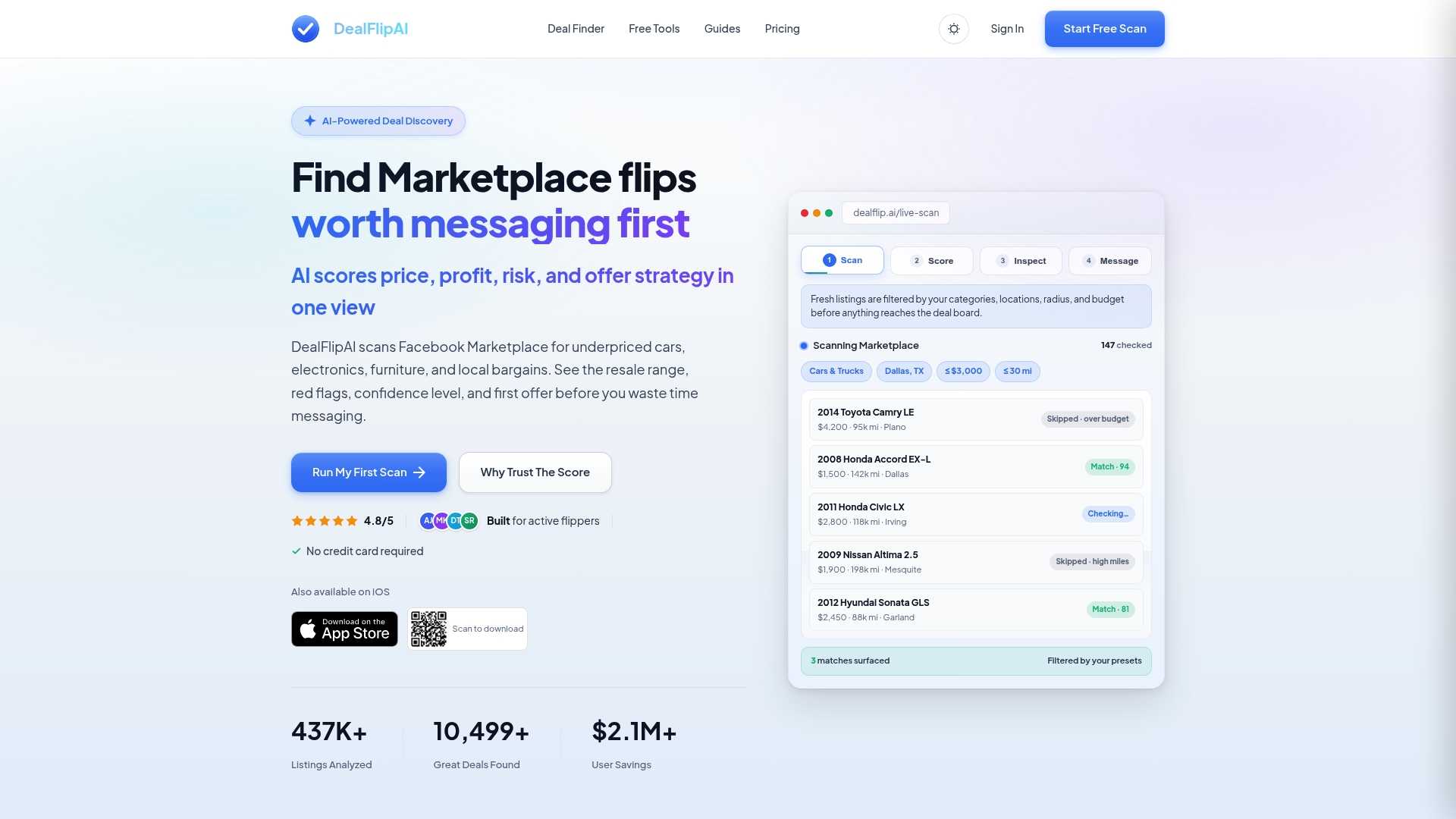
The Facebook Marketplace deal finder surfaces undervalued listings in your area in real time, so you see fresh deals before other resellers do. The listing analyzer breaks down whether a specific item is worth pursuing based on current market data. The scam checker flags suspicious listings before you commit to a meetup. Together, these tools give you a clear picture of every deal so you spend your time on flips that actually pay off. Start finding better local deals today at Dealflip AI.
FAQ
What makes local marketplace reselling more profitable than shipping?
Local pickup sales on Facebook Marketplace carry zero platform fees, while shipped transactions incur a 10% fee. You also eliminate packaging, carrier costs, and return risk entirely.
What is the best price range for local flips?
Items priced between $100 and $300 convert best on local marketplaces, with buyers expecting a 10–20% negotiation margin. This range attracts serious buyers while protecting your profit.
How do i find undervalued items to resell locally?
Source from wealthy suburbs 30–50 miles from your area, where motivated sellers price items to clear space rather than maximize value. AI tools like Dealflip AI can also surface underpriced listings automatically.
How do i stay safe during local marketplace transactions?
The Better Business Bureau recommends meeting in public, high-traffic locations and never meeting alone for high-value exchanges. Accept only cash or verified app payments like Venmo or Cash App.
What items sell fastest on local marketplaces?
Furniture, appliances, electronics, tools, and baby products sell fastest locally because buyers prefer to inspect them in person and shipping costs make online alternatives impractical.