
Use a four-step deal review workflow, scan, 60-second profit check, inspect, decide, to turn Marketplace alerts into fast buy/pass calls in under two minutes. Pull sold comps, subtract fees and repair costs, and apply a minimum margin rule before you ever message a seller. Tools like DealFlipAI can run the scoring and valuation math for you, so the only thing left to decide is whether to make the drive.
TL;DR:
- The 60-second profit check requires pulling real sold prices, calculating all-in costs, and applying a minimum profit margin to decide whether to pursue a listing.
- Using tools like DealFlipAI automates math and scouting processes, providing immediate valuations, scam alerts, and first offer suggestions to speed decision-making.
- Red flags such as suspicious photos, conflicting specs, evasive seller responses, or unusually low prices should lead to instant deal rejection.
- Tracking key metrics like days from pickup to sale, ROI, and hit rate helps optimize sourcing efficiency and prioritize high-turnover categories.
- Speed and reliability in communication typically outweigh haggling skills, emphasizing the importance of quick responses and prepared, professional offers.
Table of Contents
- What Is the 60-Second Profit Check?
- How Do You Run a Deal Review Step by Step?
- Which Tools Actually Speed Up a Deal Assessment Procedure?
- What Red Flags Should Kill a Deal Immediately?
- How Do You Track Reselling Performance Like a Business?
- What Do Experienced Flippers Wish They'd Learned Sooner?
- How DealFlipAI Fits Into Your Deal Review Workflow
- Sources
What Is the 60-Second Profit Check?
Before you type a single message to a seller, run the math. This is the filter that keeps you from wasting evenings driving across town for a $12 profit.
Step 1: Pull a real comp price, not a guess. Check eBay's sold listings (not active ones) for the exact model, or scan 3 to 5 active Marketplace comps in your area. Sold prices tell you what buyers actually paid. Active listings only tell you what sellers hope for.
Step 2: Add up your all-in cost. This is where most new flippers get burned, they price off the purchase cost alone and forget everything else:
- Purchase price (or your planned offer)
- Cleaning or repair supplies and time
- Gas and drive time to pick up and drop off
- Selling platform fees (eBay runs around 13%, Mercari has its own fee schedule)
- Storage space if the item sits for more than a few days
Step 3: Apply a simple pass/buy rule. A common baseline in flipping guides is targeting at least 2 to 3 times your all-in cost for resale, or a hard minimum dollar margin (say, $30 to $50) for smaller items where percentage math gets noisy. If the math clears your bar, move to messaging. If it's close, flag it for a second look instead of killing it outright.
Step 4: Message fast, using a template. Skip the haggling in chat. Something like "Hi! Still available? I can pick up today, cash ready" outperforms lowball offers because speed and certainty close deals that haggling loses to a faster buyer.
Pro Tip: Keep your comp price, fee percentage, and minimum margin rule saved in your phone's notes app. You want zero typing during the check, just a glance and a decision.
How Do You Run a Deal Review Step by Step?
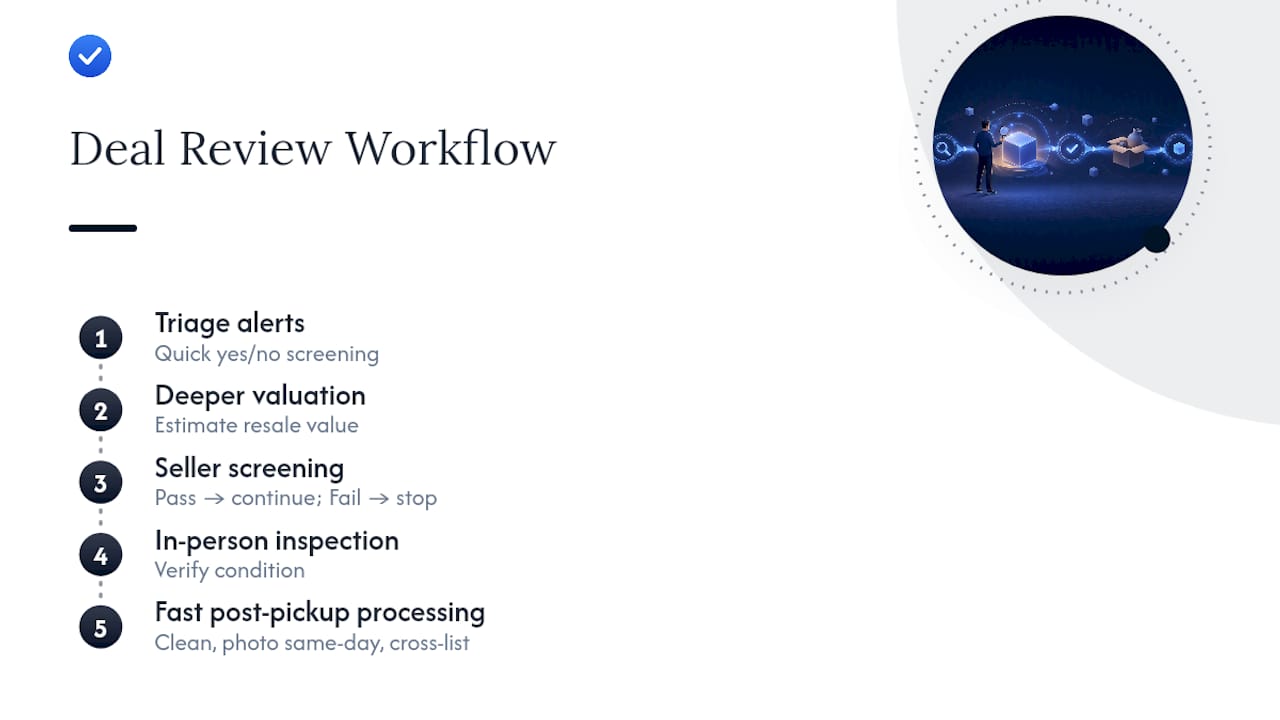
The 60-second check tells you whether a listing is worth a closer look. Here's what that closer look, and everything after it, actually involves.
1. Triage your alerts first
Not every alert deserves equal attention. A listing posted 90 seconds ago with clear photos and a fair price needs an instant response. A listing that's 24 hours old with a blurry photo and a vague title might look ignorable, but seasoned flippers often mine those "forgotten" listings specifically because other buyers scrolled past them. Sellers with stale listings are often more open to a lower offer, too.
2. Do the deeper valuation
If the quick check passes, go one layer deeper. Cross-check comps on two platforms, not just one, since resale value on eBay can differ meaningfully from Facebook Marketplace or Mercari. Run the fee math for whichever channel you'll actually resell through, and decide upfront whether this item makes sense for local pickup resale or shipped resale. A bulky exercise bike and a compact video game console have very different logistics economics.

3. Screen the seller before you commit
Check how long the account has existed, whether the profile has a real photo, and how quickly they respond. Vague or evasive answers to direct questions ("Does it turn on? Any cracks or dents?") are a signal to slow down. Send a direct appointment message: confirm the item is available, propose a pickup window, and ask one or two condition questions before you drive anywhere.
4. Inspect on arrival, negotiate only in person
Bring a checklist: does it match the photos, does it power on, are there hidden defects the listing didn't mention? Treat the chat as appointment-setting, not the negotiation itself, save real bargaining for once you can see and touch the item.
5. Process it fast after pickup
Clean or repair immediately, shoot photos same-day, and cross-list across two or three platforms rather than one. The faster an item moves from pickup to live listing, the less shelf time it eats.
Which Tools Actually Speed Up a Deal Assessment Procedure?
Manual sourcing means tab-hopping between Marketplace, eBay sold listings, and a calculator app every single time. That adds up to real hours lost per week. A few tool categories close that gap:
- Alert scanners that filter fresh listings by category, price range, and location before you ever see them
- Sold-comp lookups that pull resale history without you leaving the listing
- Fee and profit calculators that convert a raw asking price into an all-in margin estimate
- Cross-posting tools that push one listing across multiple resale platforms at once
- Tracking sheets that log every deal from alert to sale
An AI-assisted scanner is only worth trusting if it shows its work, real sold comps, real fee math, and a clear scam-risk read, rather than a black-box "good deal" badge. DealFlipAI's scoring methodology does exactly that: it breaks down valuation confidence and suggests a first offer instead of just flashing a score and moving on.
| Task | Manual approach | Tool-assisted approach |
|---|---|---|
| Spotting new listings | Refresh Marketplace repeatedly | Automated alert filtering |
| Checking resale value | Search eBay sold listings by hand | Instant comp pull inside the listing analyzer |
| Estimating profit | Mental math or a scratch calculator | Flip profit calculator with fees built in |
| Deciding where to resell | Guess based on habit | Cross-listing profit comparison across platforms |
A message template, an inspection checklist, and a 60-second calculator cost you nothing to build once and reuse forever.
What Red Flags Should Kill a Deal Immediately?
Some signals are worth a pause. Others should end the deal outright before you waste a drive.
- Stock or watermarked photos instead of real pictures of the actual item
- Measurements or specs that contradict themselves between the title and description
- Evasive or one-word answers to direct condition questions
- A price that's dramatically below every comp you pulled, with no explanation
- Pressure to pay before meeting, or a request for an unusual payment method
Empire Flippers' risk assessment framework applies just as well to a used couch as it does to a digital business: score each red flag by severity, then decide whether to proceed, renegotiate, or walk. Meet in public, daylight hours when possible, and stick to cash or an in-person payment app transfer you can confirm on the spot. DealFlipAI's scam checker flags several of these signals automatically before you even message the seller.
Pro Tip: If a listing trips two or more red flags at once, pass. One odd answer might be a nervous seller. Three is a pattern.
How Do You Track Reselling Performance Like a Business?
Treat your sourcing like a small operation, not a hobby, and the numbers will tell you where to spend your time.
- Daily or weekly cadence: set a fixed alert-review window, batch your pickups by neighborhood, and block time for listing photos and descriptions rather than doing it piecemeal.
- Inventory turnover: track days from pickup to sale. Rising hold times usually mean pricing or categories need adjusting.
- ROI per flip and hit rate: hit rate measures how many alerts actually turn into purchases, and a low hit rate usually means your filters are too broad.
- Time per flip: log hours from pickup through listing. This is the number that tells you if a category is worth scaling.
- A simple spreadsheet or Airtable base works fine at low volume. Once alert volume outpaces what you can manually review, that's the signal to add paid scanning or automation.
What Do Experienced Flippers Wish They'd Learned Sooner?
The biggest time sink isn't bad deals, it's chasing every cheap listing without a filter. New flippers often message ten sellers to land one deal, then wonder why their evenings disappear. The fix is boring but effective: run the 60-second check on everything, message fast on the ones that clear it, and let the rest go without a second thought.
Speed also beats haggling more often than people expect. A buyer who shows up ready to pay and pick up today usually wins over one trying to shave another $10 off in chat. Reliability is the actual competitive edge in this game, not negotiation skill.
— Walsh Pex
How DealFlipAI Fits Into Your Deal Review Workflow
DealFlipAI is built around the exact steps above, not as a replacement for your judgment, but as the layer that handles the math and the scam screening before you spend a minute on a listing.
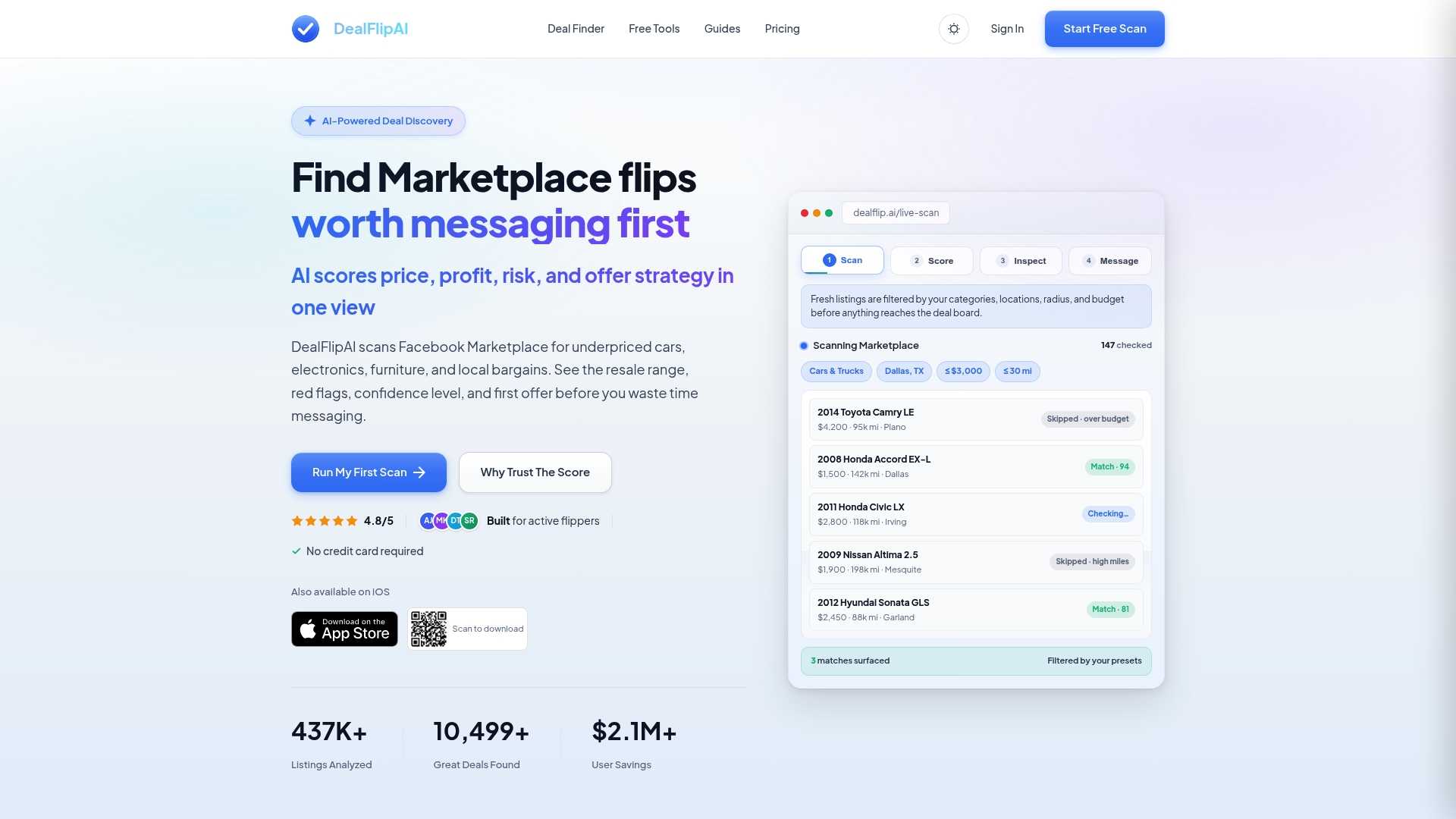
It scores incoming Marketplace listings on profit potential and risk, pulls sold comps automatically, flags scam signals, and suggests a first offer instead of leaving you to guess at negotiation. That covers the parts of the workflow that eat the most time: comp research, fee math, and seller-risk screening. If you want to test the process on a listing right now, run it through the free listing analyzer, or check margins on something you're already considering with the flip profit calculator. Start with the free scans, and upgrade only once alert volume justifies it.
Sources
A few sources worth bookmarking as you build out your own process:
- The Complete Guide to Marketplace Flipping in 2026: Turn Listings Into Profit
- Digital product due diligence checklist