
The highest-return categories on any solid flipping list right now are solid wood furniture, brand-name sneakers, consumer electronics, power tools, and specialty collectibles. Each one offers predictable demand, clear price bands, and repeat sourcing channels you can tap every week. Here is the shortlist you can act on today:
- Solid wood and vintage furniture — buy at estate sales, sell locally for significantly higher prices; fast turnover, no shipping needed
- Brand-name sneakers and designer clothing — buy at thrift stores, sell on eBay or Poshmark for a considerable markup; strong national demand
- Smartphones and tablets — buy locally, sell on eBay for a notable profit; high liquidity, easy to test
- Power tools and workshop equipment — buy at garage sales, sell on Facebook Marketplace or eBay for substantial gains; loyal buyer base
- Video game consoles and games — buy at reasonable prices, sell for several times the purchase price; nostalgia demand keeps prices firm
- Watches and jewelry — buy affordably, sell for significantly more; compact, easy to ship, high margin potential
- Textbooks and specialty books — buy inexpensively, sell for a strong markup on Amazon or eBay; near-zero sourcing cost
- Baby gear (strollers, bouncers, monitors) — buy affordably, sell locally for a good profit; fast local sales
- Collectibles (trading cards, vintage toys, sports memorabilia) — buy at low prices, sell for substantially higher amounts; niche but highly profitable
Pro Tip: Start with two or three categories, not nine. Depth in one category beats shallow knowledge across all of them — you will spot deals faster and price more accurately.
Table of Contents
- The best items to flip: per-item guidance, inspection checklist, and price bands
- Where to find inventory and how to negotiate the best buy price
- How to price items and calculate your real profit
- Quick flips for fast cash and how to scale your operation
- Inspection checklist, common mistakes, and scam red flags
- Legal and tax considerations when flipping becomes a business
- Key Takeaways
- Why conservative math beats chasing big wins
- Dealflip AI helps you find and act on profitable flips faster
- Sources and further reading
The best items to flip: per-item guidance, inspection checklist, and price bands
Every category on this list works for a specific reason. Understanding what drives value in each one is what separates profitable flippers from people who just move stuff.
1. Solid wood and vintage furniture
What to buy: Dressers, dining tables, solid wood chairs, mid-century modern pieces, and industrial shelving. Avoid particleboard and laminate — they do not refinish well and buyers know the difference.
Quick inspection checklist:
- Check all joints for wobble or separation
- Look for water rings, deep gouges, or veneer peeling
- Confirm drawer slides work smoothly
- Smell for mold or pet odors (a deal-breaker for most buyers)
Price bands: Buy at moderate prices, target selling at significantly higher prices. Best platform: Facebook Marketplace for local pickup.
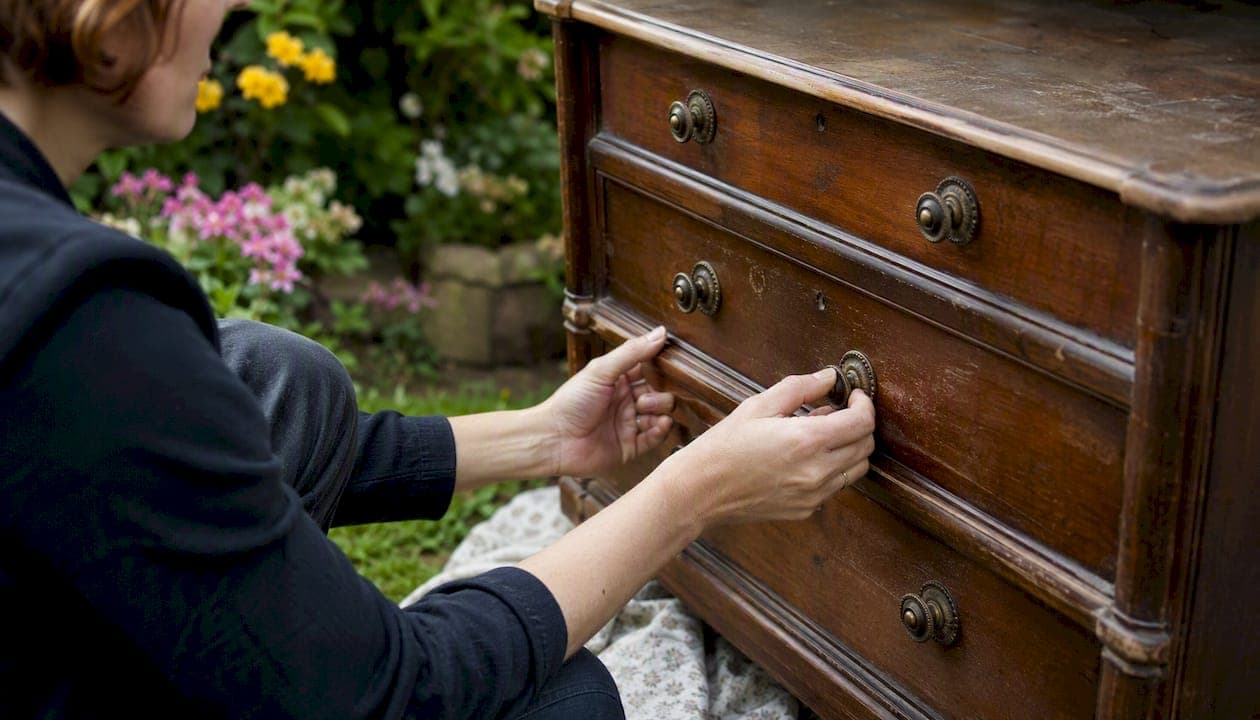
Furniture moves fast locally because buyers want to avoid shipping costs. A $40 dresser with a fresh coat of chalk paint and new hardware can list for $180 in a weekend.
Pro Tip: A $12 can of Rust-Oleum chalk paint and $8 in new drawer pulls can add at least $80 to the dresser's resale price. That is the highest ROI repair in reselling.
2. Brand-name sneakers and designer clothing
What to buy: Nike Air Force 1s, Adidas Yeezys, New Balance 990s, and any Lululemon, Patagonia, or North Face pieces. Condition matters enormously here.
Quick inspection checklist:
- Check soles for wear and yellowing
- Verify authenticity markers (stitching, font, box labels)
- Look for stains, pilling, or broken zippers on clothing
- Confirm size tags are intact
Price bands: Buy affordably, target selling for multiple times the purchase price. Best platforms: eBay, Poshmark, Depop.
3. Smartphones and tablets
What to buy: iPhones (iPhone 11 and newer), Samsung Galaxy S-series, and iPad models. Cracked screens are fine if the price reflects the repair cost.
Quick inspection checklist:
- Check IMEI against blacklist databases (use Swappa's free checker)
- Test Face ID, Touch ID, cameras, and speakers
- Check battery health (Settings > Battery on iPhone)
- Confirm the device is not iCloud or Google locked
Price bands: Buy moderately priced items, target selling for notable profit. Best platform: eBay for national reach; electronics deal finder tools help surface underpriced local listings.
4. Power tools and workshop equipment
What to buy: DeWalt, Milwaukee, and Makita cordless tools, especially drill sets, circular saws, and impact drivers. Combo kits sell particularly well.
Quick inspection checklist:
- Test every tool under load, not just at idle
- Check battery charge and hold time
- Inspect cords for fraying on corded tools
- Verify all accessories and cases are included
Price bands: Buy within a low price range, target selling for a good margin. Best platform: Facebook Marketplace locally; eBay for rare or discontinued models.
5. Video game consoles and games
What to buy: PlayStation 4/5, Nintendo Switch, Xbox Series X/S, and retro systems (SNES, N64, Game Boy). Individual game cartridges for retro systems can be goldmines.
Quick inspection checklist:
- Test disc drive and digital store access
- Check all ports (HDMI, USB, headphone)
- Confirm controllers pair and respond correctly
- Look for disc read errors on older systems
Price bands: Buy reasonably priced items, target selling at a markup. Best platforms: eBay, Facebook Marketplace.
6. Watches and jewelry
What to buy: Vintage Seiko, Citizen, and Timex watches; sterling silver and gold-filled jewelry; brand-name pieces from Tiffany & Co. or Pandora. You do not need luxury brands to profit here.
Quick inspection checklist:
- Test watch movement (does it run?)
- Check clasps, links, and crystal condition
- Look for hallmarks on metal jewelry (925, 14K, 18K)
- Research the specific model before buying
Price bands: Buy affordably, target selling for a significant profit. Best platforms: eBay, Etsy for vintage pieces.
7. Textbooks and specialty books
What to buy: College textbooks (STEM and medical editions especially), field guides, and out-of-print specialty titles. Check the ISBN against Amazon and eBay sold listings before you buy.
Price bands: Buy cheaply, target selling for a strong return. Best platforms: Amazon, eBay, BookScouter.
The margin here is extraordinary. A $3 organic chemistry textbook at a thrift store can sell for several times its purchase price on Amazon. The catch is edition cycles — always verify the current edition before buying.
8. Baby gear
What to buy: UPPAbaby, Bugaboo, and BOB strollers; Snoo smart sleepers; Owlet monitors; Ergobaby carriers. Safety-recalled items are a hard pass regardless of price.
Quick inspection checklist:
- Check CPSC recall database before buying any baby item
- Test all mechanical parts (fold, recline, brake)
- Inspect harnesses for fraying
- Confirm electronics power on and function
Price bands: Buy low-priced items, target selling locally for profit. Best platform: Facebook Marketplace for local pickup.
9. Collectibles
What to buy: Pokémon and sports trading cards, vintage Hot Wheels, Star Wars figures (pre-1985), and signed sports memorabilia. Graded cards (PSA, BGS) command significant premiums.
Price bands: Buy at low cost, target selling for much higher prices. Best platform: eBay for national collector demand.
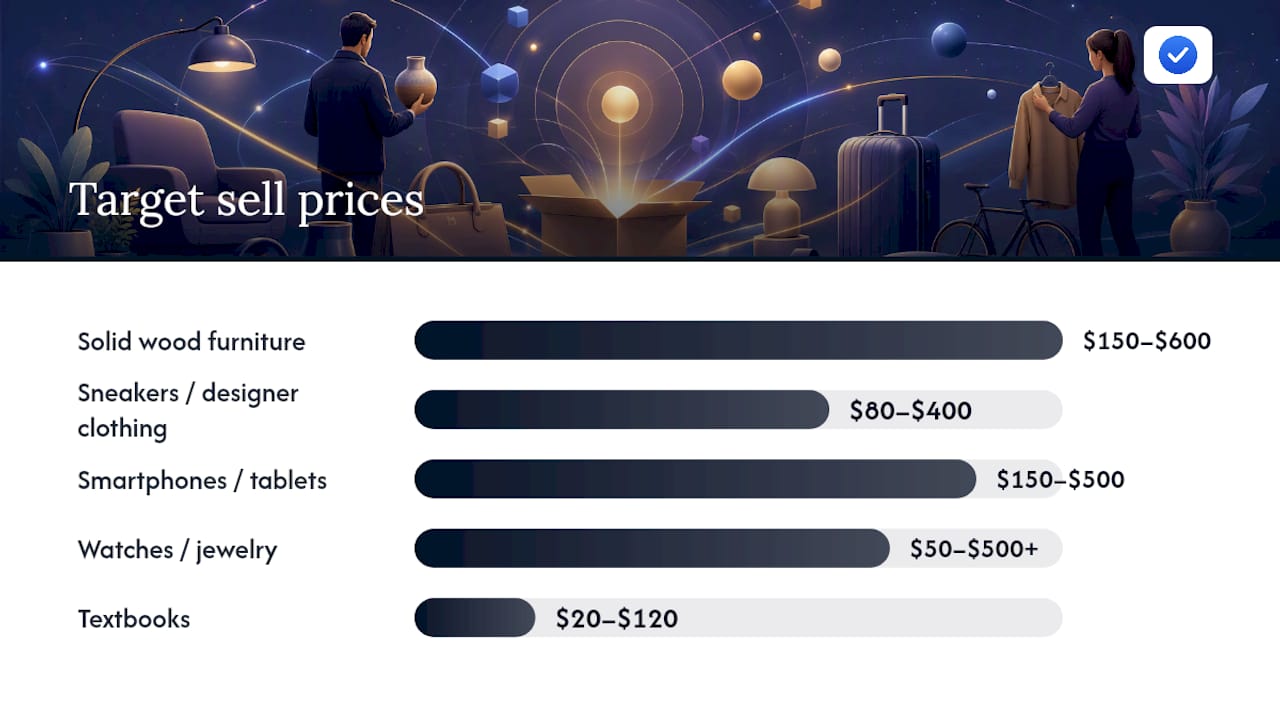
Here is a quick reference for the price bands across all categories:
| Category | Typical Buy Price | Target Sell Price | Expected Margin | Best Platform |
|---|---|---|---|---|
| Solid wood furniture | $30–$150 | $150–$600 | 100% | Facebook Marketplace |
| Sneakers / designer clothing | $20–$80 | $80–$400 | 100–400% | eBay, Poshmark |
| Smartphones / tablets | $50–$200 | $150–$500 | 50–150% | eBay |
| Power tools | $15–$80 | $60 | 100–200% | FB Marketplace, eBay |
| Video games / consoles | $20–$100 | $60 | 100–200% | eBay |
| Watches / jewelry | $10–$100 | $50–$500+ | 100–400% | eBay, Etsy |
| Textbooks | $1–$10 | $20–$120 | — | Amazon, eBay |
| Baby gear | $20–$60 | $80–$200 | 100% | Facebook Marketplace |
| Collectibles | $5–$50 | $30–$500+ | — | eBay |
A phase-based inspection checklist applied consistently across every deal is what separates profitable operators from hobby flippers. Simple, repeatable processes are the real edge.
Where to find inventory and how to negotiate the best buy price
Sourcing is where most of your profit is made. The sell price is largely set by the market. The buy price is where you have control.
Facebook Marketplace is the single best sourcing channel for furniture, tools, electronics, and baby gear. Sellers are motivated, prices are negotiable, and you can pick up locally without shipping costs. New listings post heavily on Thursday evenings and Friday mornings as people prep for weekend cleanouts. Set up saved searches and check them daily. Deal alerts automate this entirely, notifying you the moment a matching listing goes live.
Thrift stores (Goodwill, Salvation Army, Savers) are reliable for clothing, books, small electronics, and collectibles. Visit on restock days, which vary by location but are often Monday and Tuesday. Goodwill Outlet stores sell by the pound and are where experienced flippers find the deepest discounts.

Estate and garage sales are best for furniture, tools, watches, and collectibles. EstateSales.net and Craigslist list upcoming sales. Arrive early on day one for the best selection; arrive in the final hour for the deepest discounts on what remains.
Retail liquidation and clearance works well for new-in-box electronics, toys, and seasonal items. BULQ and Direct Liquidation sell pallets of customer returns. The risk is higher because you cannot always inspect individual units, but the margins on working items can be excellent.
Online arbitrage (buying on Mercari or Poshmark to resell on eBay) works when you spot a pricing gap between platforms. It requires careful attention to fees and shipping on both ends.
Sourcing do's and don'ts:
- Do get contractor estimates before committing to any item needing significant repair — professional advice before purchase prevents budget surprises
A simple two-line negotiation script:
"I'm interested, but I'd need to get it for $[your max buy price] to make the numbers work on my end. Would you take that?"
If they say no: "I understand. The best I can do is $[slightly higher offer]. I can pick up today if that works."
Cash in hand and same-day pickup are your two strongest negotiating tools. Most motivated sellers will meet you somewhere close to your number.
Pro Tip: Automated deal alerts from Dealflip AI cut the manual search time dramatically. Instead of scrolling Marketplace for an hour each morning, you get notified when a matching listing appears — which means you reach sellers before other flippers do.
How to price items and calculate your real profit
Knowing the sell price is not enough. You need to know your net profit after every cost is subtracted. Here is the formula:
Net Profit = Sell Price − Buy Price − Refurbishment Cost − Platform Fees − Shipping − Taxes
ROI % = (Net Profit ÷ Total Cost) × 100
Max Buy Price (given a target margin) = Sell Price × (1 − target margin %) − all other costs
Worked example: iPhone 12 flip
- Buy price (Facebook Marketplace): $95
- Screen replacement (local repair shop): $35
- Platform fee (eBay, ~13.25% of sale): $26.50 on a $200 sale
- Shipping (padded envelope + insurance): $12
- Total cost: $168.50
- Sell price: $200
- Net profit: $31.50
- ROI: 18.7%
That is a thin margin. If you can source the same phone for $70 and skip the screen repair (selling as-is with accurate photos), your net profit jumps to roughly $55 on the same $200 sale, pushing ROI above 30%.
The lesson: repair costs eat margin fast. Always calculate the repair-included and repair-excluded scenarios before you buy.
Platform fee summary
| Platform | Selling Fee | Notes |
|---|---|---|
| eBay | ~13.25% of total sale | Includes shipping in fee calculation |
| Poshmark | 20% at $15+ | Flat rate for small items |
| Mercari | ~13% selling fee | Fees apply to final sale price |
For most resellers, a minimum 25–30% net margin is a practical threshold. Below that, one unexpected cost (a return, a shipping damage claim, a longer hold time) wipes out the profit entirely. Holding costs matter more than most new flippers expect — even a few extra weeks sitting on inventory ties up capital you could be deploying on the next deal.
Use the flip profit calculator to run these numbers in seconds before committing to any purchase. The cross-listing profit calculator shows you which platform nets the most after fees for a given item.
Speed vs. margin checklist:
- Is the item in a fast-turn category (electronics, tools, textbooks)? Lower margin threshold is acceptable.
- Will this item require more than two weeks to sell? Add a holding cost estimate.
- Does the repair cost exceed 20% of the expected sell price? Pass unless the buy price is exceptionally low.
- Is there strong recent sold comp data (5+ sales in the last 30 days)? Green light.
The 70% rule — originally designed for real estate flips (Maximum Allowable Offer = 70% of After Repair Value minus renovation costs) — translates directly to retail flipping as a discipline: never pay more than 70% of your expected net proceeds after all costs. Treat it as a strict filter, not a loose guideline.
Quick flips for fast cash and how to scale your operation
Some categories move in days. Others sit for weeks. Knowing the difference lets you manage cash flow deliberately.
Fastest-turn categories: small electronics (earbuds, cables, chargers), brand clothing and sneakers, textbooks (especially at semester start in January and August), and power tools. These items have deep buyer pools and clear price anchors, so buyers decide quickly. For local resale dynamics, fastest flip categories consistently include tools and electronics as top performers.
Inspection checklist, common mistakes, and scam red flags
Most losses in flipping come from one of three places: overpaying, underestimating repair costs, or getting scammed. All three are preventable.
Step-by-step inspection checklist
For in-person pickups:
- Power on every electronic device and test core functions
- Check battery health on phones; test charge hold on tools
- Verify serial numbers match the device (important for phones and laptops)
- Look for water damage indicators (red dots inside charging ports, corrosion on contacts)
- Test all mechanical parts (hinges, drawers, wheels, zippers)
- Smell for smoke, mold, or pet odors
For photo-only listings (online sourcing):
- Request photos of the serial number, all four corners, and the bottom/back
- Ask the seller to send a video of the device powering on
- Cross-reference the model number against known issues (search "[model] common problems")
- Check the seller's profile age, feedback score, and response time
A deal-phase checklist applied at every stage of the transaction keeps your risk exposure low and your margins predictable.
Common mistakes
- Over-optimistic repair estimates. Get a real quote before you buy, not after. Consulting a professional before purchase is standard practice for a reason.
Scam red flags
- Price is dramatically below market with an "urgent sale" story attached
- Seller refuses to meet at a public location (police station parking lots are ideal)
- Seller requests payment via Zelle, Cash App, or wire transfer before you see the item
- Item photos look like stock images or are watermarked from another listing
- Seller cannot answer basic questions about the item's history or condition
Pro Tip: For local cash transactions, always meet in a well-lit public place. Many police departments offer designated safe exchange zones in their parking lots. For shipped transactions, use PayPal Goods & Services or a platform's built-in payment system — never friends-and-family transfers, which offer no buyer protection.
Legal and tax considerations when flipping becomes a business
Flipping a few items a year is a hobby. Flipping consistently for profit is a business, and the IRS treats it that way.
Income reporting: Any profit from reselling is taxable income. If you sell more than $600 in a calendar year through platforms like eBay, Poshmark, or Mercari, those platforms are required to issue a 1099-K form. You report this income on Schedule C (Sole Proprietor) or through your business entity.
Deductible expenses: The good news is that most of your costs are deductible. This includes your buy price (cost of goods sold), shipping materials, platform fees, mileage driven to source inventory, storage costs, and any tools or equipment used for the business.
Self-employment tax: If your net profit from flipping exceeds $400 in a year, you owe self-employment tax (currently 15.3% on net earnings) in addition to income tax. Many flippers set aside 25–30% of net profit for taxes to avoid surprises at filing time.
Business structure: Most part-time flippers operate as sole proprietors with no formal registration required. As volume grows, an LLC can provide liability protection and cleaner bookkeeping. Consult a CPA once your annual flipping revenue exceeds a few thousand dollars.
Sales tax: In most states, reselling used personal property does not require collecting sales tax. However, if you buy items wholesale or new for resale, you may need a reseller's permit to purchase tax-exempt. Rules vary by state, so check your state's Department of Revenue website.
Permits: Most casual flippers do not need a business license to start. If you operate from a home and your volume grows, check your local zoning rules and whether a home occupation permit applies.
This is general information, not tax or legal advice. Confirm current rules with a qualified CPA or your state's tax authority before making filing decisions.
Key Takeaways
The most profitable flipping strategy combines a strict buy-price discipline (never pay more than 70% of expected net proceeds), fast-turn categories, and a repeatable inspection process applied to every deal.
| Point | Details |
|---|---|
| Start with high-liquidity categories | Furniture, electronics, tools, and sneakers offer the clearest price bands and fastest sell-through. |
| Calculate net profit before every buy | Subtract platform fees, shipping, and repair costs — not just the buy/sell spread. |
| Use a deal score to triage | Score each deal on margin, days-to-sell, repair risk, and sourcing confidence before committing capital. |
| Track every flip | A simple spreadsheet showing buy price, costs, sell price, and days held reveals patterns after 20 deals. |
| Dealflip AI speeds sourcing | Dealflip AI scores Facebook Marketplace listings on profit potential and scam risk, so you find and act on deals before other flippers do. |
One-week action plan:
- Set up 3 saved search alerts on Facebook Marketplace for your top categories (30 minutes)
- Run profit calculations on 10 live listings using the flip profit calculator (1 hour)
- Visit one thrift store or estate sale and practice the inspection checklist on 5 items (2 hours)
- List 3 items you already own that you no longer need — treat it as a practice run (1 hour)
- Build a deal tracker in Google Sheets with columns for every cost line item (30 minutes)
- Set a minimum margin rule (25% net) and a maximum hold time (30 days) and write them down
- Try Dealflip AI's free scans on Facebook Marketplace listings in your target categories (30 minutes)
Three rules to live by:
- Never buy without a sold-comps check
- Never skip the repair cost estimate
- Never hold an item past your maximum hold time without repricing
Why conservative math beats chasing big wins
The flippers who build consistent income are not the ones who score a $2,000 collectible once a year. They are the ones who run 30–50 deals a year at predictable margins.
Here is a realistic example. You find a DeWalt drill set on Facebook Marketplace for $45. You test it, confirm everything works, and pick it up. After shipping and platform fees on a $150 sale, your net profit is substantial. That is not a headline flip, but if you do that 40 times in a year, you have generated over $3,000 in profit on a part-time schedule.
The 70% rule from real estate flipping adapts cleanly to retail reselling: never pay more than 70% of your expected net proceeds after all costs. Applied strictly, it filters out the deals that look attractive but leave no room for error. Most new flippers lose money not because they pick bad categories, but because they pay too much and then rationalize it.
Short hold times matter just as much as buy price. Every extra week an item sits unsold is a week your capital is not working. Set a 30-day maximum hold time, and if an item has not sold, drop the price by 15–20%. Moving inventory at a smaller margin beats holding out for a perfect price that may never come.
The other discipline that separates consistent earners from occasional lucky flippers is the post-mortem. After every deal, spend two minutes asking: did I pay the right price? Did I price it correctly? Did I list it on the right platform? After 20 deals, those answers will tell you exactly where to improve.
Dealflip AI helps you find and act on profitable flips faster
Spending hours scrolling Facebook Marketplace to find one good deal is the biggest time drain in reselling. Dealflip AI solves that directly. It scans Marketplace listings across your target categories, scores each one on profit potential, price vs. fair market value, and scam risk, then surfaces the best opportunities before other flippers see them.
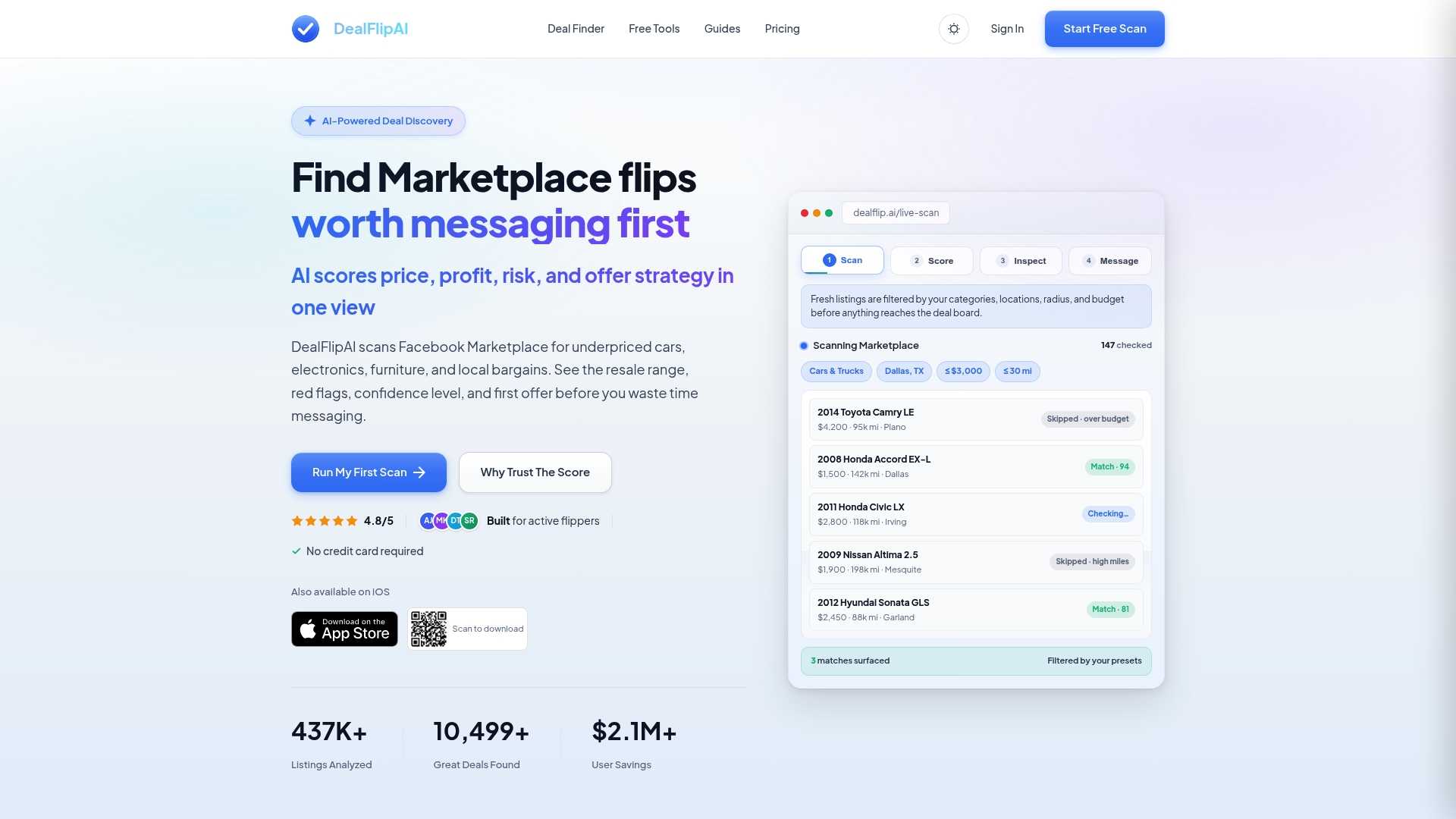
Here is how the features map to what you actually need:
- Real-time deal alerts — notify you the moment a high-scoring listing appears in your category and location, so you are first to message the seller
- Listing analyzer breaks down any Marketplace listing so you can see the profit math before you commit
Resellers using Dealflip AI report finding deals they would have missed entirely with manual searching. The platform's transparent scoring means you are not guessing — you are making offers based on real market data and seller signals.
Start with the free plan to run your first scans, then upgrade as your deal volume grows. The Facebook Marketplace deal finder is the fastest way to see what is available in your area right now.
Sources and further reading
- How To Flip Houses Successfully in 2026: Beginner’s Guide - YellowDeed
- House Flipping Guide: Essential Steps from Purchase to Profit | LYNK Mortgage
- 3-Part House Flipping Checklist (PDF Download Included)
- House Flipping Investment Property Advice | HGTV
- statista.com
- How To Flip a House: A Guide for Beginners - This Old House
- House Flip Checklist: From Offer to Closing Day
- How to Flip Houses Successfully in 2026: Beginner’s Guide - YellowDeed
- How Deal Alerts Reduce Manual Searching for Resellers