

Low-risk quick resale items are products with steady buyer demand, transparent pricing history, and minimal return risk, making them ideal for fast, profitable flips. The types of low-risk quick resale items that consistently perform include power tools, branded sneakers, tested small electronics, books, and branded clothing. These categories share one key trait: you can verify recent sold prices before you buy, which means profit is locked in at the point of purchase, not at the point of listing. Dealflip AI uses real marketplace data to score listings by profit potential and risk, giving you a clear edge when sourcing these items on Facebook Marketplace.
1. What are the best categories of low-risk quick resale items?
The strongest categories for fast resale share three qualities: steady demand, verifiable sold data, and low return rates. Popular resale categories include branded thrifted clothing, sneakers, vintage electronics, books, and tools, all backed by recent sold comps you can check before buying.
Power tools sit at the top of the list for margin per hour. Power tools average $89 profit per flip and sell within 3–14 days. Brands like DeWalt, Milwaukee, and Makita hold their value well and attract a steady pool of buyers on eBay and Facebook Marketplace.

Branded sneakers move even faster. Sneakers sell within 1–7 days and yield $30–$150 profit per pair. Nike, Adidas, and New Balance in popular sizes (men's 9–12) are the safest bets because demand is consistent and pricing is easy to verify.
Tested small electronics round out the top tier. Wireless earbuds, gaming controllers, and Bluetooth speakers sell quickly when listed in working condition with honest descriptions. The key word is "tested." An untested device is a liability, not an asset.
Books, branded clothing, and collectibles offer lower margins but faster inventory turnover. Hardcover textbooks, name-brand flannels from Patagonia or Carhartt, and sports trading cards all have active buyer communities and clear pricing benchmarks.
Pro Tip: Check recent sold comps on eBay before buying anything. If you cannot find at least 10 sold listings in the past 30 days, the item is not low-risk.
2. How to determine if a resale item is truly low-risk
Assessing risk before you buy is the single most important skill in reselling. Follow these steps every time you evaluate an item.
- Check sold listings, not active listings. Active listings show what sellers hope to get. Sold listings show what buyers actually paid. Use eBay's "Sold Items" filter and check at least 10 recent sold listings to confirm real demand.
- Inspect condition rigorously. Scratches, missing parts, and non-original accessories all reduce value. Grade the item honestly before you set a buy price.
- Test electronics before you commit. Power on the device, check all ports, and verify the screen. Testing electronics and documenting serial numbers prevents return fraud and protects you from "switch-and-return" scams.
- Calculate net profit, not gross. Subtract marketplace fees, shipping costs, and any cleaning or repair expenses from your expected sale price. What remains is your actual margin.
- Avoid emotional sourcing. Buy items because the data supports the purchase, not because you personally like them or think they look valuable.
Pro Tip: When you test an electronics item, photograph the serial number and document the screen condition with a timestamp. This single habit eliminates most return disputes before they start. For devices that need minor fixes, same-day electronics repair can restore resale value quickly.
3. Which marketplaces work best for quick-selling merchandise?
Matching your item to the right platform is as important as finding the item itself. Selling platforms match categories: eBay works best for electronics and collectibles, Poshmark for fashion, and Facebook Marketplace for bulky items.
- eBay gives you the widest buyer pool and the most transparent sold data. Use it for power tools, gaming gear, vintage electronics, and collectibles. The auction format also works well for rare items where you are unsure of the ceiling price.
- Poshmark, Depop, and Vinted are built for fashion. Branded clothing, sneakers, and accessories sell faster here than on general platforms because buyers come specifically for apparel.
- Facebook Marketplace is the best channel for bulky, heavy items. Local marketplace sales enable same-day deals for pickup-friendly items with zero shipping cost or risk. Furniture, large power tools, and appliances all move well here.
- Mercari works as a generalist platform with straightforward shipping. It attracts buyers who want a simple transaction, making it a solid secondary channel for small electronics and household items.
Use Dealflip AI's cross-listing profit calculator to compare your net margin across platforms before you list. Fees vary significantly, and the platform with the highest sale price is not always the one with the highest profit.
4. Common pitfalls to avoid when selecting resale inventory
Most beginner losses come from a small set of repeatable mistakes. Recognizing them early saves you real money.
- Buying untested electronics. Untested electronics increase return risk and negative feedback. A $30 item that gets returned costs you time, shipping fees, and a damaged seller rating.
- Sourcing counterfeit-prone items. Luxury handbags, certain sneaker models, and designer sunglasses attract fakes. Platforms actively remove counterfeit listings, and buyers dispute them aggressively.
- Ignoring shipping weight and dimensions. A $50 profit on a heavy item can disappear entirely once you calculate actual shipping. Always weigh and measure before listing.
- Relying on stale pricing data. A sold comp from 18 months ago is not reliable. Markets shift. Always use recent data, ideally from the past 30–60 days.
- Posting low-quality photos. Listing quality directly impacts buyer confidence and resale speed. Blurry or poorly lit photos create doubt, and doubt kills sales.
"Profit is made at the point of purchase, not at the point of listing. If the numbers do not work when you buy, no amount of good photography or clever pricing will fix them later."
5. Practical tips for maximizing margin and turnover speed
Getting items sold quickly at a good margin requires consistent habits, not luck.
- Price from sold comps, not wishful thinking. Set your price at or slightly below the median of recent sold listings. This positions you as the obvious buy.
- Bundle related items. A drill paired with a matching battery and charger sells faster and at a higher total price than three separate listings. Buyers value convenience.
- Calculate fees before you list. Marketplace fees and shipping can consume profits if you do not account for them upfront. Use Dealflip AI's flip profit calculator to run the numbers before committing to a sale price.
- Write honest, detailed descriptions. State the condition clearly, list any flaws, and include model numbers. Buyers who know exactly what they are getting ask fewer questions and complete purchases faster.
- Rotate inventory quickly. Holding costs are real, even if they are just opportunity costs. If an item has not sold in 14 days, drop the price by 10–15% rather than letting it sit.
Pro Tip: Use the listing analyzer tool from Dealflip AI to check your listing quality before it goes live. A stronger listing means fewer questions, faster sales, and better reviews.
Key takeaways
The most profitable approach to quick resale is buying data-backed items in strong condition, matching them to the right platform, and pricing from recent sold comps every time.
| Point | Details |
|---|---|
| Top categories for fast flips | Power tools, branded sneakers, tested electronics, books, and branded clothing sell fastest with clear pricing data. |
| Profit is made at purchase | Check 10+ recent sold listings before buying to confirm real demand and a viable margin. |
| Platform matching matters | Use eBay for electronics, Poshmark for fashion, and Facebook Marketplace for bulky local pickups. |
| Test before you list | Testing electronics and documenting serial numbers prevents returns and protects your seller rating. |
| Fees reduce real profit | Always subtract marketplace fees and shipping from your expected sale price to find your true net margin. |
What I have learned from years of flipping low-risk items
My honest take on what actually works in 2026
Most beginners waste time chasing niche trends. They read about a hot category, flood into it, and then wonder why margins have collapsed by the time they show up. The resellers who build consistent income do the opposite. They pick boring, proven categories and get very good at evaluating condition and pricing.
Power tools and branded sneakers have been reliable for years, and they still are. The reason is simple: demand is steady, pricing is transparent, and buyers are motivated. You are not trying to convince anyone that something is valuable. The market already agrees.
The other lesson I keep coming back to is this: cash flow beats rare big wins. A $40 profit flipped three times a week beats a $300 profit that takes two months to close. Beginners often fixate on the biggest possible margin. Experienced resellers fixate on turnover. Knowing how to benchmark item market value is the skill that separates consistent earners from occasional lucky sellers.
Technology has also changed the game. Tools that score listings by profit potential and flag scam signals used to require hours of manual research. Now Dealflip AI does it in seconds. Use every data advantage available to you. The resellers who resist data tools are the ones leaving money on the table.
— Walsh Pex
Dealflip AI makes finding low-risk flips faster
Sourcing profitable items used to mean hours of manual research across multiple platforms. Dealflip AI cuts that time down by scoring Facebook Marketplace listings based on price, profit potential, and risk factors before you ever contact a seller.
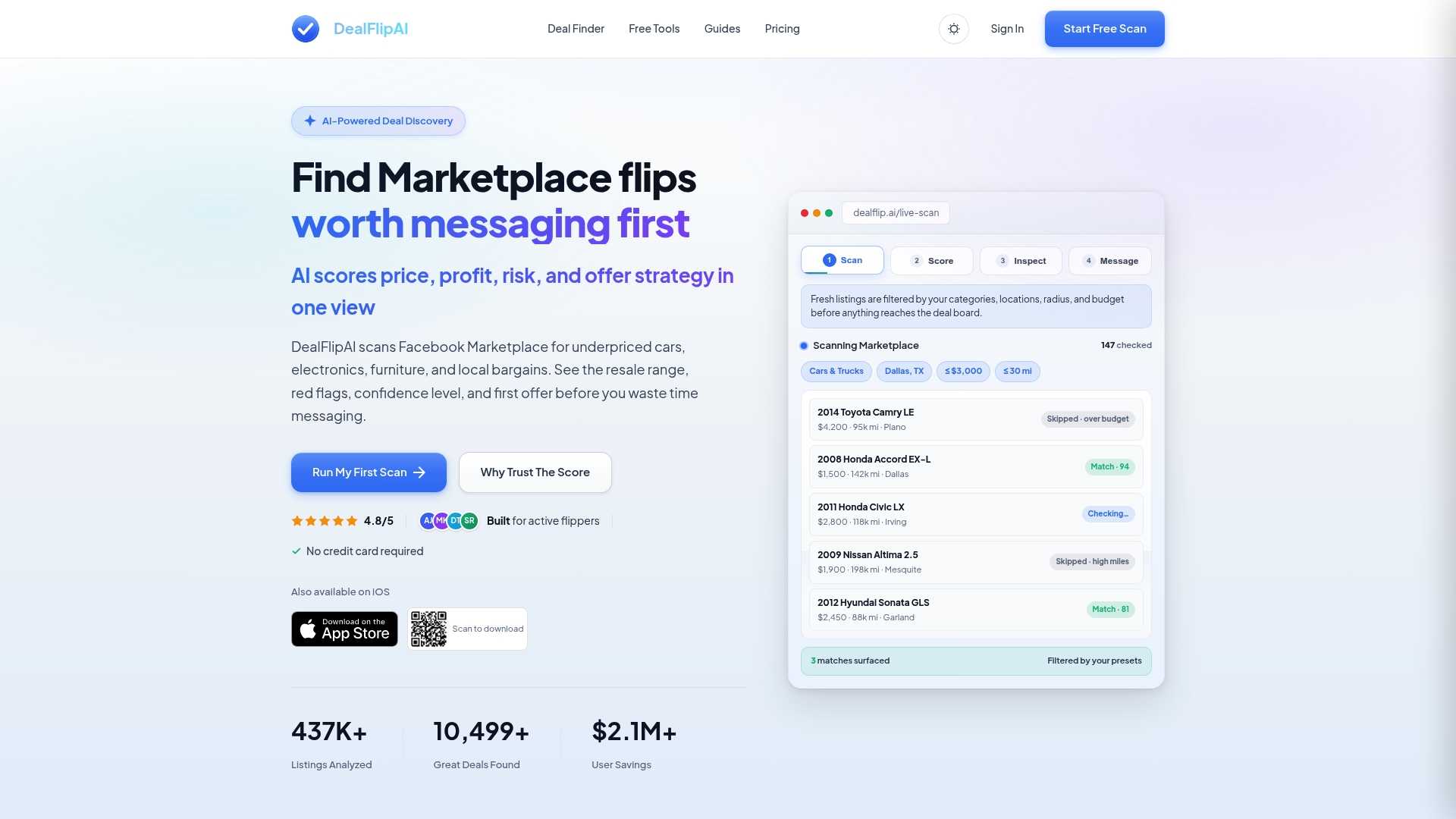
The cross-listing profit calculator shows your net margin on eBay, Mercari, and Poshmark side by side, so you always list on the platform that pays you most. The listing analyzer checks your draft before it goes live, catching weak descriptions and pricing gaps. Real-time alerts surface fresh listings before other buyers see them. If you want to source smarter and price with confidence, Dealflip AI's free reseller tools are the fastest way to get there.
FAQ
What are the safest types of items to flip for beginners?
Power tools, branded sneakers, and tested small electronics are the safest categories because they have steady demand and transparent pricing from recent sold listings. Avoid untested electronics and counterfeit-prone items until you have more experience.
How do I know if an item will sell quickly?
Check eBay's sold listings filter and look for at least 10 sales in the past 30 days at a consistent price. High sell-through rate and recent sold comps confirm that buyers are actively purchasing the item right now.
Which platform sells items the fastest?
Facebook Marketplace moves bulky items fastest through local pickup, while eBay offers the widest buyer pool for electronics and collectibles. Matching your item type to the right platform is the single biggest factor in turnover speed.
How do I avoid losing money on electronics?
Test every device before you buy it, document the serial number, and photograph the screen condition. Testing and documenting electronics is the best defense against return fraud and the most common source of beginner losses.
Do marketplace fees really affect profit that much?
Yes. Platform fees on eBay, Poshmark, and Mercari typically range from 10%–15% of the sale price, and shipping adds more. Always calculate fees and shipping before setting your buy price, not after.