

AI prioritizes high quality listings by analyzing a composite of performance and trust signals simultaneously, not by relying on any single metric like price. Platforms across online marketplaces use listing completeness, content freshness, response metrics, and buyer intent alignment to decide which products surface first. Understanding how AI improves listings gives you a real edge as a reseller or flipper. Dealflip AI applies this same multi-signal logic to Facebook Marketplace, scoring deals by profit potential, risk, and seller behavior so you can act before the competition does.
How AI prioritizes high quality listings: the core signals
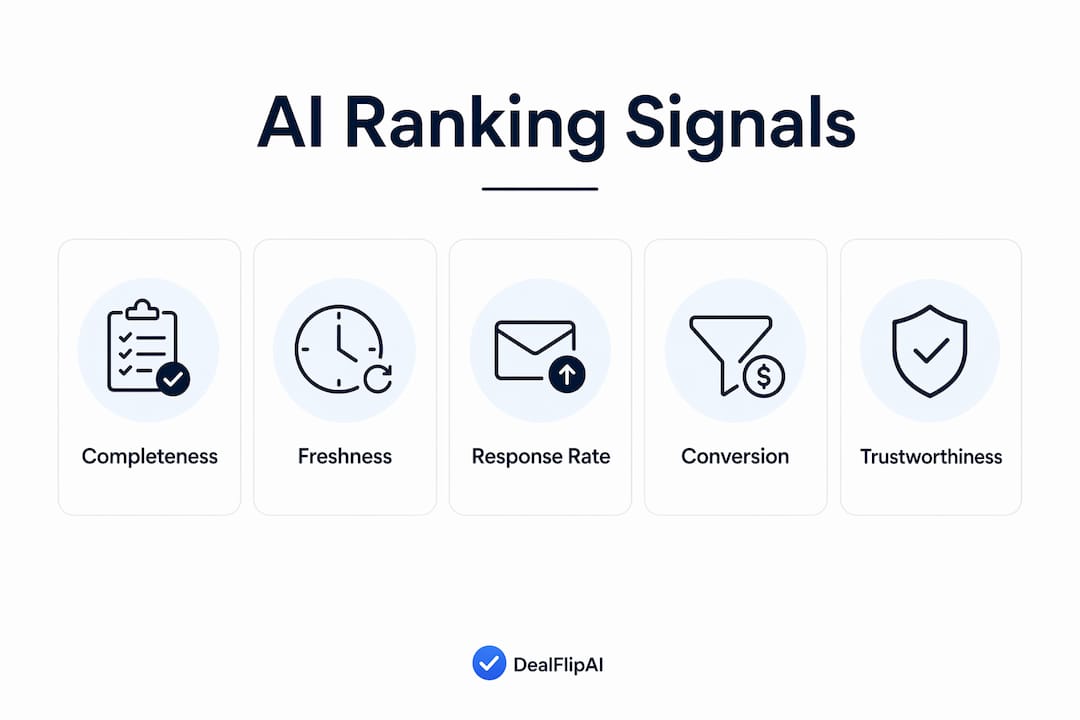
AI ranking is defined by composite scoring, where multiple trust signals are weighed together rather than any single factor dominating the result. Missing even one major signal can drop your listing out of the top results. The signals that matter most in 2026 are consistent across most major platforms.
The primary AI ranking factors include:
- Listing completeness: Every data field filled in, including dimensions, condition, brand, and category. Incomplete listings give AI less to work with, so they rank lower.
- Response metrics: How fast you reply to buyer inquiries and your overall response rate. Automated or instant replies consistently outperform manual responders in AI ranking systems.
- Conversion rate per impression: The percentage of viewers who click, save, or inquire. A listing that gets views but no action signals low relevance to AI.
- Content freshness: Regular updates to photos, descriptions, and feature details. AI treats stale content as a sign of inactive management.
- Buyer-match signals: How well your listing aligns with what a specific buyer is searching for, based on their past behavior and query patterns.
- Review sentiment and sub-scores: AI composite models weigh granular review sub-metrics like accuracy and responsiveness more heavily than a single overall star rating.
The key insight here is that top AI ranking factors in 2026 treat price as secondary. Consistent investment across all six signals outperforms a low-price strategy every time. For resellers, this means a well-described, frequently updated listing at a fair price will beat a rock-bottom listing with thin details.
Pro Tip: Run a quick audit of your active listings and check how many fields you left blank. Each empty field is a missed signal that AI uses against your ranking.

Does structured data actually change how AI reads your listing?
Structured data is the difference between AI guessing what your listing means and AI knowing exactly what it means. Schema markup, specifically the LocalBusiness and Product schemas from schema.org, tells AI systems how to categorize and extract your listing details reliably. Without it, AI has to infer, and inference leads to errors.
Here is how to apply structured data principles to your listings, even on platforms that handle markup automatically:
- Write in modular paragraphs. Each paragraph should answer one buyer question: What is it? What condition is it in? What does it include? AI extracts answers more accurately from focused, single-topic paragraphs.
- Use factual, specific language. Replace "great condition" with "no scratches, original box included, purchased in march 2024." Specific language reduces the chance of AI misrepresenting your listing.
- Label features clearly. List specs as labeled pairs: "Brand: Sony. Model: WH-1000XM5. Color: Black." This mirrors how schema markup structures data and makes your listing machine-readable.
- Answer buyer questions in the description. Listings that include buyer queries in their descriptions see a 35% increase in AI-driven search surface rate and a 28% higher click-through rate on AI-generated search summaries.
- Avoid marketing fluff. Phrases like "amazing deal" or "must see" carry no semantic value for AI. They dilute the signal density of your listing.
Listings with RealEstateListing and LocalBusiness schema appeared in AI answers 2.4 times more frequently than unstructured listings. That ratio applies to product listings too. The more clearly you label your item's features, the more often AI surfaces it to the right buyer.
Pro Tip: Before posting, read your listing description aloud and ask: "Does every sentence answer a question a buyer would actually type?" If a sentence doesn't answer a real question, cut it.
How does AI ranking differ across marketplaces?
Every marketplace runs its own AI algorithm, and platform-specific optimization is not optional if you sell across multiple channels. Applying one platform's logic to another is one of the most common mistakes resellers make.
Here is how the major platforms differ:
- Facebook Marketplace: Prioritizes local relevance, listing freshness, and seller response speed. Listings that get quick replies and regular updates stay near the top of local search results.
- Google Shopping: Blends technical content quality with authority signals. Accurate product titles, GTIN numbers, and detailed attributes drive visibility. Google rewards content authority and technical site quality over engagement speed.
- Amazon: Uses intent-based context models, including systems like COSMO and Rufus, to match listings to buyer intent at the moment of search. Keyword placement in titles and bullet points still matters, but semantic relevance to the buyer's actual goal matters more.
- Airbnb: Rewards rotation speed and guest-match personalization. Hosts who update their listings frequently and respond instantly rank higher, regardless of price.
The practical takeaway for resellers is this: templated, channel-specific content outperforms a single generic listing copy pasted across platforms. Writing a Facebook-specific description, a Google Shopping-specific title, and an Amazon-specific bullet set takes more time upfront but pays off in visibility across all three. You can also apply AI pricing optimization principles to calibrate your price point for each platform's buyer expectations separately.
What operational tactics keep listings at the top over time?
Treating your listings as active business assets, not static posts, is the single most important mindset shift for long-term AI visibility. AI ranking algorithms penalize stale content and reward continuous updates. A listing you posted three months ago and never touched is losing ground every day.
Here are the tactics that sustain top AI ranking over time:
- Schedule regular content refreshes. Update your photos, description, or feature list at least once every two to four weeks. Even small changes signal active management to AI systems.
- Automate your response workflow. Set up saved replies or auto-responses for common buyer questions. Faster response times directly improve your ranking on most platforms.
- Track engagement metrics weekly. Monitor clicks, saves, and inquiry rates for each listing. A drop in any of these signals that your listing needs a refresh before AI demotes it further.
- Test description variations. Swap out your opening sentence or reorder your feature list and watch whether engagement improves. Treat each listing like a small experiment.
- Update photos seasonally. New photos signal freshness to AI. Listing freshness goes beyond price changes. It includes meaningful content updates like photos, descriptions, and amenity lists that show active management.
The fresh listing advantage is real and measurable. Resellers who build a weekly refresh habit into their workflow consistently outperform those who post and walk away. You can also learn how to filter low-quality listings fast to understand what AI is actively penalizing, so you can avoid those patterns in your own posts.
Pro Tip: Set a recurring calendar reminder every two weeks to review your five lowest-performing listings. Update at least one element on each. Consistency beats perfection here.
Key Takeaways
AI prioritizes high quality listings by scoring multiple trust signals simultaneously, and resellers who maintain completeness, freshness, and fast response times across all their listings will consistently outrank those who focus on price alone.
| Point | Details |
|---|---|
| Multi-signal scoring | AI ranks listings using completeness, freshness, response rate, and buyer-match signals together, not price alone. |
| Structured data wins | Clear, labeled, factual listing descriptions help AI extract and surface your product more accurately and more often. |
| Platform-specific strategy | Each marketplace uses a different AI model, so tailor your listing content to the specific platform's ranking logic. |
| Active maintenance required | Updating photos, descriptions, and response workflows regularly prevents ranking decay over time. |
| Engagement metrics matter | Clicks, saves, and inquiry rates are direct inputs into AI ranking, so monitor them weekly and act on drops. |
What I've learned about AI listing quality after years in the resale market
Most resellers treat AI optimization like a one-time checklist. Fill in the fields, write a decent description, post the listing, and move on. That approach worked in 2020. It does not work now.
What I've seen consistently is that the resellers who win are the ones who treat their listings the way a retailer treats a product page. They test headlines. They swap photos. They watch which listings get saved but not purchased, and they ask why. That curiosity is what separates a $200-a-month side hustle from a $2,000-a-month operation.
The other thing worth saying plainly: AI does not reward hustle. It rewards consistency and signal quality. You can post 50 listings a week, but if they are all thin, generic, and never updated, AI will bury them. Ten well-maintained listings with complete data, fast replies, and fresh photos will outperform 50 neglected ones every time.
Brand voice also matters more than most resellers realize. Listings optimized with a consistent voice outperform generic AI-generated copies and maintain buyer trust. When your tone, level of detail, and format are consistent across all your listings, buyers recognize your style and AI recognizes your reliability as a seller.
The resellers I respect most are not the ones chasing every new AI feature. They are the ones who built a repeatable system, learned what their specific buyers respond to, and kept refining it. That is the real edge in 2026.
— Walsh Pex
Dealflip AI gives resellers a real edge on listing quality
Knowing what AI looks for in a listing is one thing. Having a tool that does the analysis for you is another. Dealflip AI scores Facebook Marketplace listings across price, profit potential, and risk factors so you can make faster, better-informed decisions without spending an hour researching each item.
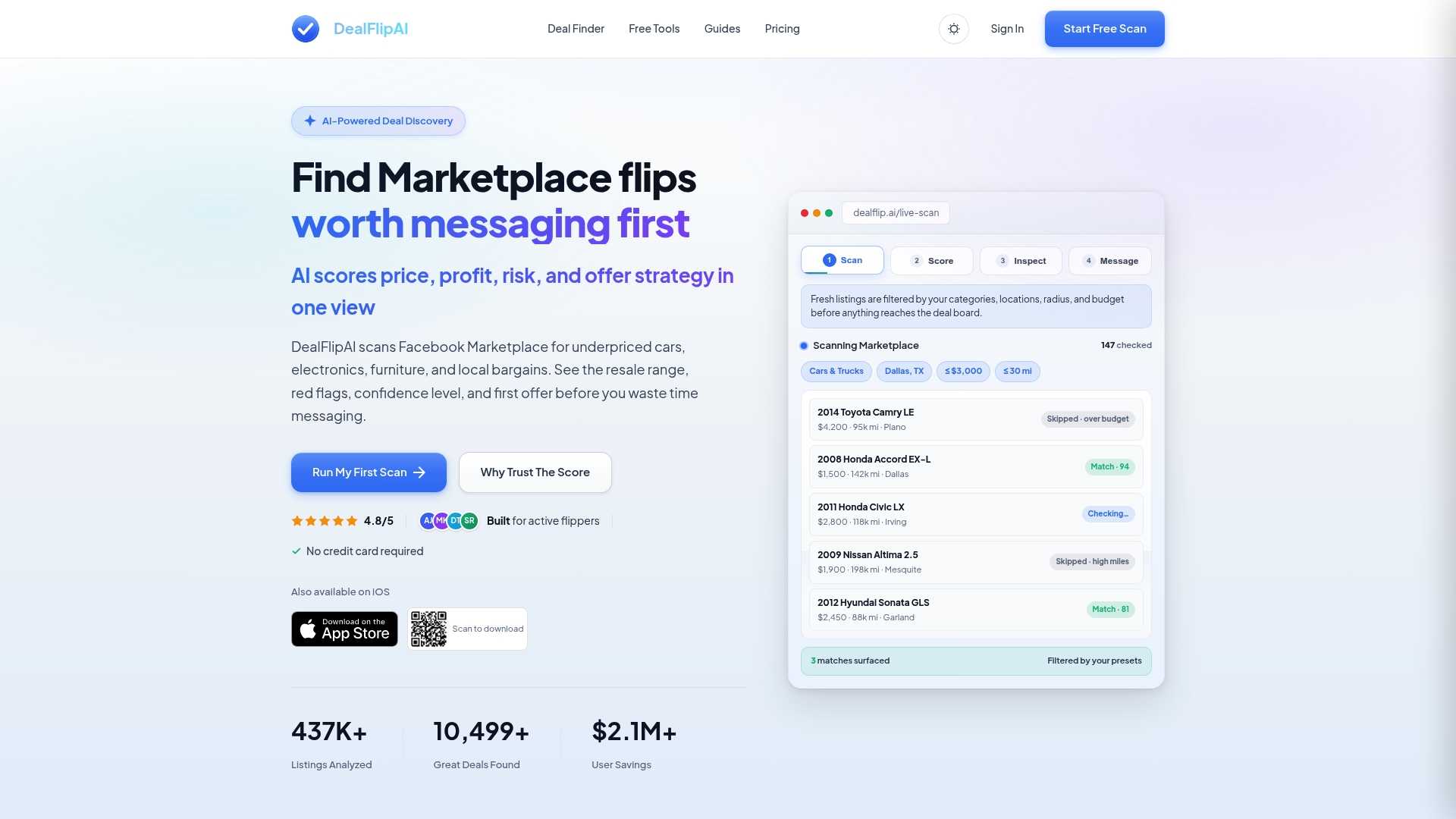
The listing analyzer tool breaks down what makes a deal worth pursuing and flags seller signals that suggest risk. If you want to compare margins across platforms before committing, the cross-listing profit calculator shows you exactly where each item earns the most. Dealflip AI also sends real-time alerts for fresh listings, so you see high-potential deals before other resellers do. For flippers who want to move faster and smarter, these tools replace guesswork with clear, data-backed decisions.
FAQ
What signals does AI use to rank listings higher?
AI ranks listings using a combination of completeness, response rate, content freshness, conversion rate per impression, and buyer-match signals. Properties or products that score well across four or more of these signals consistently appear at the top of AI-driven search results.
How does listing freshness affect AI ranking?
Listing freshness means more than changing your price. AI systems reward meaningful updates like new photos, revised descriptions, and updated feature lists, treating them as signs of active management and boosting visibility accordingly.
Does structured data really help marketplace listings?
Structured data helps AI extract and categorize your listing accurately. Listings with clear, labeled, factual descriptions appear in AI-generated answers significantly more often than vague or marketing-heavy listings.
Why do different platforms rank listings differently?
Each marketplace uses its own AI model with different priorities. Facebook Marketplace weights freshness and response speed, Amazon focuses on buyer intent matching, and Google Shopping rewards content authority and technical accuracy. A single listing copy rarely performs well across all three.
How often should resellers update their listings?
Resellers should update at least one element of their lowest-performing listings every two to four weeks. Regular updates prevent ranking decay and signal to AI that the listing is actively managed and relevant.