

Your listing price is the single most powerful factor determining how quickly an item sells and at what final price it closes. On Facebook Marketplace, where buyers scroll through dozens of similar listings in seconds, how listing price affects sale speed is not a minor detail. It is the difference between a sold notification today and a stale listing next month. This article breaks down the research, the psychology, and the practical strategies you need to price smarter and sell faster.
How does listing price affect sale speed?
The relationship between listing price and sale speed is direct and measurable. Price too high, and your item sits. Price accurately, and buyers move fast.
The clearest evidence comes from the housing market, which mirrors online marketplace dynamics more closely than most sellers realize. 57% of U.S. home sales in 2025 required at least one price reduction before closing. That means more than half of all sellers had to cut their price because they started too high. Properties that sold within 30 days, by contrast, consistently sold at or above asking price. The pattern is consistent: accurate pricing from day one produces faster sales and better final prices.
"Sellers who test the market with a high initial price typically degrade their own listing's performance and reduce speed of sale." — Redfin research on pricing accuracy
Even small overpricing adds days or weeks to your time on market. On Facebook Marketplace, where buyer attention spans are short and competing listings are always one scroll away, those extra days translate directly into lost sales.
Here is what the data shows about the impact of listing price on sale outcomes:
| Pricing scenario | Typical outcome |
|---|---|
| Priced accurately from day one | Sells within days, at or above asking price |
| Priced 10%+ above market | Requires price cuts, sells below original ask |
| Multiple price reductions | Buyers suspect problems, lower offers follow |
| Priced within buyer search filters | Higher visibility, more qualified inquiries |

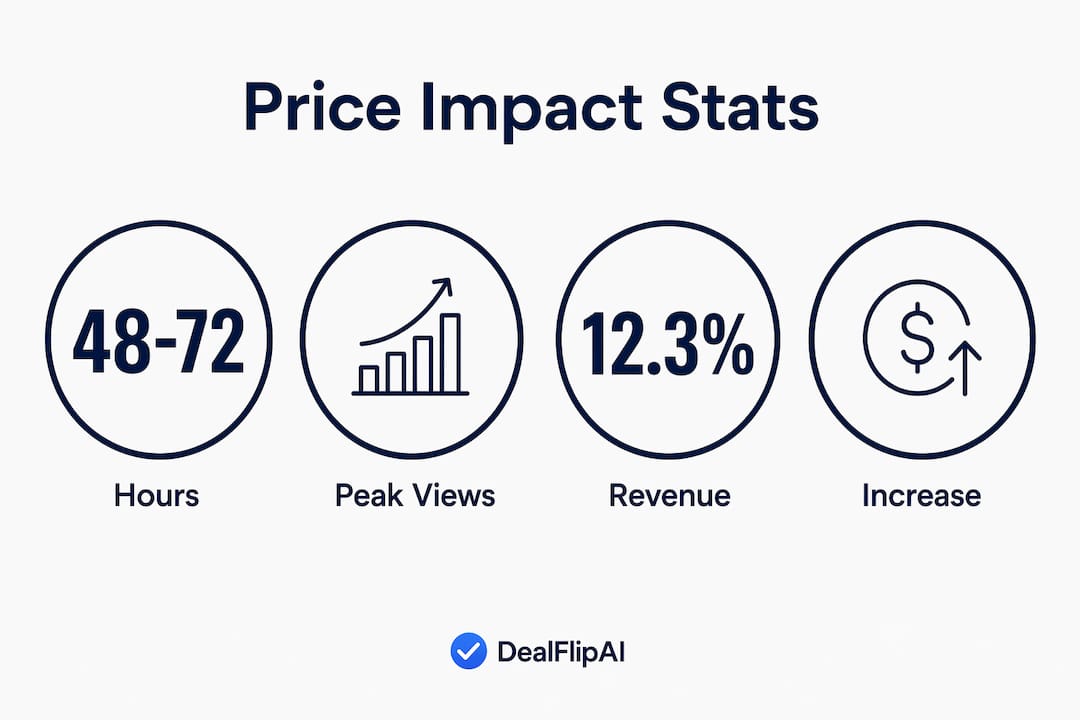
The takeaway is clear. The effects of price on sales are not gradual. They are front-loaded. The first 48 to 72 hours of a listing generate the most organic traffic. If your price is wrong during that window, you lose your best buyers permanently.
Does product type change how price influences selling?
Not every item responds to price changes the same way. This is where price elasticity of demand, or PED, becomes a practical tool for Facebook Marketplace sellers.
Price elasticity of demand measures how sensitive buyers are to price changes. High price elasticity (PED greater than 1) means a small price drop produces a disproportionately large increase in buyer interest and sales speed. Low elasticity means discounting has little effect on how fast the item moves. Understanding which category your item falls into changes your entire pricing approach.
- High elasticity items (common electronics, furniture, clothing): Small price reductions produce fast results. Dropping a used iPhone from $320 to $299 can double your inquiry volume overnight because buyers are comparison shopping across many similar listings.
- Low elasticity items (collectibles, vintage pieces, niche tools): Price cuts do not dramatically speed up sales because the buyer pool is small regardless of price. Patience matters more than discounting here.
- Unique or atypical goods: Research shows these items have higher list price ratios relative to expected sale price and longer marketing times. You can price higher, but you are waiting for the right buyer rather than attracting volume.
Standardized products, things like a specific model of gaming console or a popular brand of power tool, sell fastest when priced at or slightly below the market average. Buyers already know what the item is worth. Your job is simply to be the most competitive option in their search results.
Pro Tip: Before you list, search Facebook Marketplace for the exact item you are selling. Filter by "sold" listings if possible, or check recently listed prices. This gives you a real-time read on what buyers are actually paying, not just what sellers are asking.
Price elasticity testing also helps you protect your margins. Knowing your break-even point before you list means you can discount strategically without accidentally selling at a loss.
What does overpricing actually do to buyer psychology?
Overpricing does not just slow down your sale. It actively works against you in ways that a later price cut cannot fully fix.
The first problem is anchoring. When a buyer sees your listing priced above market, that number becomes their reference point. Overpricing creates a value deficit in the buyer's mind, causing them to search for reasons the item is not worth the price rather than reasons to buy it. They start scrutinizing photos for damage, reading your description for red flags, and comparing your listing unfavorably to cheaper alternatives.
The second problem is visibility. Facebook Marketplace buyers use price filters constantly. Listings priced outside buyer search filters simply do not appear in results. If most buyers searching for your item set a maximum of $150 and you list at $175, you are invisible to the majority of your potential buyers from the moment you post.
The third problem is the "days on market" signal. Buyers notice when a listing has been up for weeks. A long time on market raises immediate suspicion. Buyers assume something is wrong with the item, the seller, or both. This suspicion does not disappear when you drop the price.
"Repeated price cuts signal desperation and erode negotiating power, causing buyers to make lower offers than they otherwise would." — Redfin, factors affecting sale speed
The listing price impact on market perception is cumulative and largely irreversible. A listing that starts overpriced and gets cut twice is in a worse position than a listing that started at the right price, even if both end up at the same number.
How to price Facebook Marketplace listings for faster sales
Applying an optimal listing price strategy on Facebook Marketplace does not require guesswork. It requires a repeatable process.
-
Research comparable sold prices first. Search for your item on Facebook Marketplace and note what similar listings are priced at. Use the Dealflip Facebook Marketplace Value Estimator to get an AI-driven estimate of what your specific item is worth based on current market data. This removes the guesswork from your starting price.
-
Identify your item's elasticity category. Is your item a common, standardized product or something unique? Common items need competitive pricing from day one. Unique items can carry a premium but require patience and a buyer-specific description.
-
Price within buyer search filters. Most buyers on Facebook Marketplace filter by price range. Set your price at or just below a round-number threshold. Listing at $95 instead of $105 keeps you inside the "$0 to $100" filter for buyers who set that range.
-
Use AI tools to predict your optimal price point. Dealflip's AI offer suggestion tool analyzes market data and seller signals to recommend a starting price that balances sale speed with profit. This is especially useful for resellers managing multiple listings at once.
-
Set a price review schedule. If your listing gets views but no messages within 48 hours, your price is likely the barrier. If it gets no views at all, your price may be pushing you outside search filters entirely. Drop by 10 to 15 percent and monitor for 24 hours. Avoid multiple small cuts. One meaningful reduction is more effective than several small ones.
-
Know your floor before you list. Calculate your break-even price including any fees, shipping costs, or original purchase price. The Dealflip shipping fee calculator helps you factor in total costs so your price drop never accidentally takes you below profitability.
Pro Tip: Dynamic pricing research shows that price adjustments increase revenue by 12.3% on average, but also raise cart abandonment by 8.7%. On Facebook Marketplace, this means one well-timed price drop beats a series of small reductions. Make your adjustment count.
Key takeaways
Listing price is the primary driver of sale speed on Facebook Marketplace, and getting it right from day one produces faster sales and better final prices than any post-listing correction.
| Point | Details |
|---|---|
| Price accuracy from day one | Listings priced correctly sell faster and at or above asking price. |
| Overpricing creates lasting damage | High initial prices reduce visibility and create buyer suspicion that discounts cannot fully reverse. |
| Elasticity determines your strategy | Common items need competitive pricing; unique items can carry a premium but sell slower. |
| Search filter alignment matters | Pricing within buyer filter ranges directly increases how many qualified buyers see your listing. |
| Set a price review schedule | Review views and messages within 48 hours and make one meaningful adjustment rather than several small cuts. |
Pricing is a decision, not a test
Here is what I have seen sellers get wrong more than anything else: treating the listing price as a starting point for negotiation rather than a signal to buyers. The idea of "pricing high to leave room" sounds logical. In practice, it costs you your best buyers before they ever message you.
The first 48 hours of any listing are when organic reach peaks. Facebook's algorithm surfaces new listings to relevant buyers automatically. If your price is off during that window, you burn your highest-traffic moment on unqualified views and no conversions. By the time you cut the price, the algorithm has already moved on to newer listings.
I have also seen sellers underestimate how much product type changes the equation. A used MacBook Pro and a vintage lamp are not the same pricing problem. The MacBook has dozens of comparable listings and buyers who know the market cold. The lamp has a narrow buyer pool and no obvious price anchor. Treating them with the same strategy produces predictably different results.
The sellers who consistently move items fast are the ones who do their research before they post, not after. They use tools like Dealflip's free reseller calculators to check market value, factor in costs, and set a price that works from the first day. They also know their floor, so when a buyer negotiates, they can respond with confidence rather than guessing.
Data-driven pricing is not complicated. It just requires doing the work upfront instead of reacting after the listing goes cold.
— Apex
Price smarter with Dealflip's free tools

Dealflip gives Facebook Marketplace sellers the data they need to price confidently from day one. The Facebook Marketplace Value Estimator uses AI to analyze current market listings and give you a realistic price range for your specific item, so you are not guessing or anchoring to an outdated number. The Listing Analyzer goes further, evaluating your listing's price, description, and photos to identify what is slowing down your sale. If you want to find well-priced items to flip for profit, the deal finder tool surfaces undervalued listings before other buyers spot them. All of these tools are free to use and built specifically for active resellers on Facebook Marketplace.
FAQ
How does listing price affect sale speed on Facebook Marketplace?
Listing price directly controls how many buyers see your item and how quickly they act. Prices set within buyer search filters generate more views, and accurate pricing relative to comparable listings produces faster offers and higher final sale prices.
What happens if I overprice my listing?
Overpriced listings receive fewer views because they fall outside buyer search filters, and buyers who do see them are more likely to scrutinize flaws rather than make an offer. Price reductions after a long time on market signal desperation and typically result in lower final offers.
How do I find the right price for my Facebook Marketplace listing?
Search for recently sold comparable items on Facebook Marketplace and use a tool like the Dealflip Facebook Marketplace Value Estimator to get an AI-based market price. Factor in your costs using a fee calculator to confirm your floor price before posting.
Does price elasticity matter for online marketplace sellers?
Yes. High-elasticity items like common electronics respond strongly to small price drops, while unique or collectible items have low elasticity and sell slowly regardless of price. Knowing your item's elasticity helps you decide whether to discount aggressively or hold firm and wait for the right buyer.
When should I reduce my listing price?
If your listing gets views but no messages within 48 hours, a price reduction of 10 to 15 percent is the right move. Make one meaningful cut rather than several small ones, since repeated reductions signal to buyers that the item may have problems.