

Benchmarking item market value is the practice of analyzing recent completed sales from equivalent products to determine a realistic and competitive resale price. The standard method calls for 5–10 sold transactions from the last 30–90 days, using only closed sales rather than active asking prices. This distinction matters because asking prices routinely overstate what buyers actually pay. Resellers and investors who master this process price with confidence, move inventory faster, and protect their profit margins on platforms like Facebook Marketplace.
How to benchmark item market value: primary methods and sources
The most reliable data for any market value assessment comes from completed sales, not listings. A completed sale proves what a real buyer paid under real conditions. An asking price proves only what a seller hopes to receive.
The three most widely used sources for sold comps are:
- eBay sold listings: Filter by "Sold Items" under search options. You get actual transaction prices, dates, and condition details. This is the most accessible free source for most product categories.
- Auction house archives: Houses like Heritage Auctions and Sotheby's publish hammer prices for collectibles, art, and high-value goods. These records carry strong credibility because the sales are verified and competitive.
- WorthPoint: A paid database covering millions of sold antiques, collectibles, and vintage items. WorthPoint is worth the subscription cost when you regularly buy and sell in those categories.
When pulling comps, filter by condition first. A "like new" sold price tells you nothing useful if your item is "good" condition. Choosing comps from the same marketplace and matching condition level avoids skewed valuations caused by mixing sale channels or quality tiers. A vintage camera sold at auction attracts a different buyer pool than the same camera sold on Facebook Marketplace, and the prices will reflect that gap.
Marketplace selection directly affects accuracy. Mixing comps from eBay, auction houses, and local peer-to-peer platforms in the same analysis distorts your price picture. Pick the channel that most closely matches where you plan to sell, then pull all your comps from there.

Pro Tip: When using eBay for comps, set the date filter to the last 30 days and sort by "Price + Shipping: Highest First." This quickly shows you the ceiling and floor of what buyers actually paid.
How to analyze sold listings and set a realistic price range
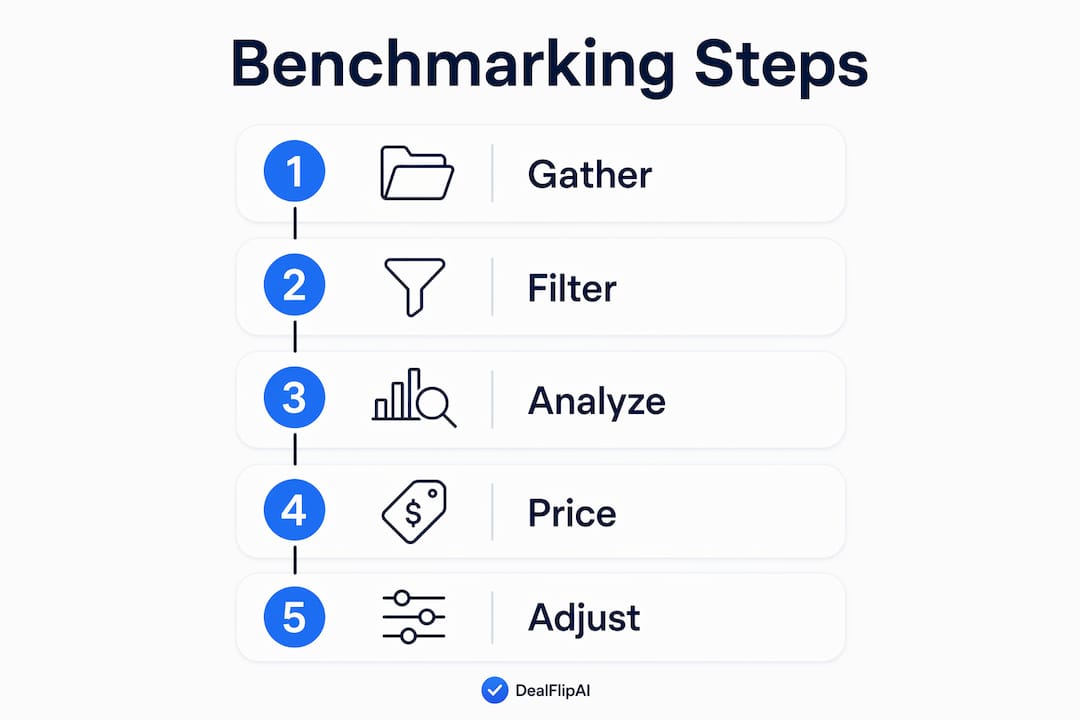
Once you have 5–10 solid comps, the analysis follows a clear process. You are looking for three numbers: the low, the median, and the high of your sold data set.
- List all sold prices from your comps in a column, from lowest to highest.
- Identify the median by finding the middle value. If you have 10 comps, average the 5th and 6th values. The median is more reliable than the average because it is not distorted by one unusually high or low sale.
- Weight by recency and condition. A sale from last week carries more weight than one from 75 days ago. A sale in identical condition carries more weight than one in better or worse shape.
- Set your price target based on your selling goal. Listing at the median sold price targets a standard sell-through of roughly 7–21 days. Top-range pricing works for patient sellers who can wait. Bottom-range pricing moves inventory fast when you need quick cash.
- Recheck your comps every 14 days if the item has not sold. Markets shift, and a price that was competitive two weeks ago may now be above the current ceiling.
Understanding the difference between market value, asking price, and appraisal value prevents costly mistakes. Market value reflects what a willing buyer pays today, not what a seller wants or what a tax assessor calculated last year. Appraisal value is an expert's formal opinion, often used for insurance or estate purposes. Asking price is simply a starting point in a negotiation.
| Price target | Best for | Expected timeline |
|---|---|---|
| Bottom of range | Fast cash, clearing inventory | 1–7 days |
| Median sold price | Standard resale, balanced approach | 7–21 days |
| Top of range | Patient sellers, rare or desirable items | 21+ days |
Pro Tip: If you are selling on Facebook Marketplace, price 5–10% above your true target. Local buyers almost always negotiate, so build that buffer in from the start.
You can also use a comparable market analysis framework to document your comps systematically. Keeping a simple spreadsheet with item name, sold price, condition, date, and platform turns your research into a reusable reference.
When to use AI tools and professional appraisals
AI valuation tools give you a fast ballpark estimate. They are useful for a quick sanity check, not a final pricing decision. AI estimates typically land within 20–40% of true market value, which is wide enough to cause real pricing errors if you rely on them alone. Use AI to screen items quickly, then confirm with sold comps before committing to a buy or listing price.
The right level of research depends on the item's value:
- Under $500: Self-research with sold comps is sufficient. Spend 10–15 minutes pulling eBay data and you will have a reliable number.
- $500–$1,000: Consider a professional opinion from a specialist dealer or experienced reseller in that category. The cost is low and the risk reduction is real.
- Over $1,000: A certified appraisal is worth the fee. Professional appraisals reduce valuation risk at higher values, and the documentation protects you in disputes or insurance claims.
- Over $5,000: A certified appraisal is not optional. At this level, a pricing error of even 10% represents a significant dollar loss.
Professional valuers apply multiple valuation methods and reconcile the results rather than relying on any single approach. That same discipline applies to your own research. Cross-checking eBay sold data against an auction archive or a specialist database gives you a much stronger price conclusion than any single source alone.
Dealflip AI takes a similar multi-signal approach for Facebook Marketplace listings. It scores listings based on price, profit potential, and risk factors, giving resellers a structured starting point before they dig into manual comp research.
Common pitfalls when benchmarking prices on peer-to-peer platforms
Most pricing mistakes on Facebook Marketplace and similar platforms share one root cause: using asking prices instead of sold prices. Asking prices average 30–80% higher than actual sold prices. That gap means a reseller who prices based on active listings will overprice consistently, hurting both visibility and sell-through rate.
The other common errors are easier to fix once you know them:
- Ignoring condition grading. Use standardized terms like "mint," "excellent," "good," and "fair" consistently. Mixing condition levels in your comps produces a meaningless price range.
- Mixing sale channels. A price from a specialty auction does not translate directly to a Facebook Marketplace sale. Stick to comps from the channel where you plan to sell.
- Skipping the buy price formula. Professional flippers use a simple rule: max buy price equals median sold price × 0.40. That 40% figure accounts for platform fees, shipping, time, and profit margin. If you cannot buy the item at or below that number, the flip likely does not pencil out.
- Setting prices and forgetting them. Markets move. An item that sat for three weeks needs a fresh comp check, not just a price drop.
"The reseller who wins is the one who knows what things actually sell for, not what people hope to get for them."
Tracking marketplace price trends over time also helps you spot seasonal patterns. Electronics tend to spike before the holidays. Outdoor gear moves in spring. Knowing these cycles lets you time your buys and listings for maximum return.
Key takeaways
Accurate item valuation requires sold comps, not asking prices, and the median of 5–10 recent sales from the matching marketplace and condition tier is your most reliable pricing anchor.
| Point | Details |
|---|---|
| Use sold comps only | Pull 5–10 completed sales from the last 30–90 days; ignore active asking prices entirely. |
| Match marketplace and condition | Comps from the wrong channel or condition tier produce a distorted price range. |
| Price to your goal | Median sold price for standard sales, top range for patience, bottom range for speed. |
| Apply the buy price formula | Max buy price equals median sold price × 0.40 to protect your profit margin. |
| Recheck every 14 days | Markets shift; update your comps and price if the item has not sold within two weeks. |
Why I trust sold data over everything else
Walsh Pex here. After years of watching resellers overpay for inventory and underprice their listings, I am convinced that the single biggest skill gap in this business is the refusal to look at actual sold prices. People browse active listings, see a $200 asking price, and assume that is what the market will bear. It is not. It is what someone hopes the market will bear.
The 30–90 day sold comp window is not arbitrary. It captures enough transactions to show a real pattern while staying current enough to reflect today's demand. Go back six months and you are pricing based on a market that may no longer exist.
I also want to push back on the idea that AI tools are a shortcut you can rely on. They are a screening tool. They help you decide whether an item is worth researching further. The actual pricing decision still requires you to pull comps, check condition, and think about your specific selling channel. AI gets you to the starting line faster. It does not cross the finish line for you.
The resellers I have seen build consistent income treat comp research like a non-negotiable step, not an optional one. They spend 10–15 minutes per item, document their findings, and revisit prices on a schedule. That discipline is what separates profitable flippers from people who break even.
— Walsh Pex
Dealflip AI tools for faster Facebook Marketplace valuation
Knowing the method is one thing. Having the right tools cuts your research time significantly.
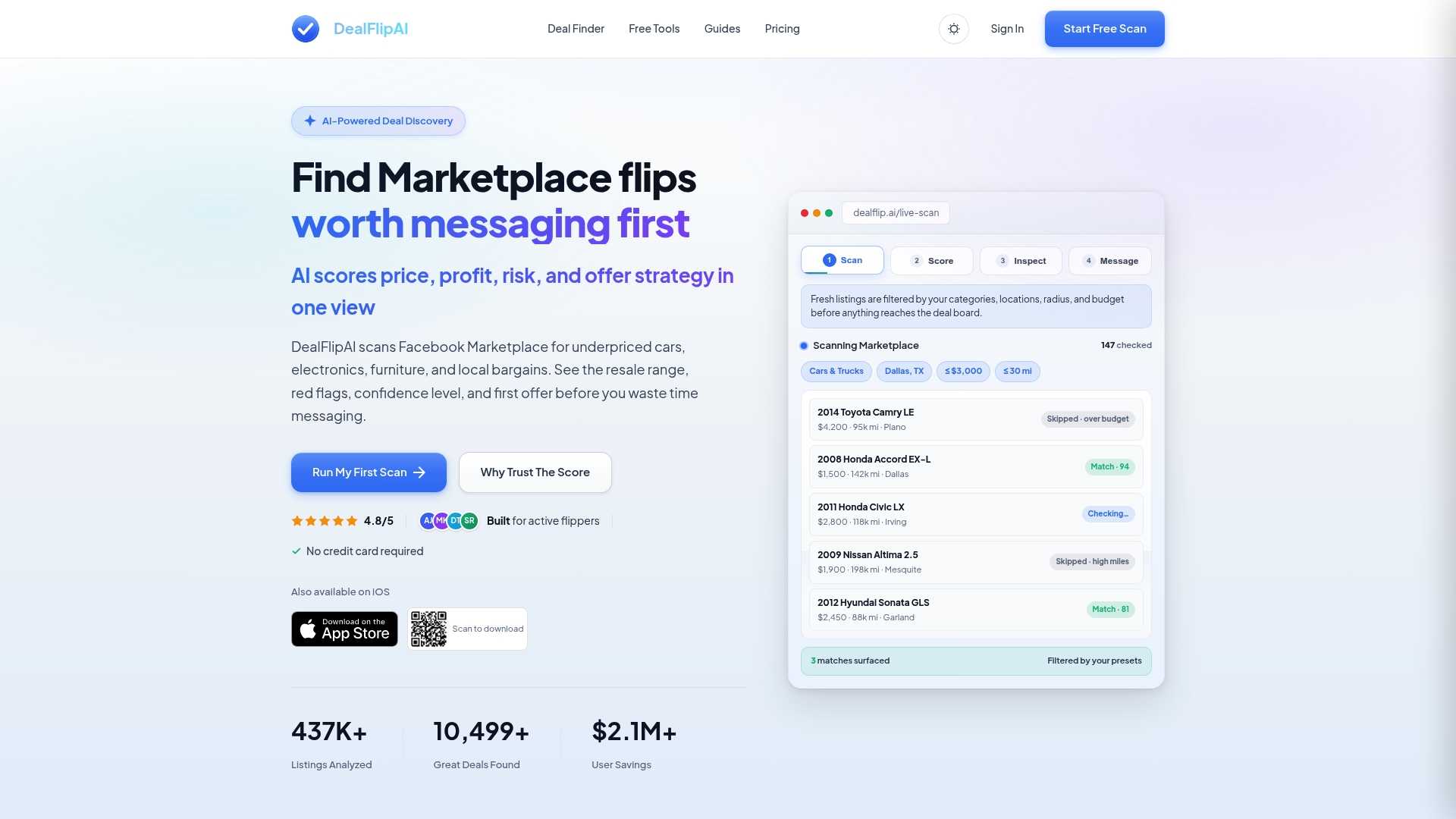
Dealflip AI builds its analysis directly around Facebook Marketplace listings. The listing analyzer tool scores each deal on price, profit potential, and risk, so you can see at a glance whether a listing is worth pursuing. The flip profit calculator lets you plug in your buy price, estimated sell price, and fees to confirm your margin before you commit. Both tools are free to use and designed for resellers who want data behind every decision, not gut feelings. If you are serious about pricing accurately on Facebook Marketplace, these calculators belong in your regular workflow.
FAQ
What is the most reliable way to assess item worth?
The most reliable method is analyzing 5–10 completed sales from the last 30–90 days on the platform where you plan to sell. Sold prices reflect real buyer behavior; asking prices do not.
How do I benchmark item market value without paid tools?
eBay's "Sold Items" filter is free and covers millions of product categories. Filter by condition and date, pull 5–10 comps, and calculate the median price for a solid baseline.
When does a professional appraisal make sense?
For items valued under $500, self-research is sufficient. For items over $1,000, a professional opinion reduces risk. For items over $5,000, a certified appraisal is the standard recommendation.
What is the max buy price formula for flipping?
Professional flippers calculate max buy price as median sold price × 0.40. That figure accounts for platform fees, time, and profit margin, and keeps your resale math profitable.
Why do asking prices mislead resellers?
Asking prices average 30–80% higher than actual sold prices. Pricing based on active listings causes consistent overpricing, which hurts search visibility and slows sell-through on peer-to-peer platforms.