

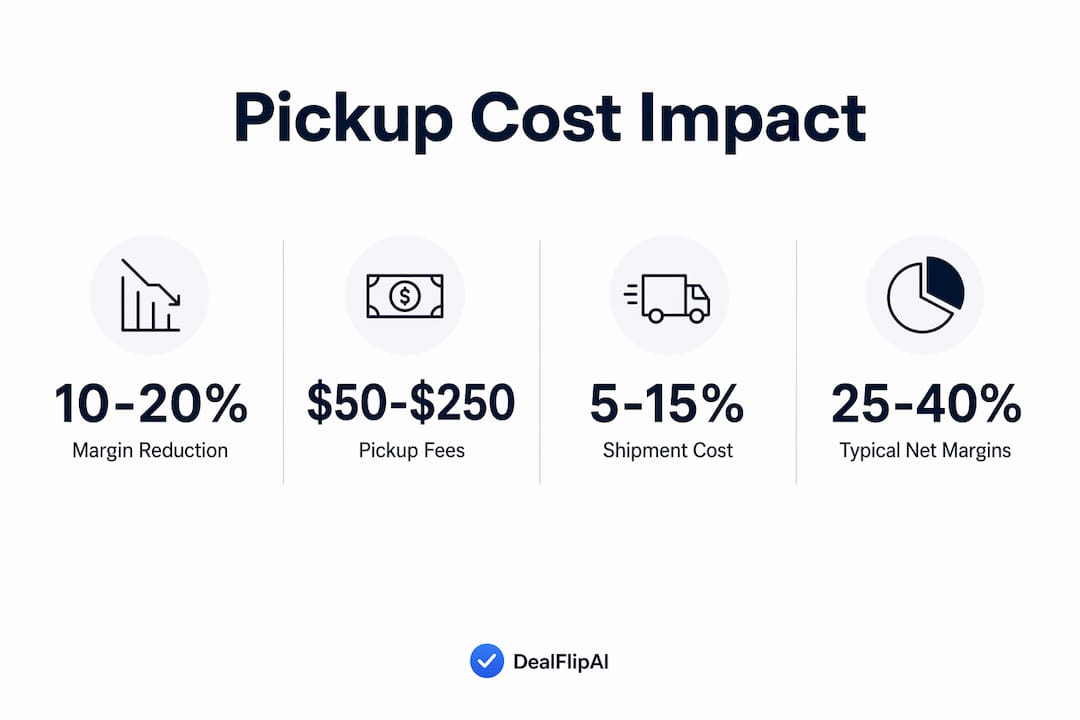
The role of pickup cost in margins is the share of logistics expense that directly reduces the profit you earn on resold goods, and it is one of the most underestimated numbers in reselling. Standard pickup fees run $50 to $250 per shipment, and that is before residential surcharges, fuel adjustments, or drive time. For resellers and flippers working Facebook Marketplace or local sourcing routes, these costs can quietly erase 10–20% of your margin before you ever list an item. Dealflip AI tracks these variables so you can price with confidence from the start.
How do pickup costs affect reseller profit margins in practice?
Pickup cost is the logistics expense of collecting goods from a source location, whether that is a seller's home, a warehouse, or a freight terminal. The impact on your bottom line is direct and measurable.
Pickup fees inflate total shipment costs by 5–15% on top of the base linehaul rate. That means a $200 freight move can carry $10–$30 in pickup charges you did not budget for. Multiply that across dozens of flips per month and the damage compounds fast.

The margin benchmarks for resale and junk removal businesses tell the same story. Solo operators net 25–40% while multi-truck fleets drop to 18–32%, largely because fleet operations carry higher fixed pickup costs per route. Solo flippers who control their own pickup schedule and geography hold a real structural advantage.
The hidden cost most beginners miss
Truck roll cost is the expense category that surprises new resellers most. It covers drive time, fuel, vehicle depreciation, insurance, and the opportunity cost of hours spent traveling rather than selling. Truck roll totals $75–$150 per service call, and that number rises sharply for distant or rural pickups. A flip that looks profitable on paper can turn negative once you account for 90 minutes of unpaid drive time.
Wait times and residential surcharges add another layer. Urban LTL pickup fees run $50–$100, while rural FTL pickups reach $150–$250. Express services carry a 20–50% premium on top of standard rates. These are not edge cases. They are routine costs that belong in every margin calculation you run.
| Cost Type | Typical Range | Margin Impact |
|---|---|---|
| Urban LTL pickup fee | $50–$100 | Reduces net margin 5–10% |
| Rural FTL pickup fee | $150–$250 | Reduces net margin 10–20% |
| Residential surcharge | $25–$75 | Adds flat cost per stop |
| Truck roll (drive time, fuel, depreciation) | $75–$150 per call | Often unbillable; erodes hourly rate |
| Express service premium | 20–50% above base | Compresses margin on time-sensitive flips |
Pro Tip: Before you commit to any pickup, run the full truck roll number through a tool like Softscotch's truck roll calculator. If the drive time alone costs $100 and your expected flip profit is $120, you are working for $20 per trip.
Pickup vs. delivery: which one actually costs less?
The common assumption is that picking up an item yourself is always cheaper than paying for delivery. That assumption is often wrong.
Pickup beats delivery on raw receipt cost with small, close orders. Delivery wins when orders are large, weather is bad, or app promotions apply. For resellers, the math shifts further because your time has a dollar value attached to it.
"Evaluate 'cost plus hassle,' not just raw fees. A pickup that saves $15 in delivery fees but costs you 45 minutes of drive time is not a win if your effective hourly rate is $40." — Fast Food Pickup vs Delivery: Cost and Time Guide
Switching from delivery to customer self-pickup can increase margins by roughly 20% per order by removing delivery fees and packaging costs. But that same model requires parking, staffing, and coordination that offset savings if you are not set up for it.
Here is when each option makes sense for resellers:
- Self-pickup wins when the item is within 15 minutes, the profit margin is above 35%, and no special packaging is needed.
- Delivery wins when the item is bulky, the buyer is far away, or your time is better spent sourcing new inventory.
- Negotiated carrier pickup wins when you move volume regularly and can lock in flat rates with a freight partner.
- Local marketplace pickup wins when you are selling, not buying, and want to eliminate your own shipping risk entirely.
Understanding local pickup and shipping risk is a skill that separates casual flippers from consistent earners.
How to build pickup expenses into your pricing strategy
Pricing without accounting for pickup expenses is the fastest way to sell at a loss without realizing it. The fix is a structured cost-plus approach that treats pickup as a line item, not an afterthought.
Here is a straightforward method to protect your margins:
- Calculate your total acquisition cost. Add the purchase price, pickup fee, fuel, and any surcharges. If you drove to get the item, include your truck roll cost at a realistic hourly rate.
- Add indirect costs. Storage, cleaning, photography, and platform fees all belong in your cost base. Fulfillment cost components for e-commerce resellers typically include more line items than most beginners expect.
- Set your breakeven price. This is the minimum you can accept without losing money. Breakeven pricing must include all costs, including pickup fees, to be accurate.
- Apply your target margin on top. For small or distant pickups, target 30–40% net margin to cover fixed truck roll costs. For high-volume, close-range flips, 20–25% net is sustainable.
- Use a calculator before you commit. The Flip Profit Calculator from Dealflip AI lets you input pickup costs, fees, and expected sale price to see your real margin before you drive anywhere.
Pro Tip: Negotiate volume rates with local haulers or freight carriers if you flip more than 10 items per month. A recurring contract can cut per-pickup costs by 15–25% compared to one-off rates.
Comparing fulfillment models side by side helps you make faster decisions on the ground:
| Fulfillment model | Avg. pickup cost | Best for | Margin risk |
|---|---|---|---|
| Self-pickup, local | $10–$40 (fuel + time) | High-margin, nearby items | Low if time is tracked |
| Freight carrier pickup | $50–$250 | Bulky or long-distance items | High if surcharges ignored |
| Customer self-pickup (selling) | $0 | Facebook Marketplace local sales | Very low |
| Third-party logistics | Variable | High-volume resellers | Medium, contract dependent |
What tools and strategies actually minimize pickup costs?
Controlling pickup expenses starts with visibility. You cannot manage a cost you cannot see until the invoice arrives.
- Use transparent quoting platforms. FreightAmigo provides instant rate visibility so you see pickup fees before you commit to a shipment. Proactive carrier selection and site assessments can cut pickup costs in half compared to booking blind.
- Apply predictive risk analysis. Predictive risk tools reduce pickup defects and related costs by up to 30% by routing sensitive loads away from high-risk carriers. For high-volume resellers, this kind of pre-emptive planning stabilizes margins across the board.
- Sort materials before disposal. Elite junk removal and resale operators reduce dump fees by 10–20% by sorting items for donation or recycling before paying to haul them away. That savings goes straight to net profit.
- Optimize your service area. Non-billable truck rolls are pure cost. Tightening your pickup radius to a defined geographic zone cuts fuel and drive time without sacrificing deal volume.
- Score deals before you go. Dealflip AI analyzes Facebook Marketplace listings and scores them on price, profit potential, and risk factors. You see whether a deal is worth the pickup cost before you leave the house.
Pro Tip: Check the hidden fees in fulfillment contracts before signing with any logistics partner. Accessorial charges like liftgate fees, inside delivery, and redelivery can add $50–$150 per stop that your original quote never showed.
Flexible pickup scheduling also matters more than most resellers realize. Matching your pickup windows to carrier off-peak hours can reduce express premiums and improve on-time rates. Dealflip AI's analysis of flexible pickup and offer success shows that resellers who adapt their pickup timing close more deals at better prices.
Key takeaways
Pickup costs are a direct margin expense, and treating them as core costs rather than incidental fees is the single most important shift resellers can make in their pricing approach.
| Point | Details |
|---|---|
| Pickup fees erode margins fast | Standard fees of $50–$250 plus surcharges can cut net margins by 10–20% per transaction. |
| Truck roll is the hidden killer | Drive time, fuel, and depreciation total $75–$150 per call and are rarely billed back to the buyer. |
| Pickup is not always cheaper | Self-pickup beats delivery only when the item is close, the margin is strong, and your time is accounted for. |
| Price from total cost, not purchase price | Build pickup fees, truck roll, and surcharges into your breakeven before setting a sale price. |
| Technology closes the visibility gap | Tools like Dealflip AI and FreightAmigo surface pickup costs before you commit, protecting margins at the decision point. |
Why I think most resellers are pricing one cost too late
I have watched hundreds of resellers run the same mistake. They calculate margin from purchase price to sale price and treat the drive to pick up the item as free. It is not free. It is just invisible until you add up a month of gas receipts and realize your "profitable" flips were actually paying you $8 an hour.
The industry data backs this up. Healthy service businesses target 20–30% net margins, but small or distant jobs require 30–40% to stay profitable once fixed truck roll costs are applied. Most beginners price for 20% and then wonder why the numbers do not add up at month end.
The resellers I have seen build real, repeatable income share one habit. They run the full cost calculation, including pickup, before they make an offer. Not after. Not when they are already in the car. Before. That one shift changes everything about how you evaluate a deal.
Technology has made this easier than it has ever been. Platforms that score listings and surface hidden cost factors remove the guesswork that used to cost beginners their first few months of profits. The resellers who adopt these tools early are not just saving money. They are building a decision-making process that scales.
The soft costs are the ones that will get you. Opportunity cost, wait time, re-delivery fees, and accessorial charges do not show up on a listing. They show up on your bank statement. Build them in from the start, or they will find you later.
— Walsh Pex
See your real margin before you make an offer
Dealflip AI is built for resellers who want to know their numbers before they commit. The Flip Profit Calculator lets you input purchase price, pickup cost, platform fees, and target sale price to see your actual margin in seconds. The Shipping Fee Calculator handles Facebook Marketplace fee structures so nothing gets missed.
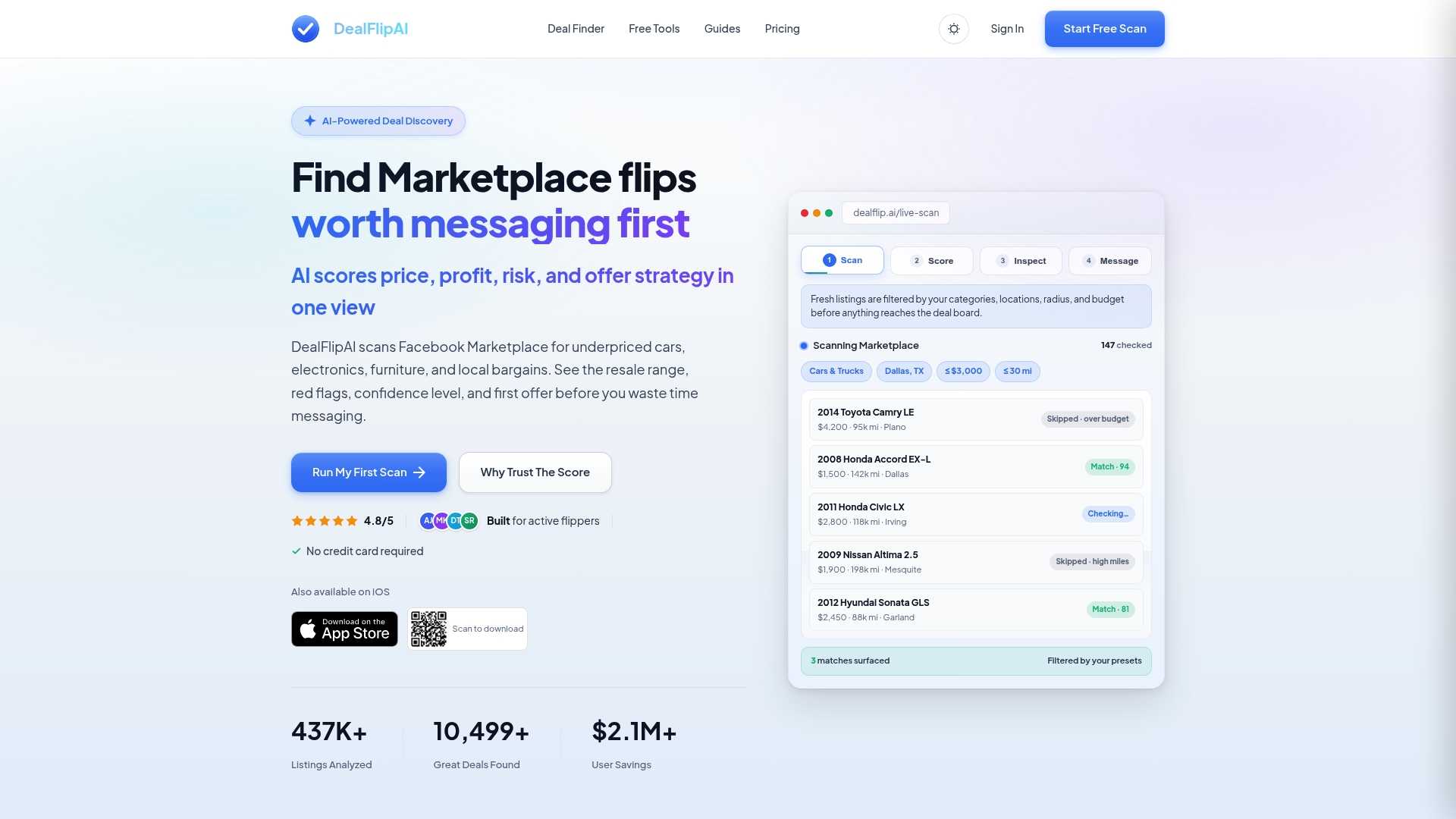
Beyond calculators, Dealflip AI scores every listing on price, profit potential, and risk factors, so you know whether a deal is worth the drive before you leave. Real-time alerts surface fresh listings before other buyers see them. If you want to find profitable deals on Facebook Marketplace with pickup costs already factored in, Dealflip AI is where to start.
FAQ
What is the typical impact of pickup costs on reseller margins?
Pickup fees can reduce profit margins by 10–20% per transaction, with standard fees ranging from $50 to $250 plus residential surcharges of $25–$75. Untracked truck roll costs of $75–$150 per call add further margin pressure.
When does self-pickup cost more than delivery for resellers?
Self-pickup costs more than delivery when drive time, fuel, and opportunity cost exceed the delivery fee savings. Resellers should evaluate total cost including time, not just the raw fee difference.
How do you include pickup expenses in a reseller pricing strategy?
Add all pickup costs, including fuel, surcharges, and truck roll, to your total acquisition cost before calculating your breakeven price. Then apply your target margin on top of that full cost base.
What tools help resellers track and manage pickup costs?
Dealflip AI's Flip Profit Calculator, FreightAmigo's quoting platform, and Softscotch's truck roll calculator each help resellers quantify pickup expenses before committing to a deal or shipment.
How much can resellers save by optimizing pickup logistics?
Proactive carrier selection and site assessments can cut pickup costs by up to 50%, while material sorting for recycling reduces dump fees by 10–20%. Predictive risk tools lower pickup defect costs by up to 30%.