

Yes, AI for flipping works: it surfaces underpriced Marketplace listings, scores their profit potential, flags likely scams, and drafts your first offer, so you spend your time buying and selling instead of scrolling. Your immediate move is simple. Turn on alerts for your top one or two categories, set a conservative deal-score threshold, and let the tool do the hunting while you handle verification and negotiation. Platforms like Meta's own Marketplace AI tools and dedicated apps like Dealflip AI both play a role here, but they solve different halves of the problem.
TL;DR:
- AI tools generate deal scores based on recent sold comparables, condition, demand, and time on market, helping to identify profitable flips faster.
- Verification of listings must include asking for additional photos, serial numbers, and on-site testing, as AI cannot detect seller dishonesty or in-person condition issues.
- AI alerts should be set narrowly based on categories, condition, and local area filters, with higher scores triggering immediate action for best deals.
- AI-generated pricing may misjudge local market variations or appear suspicious if overly polished, so human judgment remains essential for final decisions.
- Use AI for filters and initial evaluations, but always adhere to platform policies and verify deal authenticity through personal inspection to avoid scams and unethical behavior.
Table of Contents
- How AI Changes Flipping Workflows: Sourcing, Pricing, Messaging, and Shipping
- How Do You Run an AI-Assisted Flipping Workflow?
- What Risks Does AI Miss When Vetting a Deal?
- Which AI Features Actually Matter When Choosing a Tool?
- Can AI Help You Source Deals Beyond Marketplace?
- What Do Successful AI-Assisted Flips Actually Look Like?
- Is It Legal and Ethical to Use AI for Marketplace Flipping?
- Why Marketplace-Specific AI Beats Generic Tools for Flippers
- Test-Drive AI Deal Scoring Before You Buy Another Item
- Primary Sources and Further Reading
- Sources
- FAQ
How AI Changes Flipping Workflows: Sourcing, Pricing, Messaging, and Shipping
Flipping used to run on manual effort: refreshing search results, guessing at fair prices, and typing the same reply to ten strangers asking "is this still available?" AI has quietly rewired all four stages of that workflow.
On the sourcing side, Meta's Marketplace AI tools now generate draft listings straight from photos and suggest prices based on nearby comparable sales. That's built for sellers, but it changes what buyers see, too: cleaner listings with more consistent pricing, which makes outlier deals easier for scanning tools to catch.
Deal scoring is where the real value sits for a flipper. A useful score blends four things:
- Estimated resale value pulled from recent sold comps, not just active listings
- Condition uncertainty, since a vague description or blurry photo should lower confidence
- Demand signal, meaning how fast similar items move in your area
- Time-in-market, because a listing sitting for three weeks tells a different story than one posted an hour ago
Messaging automation matters more than most new flippers expect. Reporting from Digital Trends documents Marketplace's auto-replies pulling listing details to instantly answer availability questions, which cuts down on missed leads during the hours you're not glued to your phone.
Quick stat: reporting from Yahoo Tech notes AI-generated drafts can produce a full title, description, and suggested price within seconds, a real advantage for anyone listing dozens of items a month rather than one or two.
Shipping automation, including prepaid labels and built-in tracking, rounds out the picture by letting you resell outside your immediate driving radius without extra logistics headaches.
How Do You Run an AI-Assisted Flipping Workflow?
A good scan is worthless if you don't have a process for what happens after the alert hits your phone. Here's the sequence that keeps flippers fast without getting sloppy.
- Configure your scans and alerts. Pick two or three categories you actually know how to resell, set a price band, define your travel radius, and filter for condition terms like "like new" or "barely used."
- Triage by deal score and urgency. A listing scored above 80 with the seller online in the last hour deserves a message now. A 60-scored listing posted three days ago can wait until after dinner.
- Run your verification checklist before you commit. Ask for extra photos from different angles, request the serial or model number, and ask pointed condition questions ("does it power on, any cracks, original charger included?"). Vague or slow answers are themselves a signal.
- Calculate your all-in profit. Add platform fees, shipping costs, and any cleaning or repair time to your purchase price, then compare that total against a realistic resale price pulled from actual sold comps, not wishful thinking. A profit calculator makes this step fast instead of a spreadsheet chore.
- Send a first offer that fits Marketplace culture. Something like "Hey, is this still available? I can do $X cash today, pickup at your convenience" tends to outperform lowball one liners because it signals a serious, fast buyer.
Pro Tip: Never send your top offer first. Sellers who counter are almost always more motivated than ones who ghost you.
Verification against real sold comps at step 3 matters most on higher-ticket items, where a wrong guess costs real money instead of a wasted afternoon.
What Risks Does AI Miss When Vetting a Deal?
AI catches patterns. It does not catch a seller who's lying to your face at a meetup, which is exactly why human verification still carries the final call.
Tools built for deal scanning typically flag:
- Duplicate images pulled from other listings or stock photos
- Prices that sit implausibly far below every comparable sale nearby
- Brand new seller accounts with no history or reviews
- Descriptions that don't match the stated model number or specs
Those signals catch a meaningful share of low-effort scams, but not all of them. First-person testing found AI can also misprice items in some local markets and produce listing copy so polished it reads as suspicious to wary buyers, which cuts both ways for flippers relying on automated pricing.
The checks that stay entirely on you: inspect every photo at full resolution, ask for the serial number and confirm it matches the visible unit, test electronics on the spot at a public meetup, and insist on a documented payment method rather than cash handed over in a parking lot with no receipt.
Your walk-away list should include: seller refuses a video call or extra photos, price drops suspiciously after you show real interest, or the meetup location keeps changing at the last minute.
One caution on false positives: a legitimately great deal from a first-time seller clearing out a deceased relative's garage will often trip the "new account" flag. Don't discard a scored listing outright. Investigate first, walk away second.
Which AI Features Actually Matter When Choosing a Tool?
Most reseller tools get judged by brand name. Judge them by capability instead, because that's what determines whether the tool actually saves you time.
Prioritize these features, in roughly this order:
- Scan latency. How fast does a new listing turn into an alert? Minutes matter when good deals get scooped up in under an hour.
- Valuation transparency. Does the tool show its math, comps used, and confidence level, or just spit out a number you have to trust blindly?
- Alerting reliability. Push notifications that actually fire, filtered tightly enough that you're not drowning in noise.
- Scam detection depth. Beyond obvious red flags, does it flag subtler patterns like price history manipulation?
- Cross-listing profit calculators. Useful once you're reselling across eBay, Poshmark, or Mercari and need margin math per platform.
An occasional flipper doing five deals a month needs a lighter, cheaper scan tier. A volume reseller running 50+ scans weekly needs unlimited or high-cap tiers where per-scan cost actually justifies itself. Test any tool with three checks: search a known item you've already priced manually, compare the suggested value against real sold comps using something like a value estimator, and confirm alerts actually land on your phone within a reasonable window.
Can AI Help You Source Deals Beyond Marketplace?
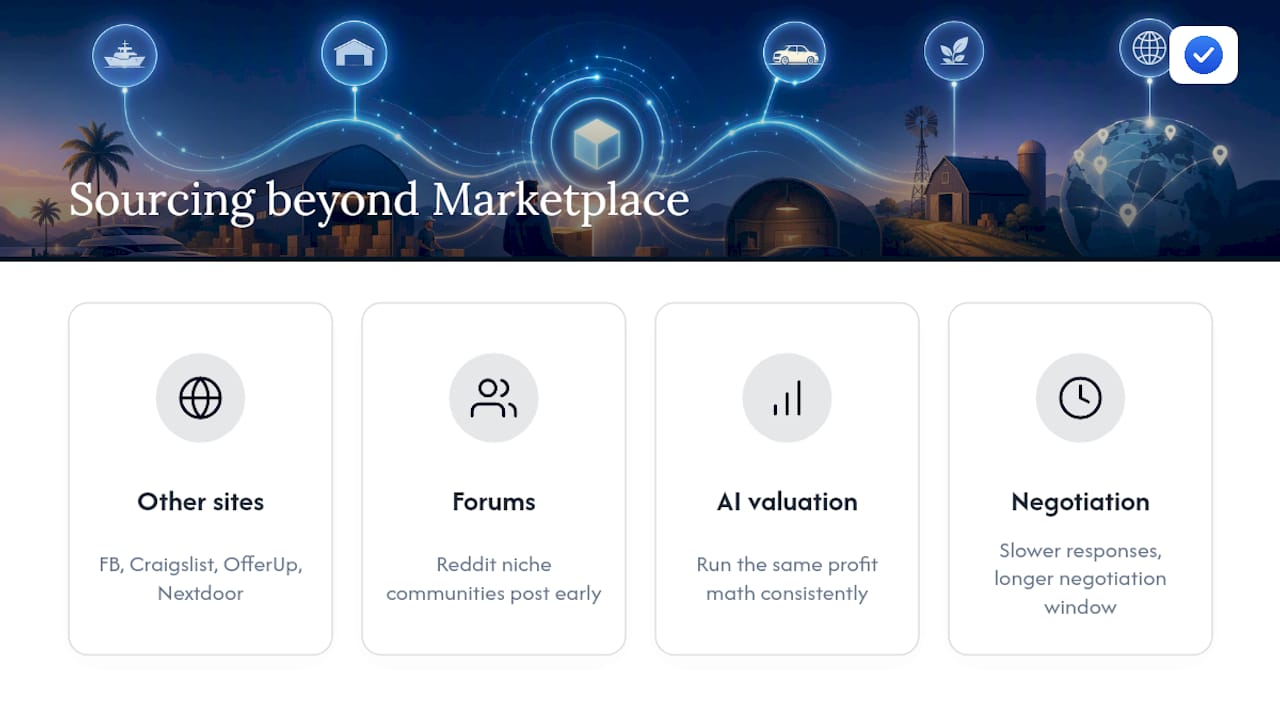
Marketplace isn't the only place underpriced inventory hides, and AI's usefulness extends well past that one app. Local Facebook Buy/Sell/Trade groups, Craigslist, OfferUp, and Nextdoor all carry listings that never show up in a Marketplace-only scan, and some resellers pair general web-monitoring tools with keyword alerts to catch these secondary sources.
Reddit communities built around specific niches (vintage cameras, sneaker resale, tool collecting) often post gear before it ever hits a public marketplace, and a simple keyword alert on those forums can beat a scanning tool to the punch entirely. The same goes for estate sale listing sites and local classifieds that rarely get indexed by mainstream apps.
The practical technique: use AI-assisted valuation to double check anything you find manually elsewhere, even when the sourcing itself happened outside an automated scan. If you found a listing through a tip in a Discord server or a friend's group chat, run it through the same profit math you'd use for a Marketplace find. Consistency in your evaluation process matters more than where the lead originated.
One caveat worth naming: response speed on forums and niche groups tends to be slower than Marketplace's instant messaging, so your negotiation window is often longer. That can work in your favor if you're patient, since motivated sellers on slower platforms are more likely to accept a fair, unhurried offer than one that feels rushed.
What Do Successful AI-Assisted Flips Actually Look Like?
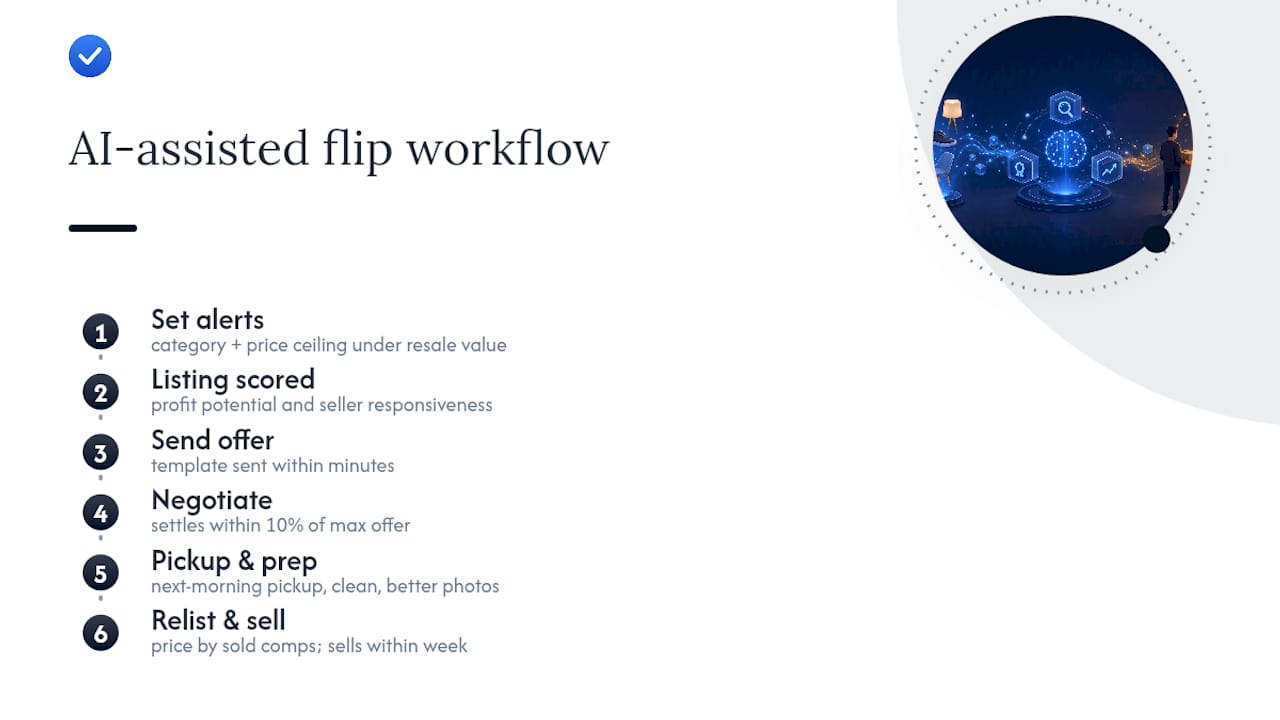
A typical high-margin flip follows a predictable shape once AI is doing the front-end filtering. A flipper sets alerts for a specific category, say power tools or gaming consoles, with a price ceiling well under known resale value. A new listing appears at 9 p.m., scored high on both profit potential and seller responsiveness, since the account has reviews and a fast reply history.
The flipper sends a first offer within minutes using a template pulled from prior successful negotiations, something along the lines of "still available? I can grab it tonight, cash in hand." The seller counters slightly, they settle within ten percent of the flipper's calculated max offer, and pickup happens the next morning.
The item gets a quick clean, a few better photos, and relists at a price backed by actual sold comps rather than a guess. It sells within a week, and the margin holds because every cost, from platform fees to a $15 replacement part, got calculated before the purchase, not after.
The pattern that separates a profitable flip from a break-even one usually isn't the sourcing speed. It's whether the all-in profit calculation happened before money changed hands or got skipped in the excitement of a good find. Flippers who skip that step consistently report thinner margins than they expected once fees and shipping eat into the number they had in their head.
Is It Legal and Ethical to Use AI for Marketplace Flipping?
There's nothing illegal about using AI to scan public listings, calculate resale value, or draft a message. Marketplace listings are public information, and using a tool to process that information faster than a human could isn't fraud or manipulation; it's automation applied to a normal buying decision.
The ethical line shows up in how you interact with sellers, not in the AI tool itself. Misrepresenting your intentions, using a fake profile to hide that you're a reseller, or pressuring a vulnerable seller into an unfair price crosses a line that has nothing to do with whether AI helped you find the listing.
One area worth genuine caution: Meta's rollout guide recommends reviewing AI-generated drafts and suggested prices before publishing, since the AI lacks full context on item provenance, true condition, or hyperlocal demand. Publishing a listing with an AI-suggested price you never checked against real comps, and then discovering it undersold or oversold badly, is a mistake of process, not ethics, but it's worth avoiding all the same.
Respect platform terms of service too. Marketplace prohibits scraping and automated messaging that violates its policies, so any tool you use should work within the platform's rules rather than around them.
Why Marketplace-Specific AI Beats Generic Tools for Flippers
Generic pricing tools built for broad e-commerce miss something Marketplace flippers can't afford to ignore: local context. A couch worth $300 in one metro area might sell for $150 two states over, and a tool trained on national averages will hand you a confidently wrong number every time.
That's the real case for Marketplace-specific AI. It understands the listing format, the local comp pool, and the specific scam patterns that show up on peer-to-peer platforms rather than storefronts. Dealflip AI builds its scoring around exactly that context, weighing price against resale value and seller risk signals rather than treating every listing like a generic product page.
The gap between what these tools promise and what actually moves your bottom line is verification discipline. A high deal score should speed up your decision, not replace your judgment entirely. The flippers who do best treat AI as a filter that surfaces candidates faster, then apply the same skepticism they'd use without any tool at all.
— Walsh Pex
Test-Drive AI Deal Scoring Before You Buy Another Item
If you've been sourcing by scrolling Marketplace for an hour a night hoping something good shows up, Dealflip AI flips that model: it scans for you, scores profit potential and risk automatically, and hands you a suggested first offer instead of a guess.
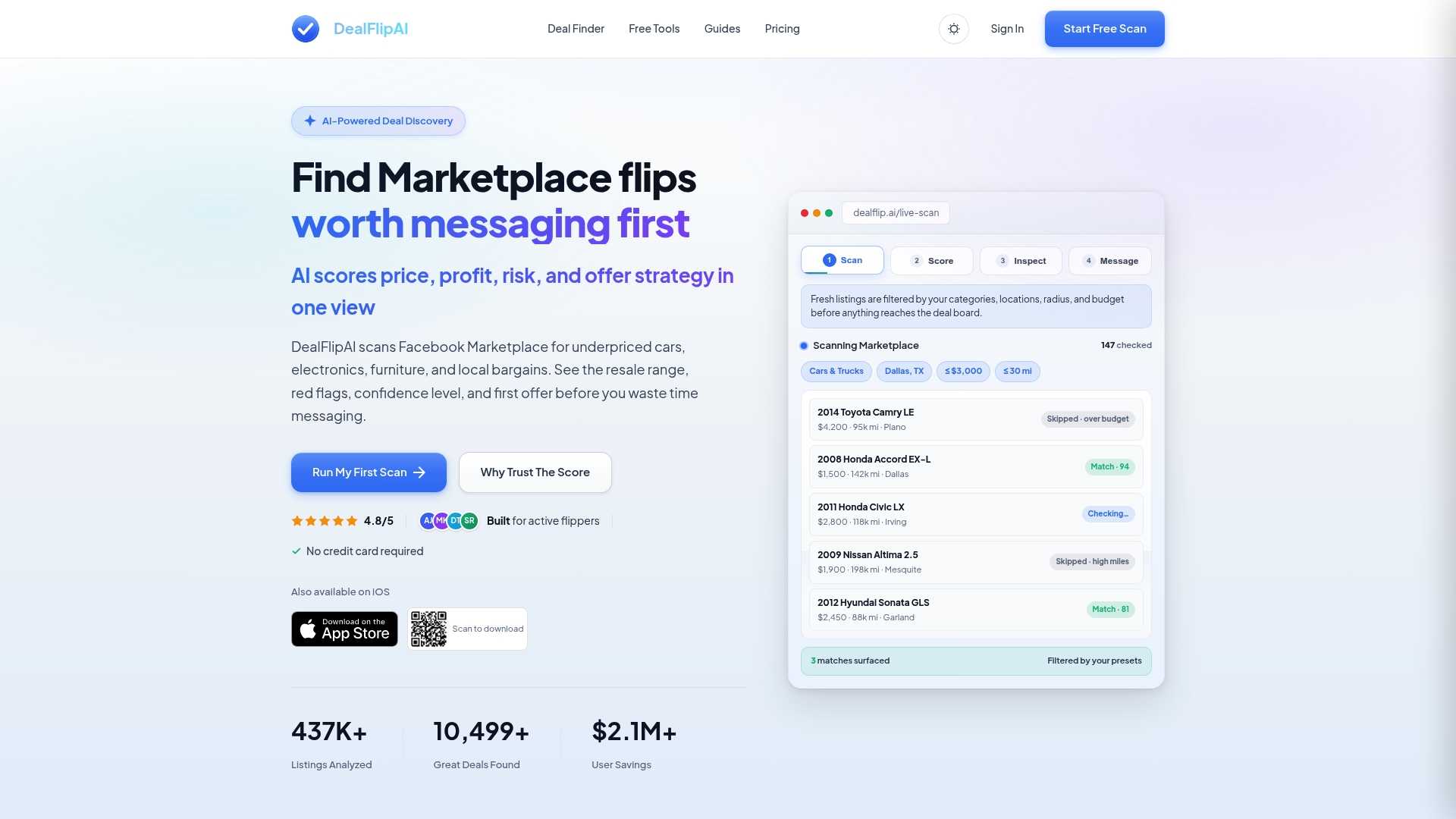
The free plan gives you three things worth testing right now. Run a local scan in your top category and see what surfaces. Pull up a listing you already know well and check whether the deal score matches your own instinct. Then preview a suggested first offer alongside the margin calculation and see if the math holds up against your own estimate using the flip profit calculator. For a deeper price check on any single listing, the listing analyzer breaks down valuation transparently instead of handing you a black-box number.
Once you've run those three checks, compare a few listings against the value estimator to confirm suggested prices line up with real sold comps in your area, then decide if the paid tier's scan volume fits how many deals you're chasing each week.
Primary Sources and Further Reading
Every AI feature claim in this article traces back to Meta's own Marketplace AI announcement, plus practical reporting from Digital Trends and Yahoo Tech on how the rollout actually plays out for sellers.
Sources
- Facebook Marketplace's New Meta AI Tools Make Selling Faster and Easier
- Facebook Marketplace's new AI ends the "is this available" nightmare - Digital Trends
- Facebook Marketplace Rolls Out New AI-Powered Tools to Help Sellers
- How to use AI to sell stuff online faster on Facebook Marketplace and eBay
FAQ
Does AI Actually Find Better Marketplace Deals Than Manual Searching?
AI-assisted scanning catches underpriced listings faster than manual refreshing because it checks continuously and scores against sold comps, though you still need to verify condition and seller legitimacy yourself.
What's a Good Deal Score to Act On?
There's no universal number, but a conservative flipper should start with a high threshold, around 80 or above on most scoring scales, and lower it only once they've confirmed the tool's estimates match their own local market experience.
Can AI Detect All Marketplace Scams?
No. AI flags common patterns like duplicate photos and improbable pricing, but it can't verify in-person condition or catch a seller lying during a meetup, so human verification stays mandatory.
Is Using AI to Find Marketplace Deals Considered Cheating?
No. Scanning public listings and calculating fair value with a tool like Dealflip AI is automation applied to information anyone can see; the ethical line is about how you treat sellers, not the tool you use to find them.
How Much Does AI Flipping Software Typically Cost?
Pricing usually scales with scan volume, from limited free plans for occasional flippers to higher-capacity paid tiers for volume resellers; check a pricing page directly since tiers vary by provider and category coverage.