
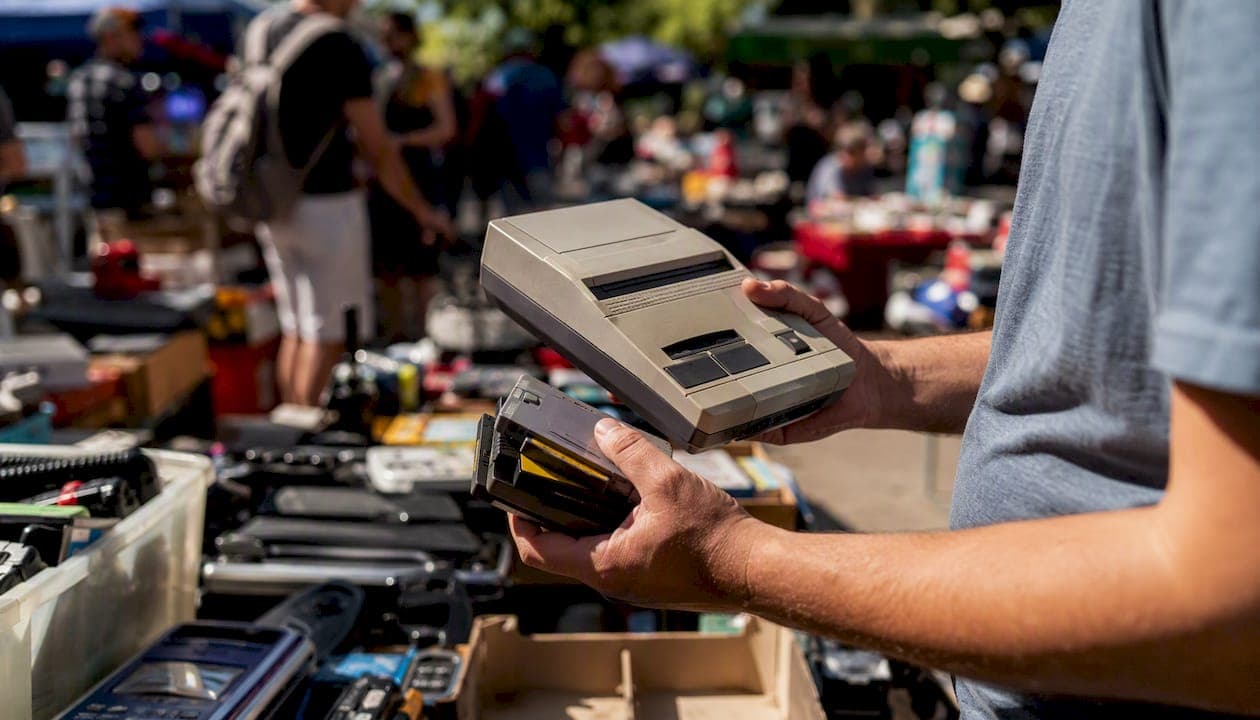
The fastest local items to flip for high ROI are video game consoles, power tools, branded sneakers, small electronics, outdoor performance clothing, textbooks, and pickup-only furniture. Your first move: pull sold listings on eBay or Facebook Marketplace for the item in front of you, then run a quick profit calculation before you commit a dollar.
Here's a 60-second buy/no-buy routine you can use right now:
- Check sold comps first. Search the item on eBay, filter to "Sold," and find 3 recent sales. That's your ceiling.
- Apply the 3x rule as a starting filter. If you can't buy it for one-third of the average sold price or less, skip it unless condition is exceptional.
- Minimum margin threshold: Target at least 30% net profit after fees, shipping, and any prep costs. Below that, the risk rarely justifies the effort on fast-turn items.
- If you can't test it, don't buy it. A non-working console or a power tool missing its battery pack cuts your resale value in half.
Key Takeaways
The fastest path to consistent profit in local resale is pairing a quick-turn category (video games, power tools, small electronics) with a higher-margin one (outdoor clothing, vintage kitchenware) and applying a five-minute evaluation before every buy.
| Point | Details |
|---|---|
| Top fast-flip categories | Video game consoles, power tools, branded sneakers, small electronics, and outdoor clothing flip fastest with 40–150%+ margins. |
| Five-minute evaluation rule | Run the five-step checklist (condition, working test, authenticity, accessories, repair cost) before every purchase. |
| Minimum margin threshold | Target at least 30% net margin and $25 minimum absolute profit on fast-turn items. |
| Platform matching | Sell furniture, bikes, and heavy tools locally; ship deadstock sneakers, trading cards, and textbooks nationally. |
| Safety and records | Meet in public for local pickups, verify serials before buying, and log every transaction for tax purposes. |
| Dealflip AI | Use Dealflip AI's real-time alerts, listing scorer, and profit calculator to find and evaluate Facebook Marketplace deals faster. |
Table of Contents
- 1. The top local items that flip fast for high ROI
- 2. Where to find fast local deals
- 3. Which platforms give you the fastest sale and best net ROI
- 4. How to evaluate a flip in five minutes
- 5. Listing and logistics best practices for faster sales
- 6. Red flags and risks to watch before you buy
- 7. Tools and workflows that speed up your flipping operation
- 8. Realistic expectations: what fast local flipping actually looks like
- Dealflip AI speeds your path from listing to profit
- Sources
1. The top local items that flip fast for high ROI
The categories below are ranked by a combination of speed-to-sell and typical net margin, drawing on resale category data from Fit Small Business and the Underpriced. Each entry is a decision card: buy price, sell range, margin estimate, and where to exit.
Video game consoles and games
Consoles sell fast because buyers search for them constantly and condition is easy to verify on the spot. A working PS5 bought locally for $250–$300 routinely sells for $380–$430 on Facebook Marketplace or eBay within 48–72 hours. Physical game lots are even faster: a $20 thrift-store lot of 10 PS4 games can clear $60–$80 locally in a weekend. The Business Insider profile of Caleb Ashton shows exactly this ladder: he started with low-budget game buys, learned the comps, and scaled into a full resale platform. Video games are one of the most reliable quick-turn categories for early cash flow.
Power tools (name brands only)
DeWalt, Milwaukee, and Makita tools hold value exceptionally well. A DeWalt 20V drill/driver kit bought at a garage sale for $30–$50 sells for $90–$140 on Facebook Marketplace or OfferUp within a few days. Cordless tool sets with batteries command the highest premiums because batteries alone retail for $50–$100 new. Always test before buying: plug it in or charge the battery on the spot.
Branded sneakers
Nike Air Jordan, Adidas Yeezy, and New Balance 990-series pairs bought below retail or at thrift stores can double or triple in resale value. Deadstock (unworn, original box) pairs are the fastest movers. A pair of Jordan 1s bought for $60 at a garage sale can sell for $150–$220 on StockX or GOAT within a week. Worn pairs with good condition still move on Poshmark or eBay for solid margins.
Small electronics (tablets, earbuds, smart speakers)
iPads, AirPods, and Amazon Echo devices are compact, easy to ship, and have deep buyer demand. A used iPad 9th gen bought locally for $80–$100 sells for $150–$180 on eBay. Always factory reset before listing and confirm iCloud lock is cleared. Locked devices are nearly unsellable.
Outdoor and performance clothing (Arc'teryx, Patagonia, North Face)
Underpriced.app's 2026 rankings specifically flag outdoor performance clothing as one of the highest-margin flip categories because buyers know the brands, condition is easy to assess, and shipping is simple. A Patagonia fleece bought at Goodwill for $8–$12 regularly sells for $45–$75 on Poshmark or eBay. Arc'teryx jackets found at thrift stores for modest prices can sometimes resell for several times the purchase price, offering strong profit potential.
Textbooks and academic books
College textbooks are a seasonal goldmine. A $5 thrift-store find can sell for $40–$120 on Amazon or eBay during back-to-school season (August and January). Use the Amazon seller app to scan barcodes in-store and see the current buy box price instantly. Focus on STEM, nursing, law, and business titles from the last 5 years.
Furniture (pickup only)
Solid wood dressers, mid-century modern pieces, and name-brand office chairs (Herman Miller, Steelcase) are high-ROI finds that sell locally fast because buyers want to see them in person anyway. A solid oak dresser bought for $40 at an estate sale can sell for $150–$250 on Facebook Marketplace within a week. No shipping required, which means no packaging costs and no carrier damage risk.
LEGO sets (sealed or complete)
Sealed LEGO sets appreciate reliably, and even open sets with all pieces sell well. A $30 garage-sale find of a retired set can sell for $80–$150 on eBay. Verify piece counts using the LEGO inventory checker at Bricklink.com before buying open sets.
Trading cards (Pokémon, sports)
Pokémon and sports card lots are compact, easy to ship, and have a massive buyer base. A $10–$20 lot of mixed cards can contain a single holo worth $30–$100. Graded cards (PSA, BGS) command the highest prices. Sort before listing: bulk commons sell as lots, and rares sell individually.
Vintage kitchenware (Pyrex, Le Creuset, cast iron)
Vintage Pyrex patterns and Le Creuset Dutch ovens are consistent thrift-store winners. A $4 Pyrex casserole dish in a rare pattern can sell for $30–$80 on eBay. A Lodge cast iron skillet bought for $5 at a garage sale sells for $25–$40 locally within days. These items are heavy, so local pickup or OfferUp is often the smarter exit.
Baby gear (strollers, high chairs, bouncers)
Name-brand baby gear (UPPAbaby, Graco, Baby Trend) sells fast on Facebook Marketplace because parents want it quickly and locally. A used UPPAbaby Vista stroller bought for $150 can sell for $350–$450. Always check for recalls at CPSC.gov before listing.
Musical instruments
Guitars, keyboards, and drum kits hold value well and sell locally to players who want to try before they buy. A Fender Stratocaster bought for $80 at a garage sale can sell for $200–$350 on Craigslist or Facebook Marketplace. Condition and playability are everything: test every string and key.
Quick-reference summary table
| Item category | Typical buy price | Typical sell range | Est. margin | Time to sell | Best exit platform |
|---|---|---|---|---|---|
| Video game consoles/games | $15–$300 | $40–$450 | 40–80% | 1–5 days | Facebook Marketplace, eBay |
| Power tools (name brand) | $25–$80 | $80–$200 | 50–70% | 2–7 days | Facebook Marketplace, OfferUp |
| Branded sneakers | $20–$100 | $80–$300+ | 60–150% | 3–10 days | StockX, GOAT, Poshmark |
| Small electronics | $40–$120 | $100–$220 | 40–80% | 3–7 days | eBay, Facebook Marketplace |
| Outdoor/performance clothing | $8–$40 | $45–$300 | 100–400% | 5 days | Poshmark, eBay |
| Textbooks | $1–$10 | $20–$150 | 200–500% | 1 day | Amazon, eBay |
| Furniture (pickup only) | $20–$100 | $100–$400 | 100–300% | 3–10 days | Facebook Marketplace, Craigslist |
| LEGO sets | $10–$50 | $40–$200 | 80–200% | 5 days | eBay |
| Trading cards | $5–$30 | $20–$200+ | 100–300% | 3 days | eBay, local |
| Vintage kitchenware | $3–$20 | $20–$120 | 150–400% | 5 days | eBay, OfferUp |
| Baby gear | $50–$200 | $150–$500 | 50–150% | 3–10 days | Facebook Marketplace |
| Musical instruments | $30–$150 | $100–$400 | 60–150% | 7 days | Craigslist, Facebook Marketplace |
Micro example: A $35 DeWalt drill kit (no battery) sourced at a garage sale, paired with a $15 compatible battery from a thrift store, sold on Facebook Marketplace for $120.
2. Where to find fast local deals
Sourcing speed is where most new flippers lose time. The channels below are ranked by how quickly you can find actionable inventory, not by how well-known they are.
Facebook Marketplace
Facebook Marketplace is the single best sourcing channel for fast local resale because sellers often underprice to move items fast. Use these search strings to surface undervalued listings:
"lot" + category(e.g., "lot power tools") to find bundle deals"moving" + itemto find motivated sellers"obo"(or best offer) + category to find negotiable listings- Filter by "Listed today" to catch fresh posts before other flippers
When you message a seller, keep it short: "Hi, is this still available? Can you do $[X]? I can pick up today." One line. Sellers respond faster to direct offers than to questions.
Garage and estate sales
Saturday morning garage sales are still one of the highest-ROI sourcing channels because sellers price to clear, not to profit. Estate sales run by companies (search EstateSales.net for your zip code) often have better inventory but slightly higher prices. Arrive at opening time for the best picks, or arrive in the last hour for deeper discounts on what's left.
Pro Tip: At estate sales, ask the organizer if there's a "box lot" deal for unsorted items. You can often buy a full box of mixed electronics or tools for $10–$20 and sort for winners at home.
Thrift stores and Goodwill Bins
Standard Goodwill and Salvation Army stores price by category, so margins are thinner but consistent. The real upside is at Goodwill outlet "Bins" locations, where items are sold by weight. A Portland teen famously paid roughly $3 by weight for a historic Lakers jacket that later reached auction estimates in the six figures. That kind of find is genuinely rare, but the Bins regularly produce $30–$100 flips for buyers who know what to look for. Budget 2–3 hours per Bins visit and bring gloves.
Craigslist free section and local listings
Craigslist remains a strong channel for high-ticket local pickups: furniture, appliances, and tools. The free section occasionally surfaces working items that owners just want gone. Set a saved search alert for your top categories and check it daily. Posting is free for most categories, though some categories carry fees depending on location.
Local buy/sell Facebook groups, OfferUp, and Nextdoor
Neighborhood-specific buy/sell groups on Facebook often have less competition than the main Marketplace feed. Search "[your city] buy sell trade" and join 3–5 active groups. OfferUp has a similar local-first structure. Nextdoor occasionally surfaces free or deeply discounted items from neighbors clearing out.
Retail clearance and liquidation
Big-box clearance racks (Target, Home Depot, Best Buy) can produce quick flips on discontinued electronics and tools. Liquidation pallets from B-Stock or Direct Liquidation are higher risk but can yield bulk inventory at steep discounts. Start with single-item clearance buys before committing to pallets.
Negotiation micro-rules:
- Anchor low: open at 40–50% of asking price on Marketplace and garage sales.
- Walk away politely if the seller won't move past 70% of asking (your margin disappears above that on most items).
- Bundle offers work well: "I'll take all three for $X" often gets a yes when individual offers don't.
3. Which platforms give you the fastest sale and best net ROI
Matching your item to the right platform is one of the most practical local flipping tips you can act on immediately. The wrong platform costs you days and fees.
Local pickup platforms: Facebook Marketplace, OfferUp, Craigslist
These three are your go-to for anything heavy, fragile, or high-value enough that shipping risk outweighs the wider audience. Facebook Marketplace has the largest local buyer pool in most U.S. markets. OfferUp has a built-in rating system that adds buyer trust. Craigslist skews older but still dominates for furniture, vehicles, and large appliances in many cities.
Zero platform fees for local cash transactions on all three. That's the core advantage: every dollar of margin stays in your pocket.
eBay
eBay is the right call when your item has national demand but isn't brand-authenticated (sneakers, trading cards, vintage kitchenware, textbooks). The trade-off: a much larger buyer pool means faster sales on niche items that your local market can't absorb.
StockX and GOAT
For authenticated sneakers and streetwear, StockX and GOAT are the highest-net platforms because buyers pay a premium for authentication. StockX charges a transaction fee that varies by seller level, and GOAT charges a commission plus cash-out fee. Both are ship-only, so factor in packaging and carrier costs.
Poshmark
Poshmark works best for branded apparel, shoes, and accessories. The social feed structure rewards active sellers who share listings daily. Outdoor performance brands (Patagonia, Arc'teryx, Lululemon) move quickly here.
Amazon
Amazon is the strongest channel for textbooks and in-demand books. The Amazon seller app's barcode scanner lets you check the current buy box price in-store before you buy. Individual seller fees vary by category, so check the fee schedule before listing. Amazon Local Selling also supports local delivery for furniture and large items, with no additional fees beyond standard referral fees.
Platform-specific tipping points:
- Always sell locally: furniture, bikes, large appliances, heavy tools, baby strollers
- Always ship: deadstock sneakers, trading cards, rare collectibles, textbooks
- Test locally first, then ship if no sale in 5 days: small electronics, power tools, branded clothing
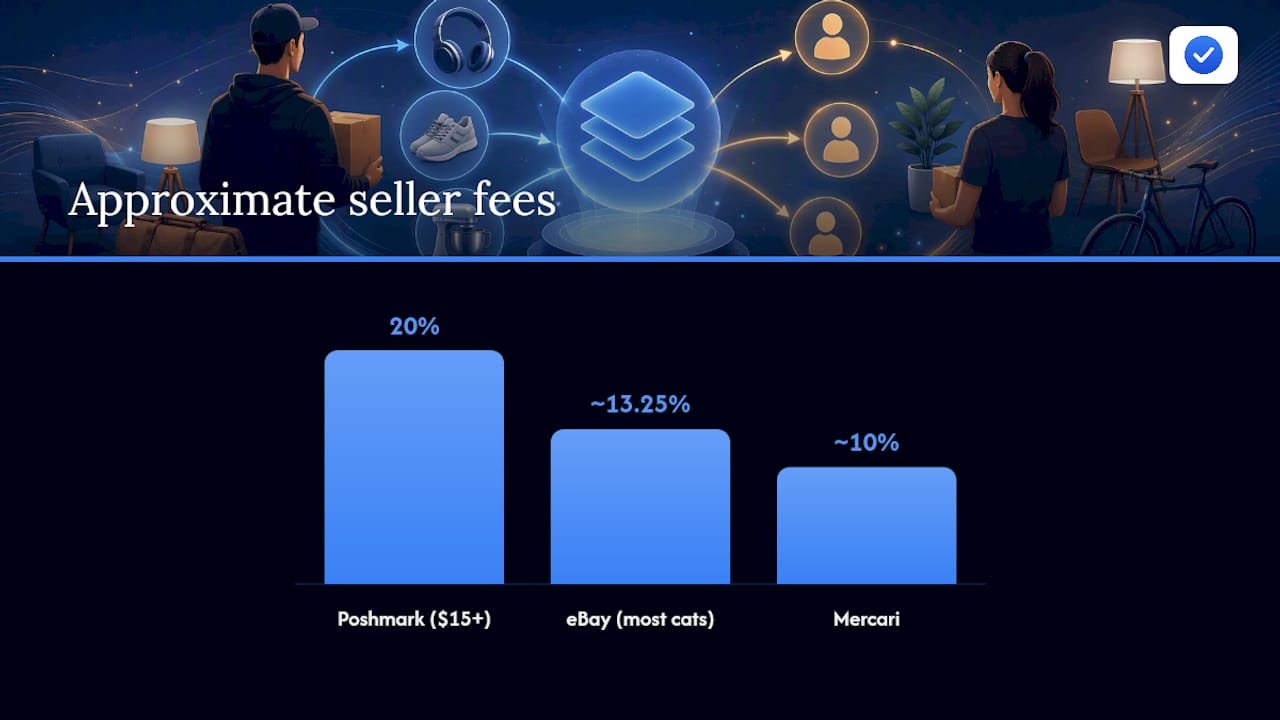
Statistic callout: eBay's standard seller fee for most categories is approximately 13.25% of the total sale amount (item price plus shipping), which means a $100 sale nets roughly $86.75 before shipping costs. Factor this into your profit formula before listing.
Pro Tip: Cross-list heavy-demand items on both Facebook Marketplace and OfferUp simultaneously. The first buyer to commit wins. Delete the other listing the moment you confirm the sale to avoid double-selling.
4. How to evaluate a flip in five minutes
A fast, repeatable evaluation keeps you from buying bad inventory. Run this checklist every time, whether you're at a garage sale or scrolling Marketplace.
- Condition check. Look for cracks, missing parts, heavy wear, water damage, or corrosion. Any of these cuts your sell price; two or more usually kills the margin.
- Working test. Power it on. Charge it. Run it. A non-working item is worth 10–20% of a working one at best, and often unsellable locally.
- Authenticity and brand markers. Check logos, stitching, serial number placement, and packaging. Fakes are common in sneakers, electronics, and branded apparel.
- Accessories and serials. Missing chargers, batteries, or original boxes reduce value. Note what's included and price accordingly. For electronics, write down the serial number and check it against stolen-device databases (Swappa's ESN checker, for example).
- Repair or parts cost. If it needs a part, look it up on the spot. A $10 replacement battery that makes a $30 tool worth $90 is a good trade. A $60 screen repair on a tablet you paid $50 for is not.
Simple profit formula:
Worked example: You buy a Milwaukee M18 drill for $45. Comparable sold listings on Facebook Marketplace show $130. Platform fee: $0 (local cash). Shipping: $0. Cleaning supplies: $3.
Use the Dealflip AI flip profit calculator to run this math in seconds for any listing, including automatic fee estimates for eBay, Poshmark, and Mercari.
Quick thresholds:
- Fast-turn items (consoles, tools, small electronics): target at least 30% net margin and $25 minimum absolute profit.
- Higher-margin holds (outdoor clothing, vintage kitchenware, rare collectibles): 50%+ net margin justifies a longer wait.
Platform fee reference (approximate, verify current rates before listing):
| Platform | Approximate seller fee |
|---|---|
| Facebook Marketplace (local) | 0% |
| OfferUp (local) | 0% |
| Craigslist (most categories) | Free to post |
| eBay (most categories) | ~13.25% of total sale |
| Poshmark ($15+) | 20% |
| Mercari | ~10% payment fee |
| StockX | Varies by seller level |
5. Listing and logistics best practices for faster sales
A well-listed item sells in hours. A poorly listed one sits for weeks.
Photo checklist (minimum 4 shots):
- Hero shot: item clean, on a neutral background, in good natural light
- Damage shot: any scratches, wear, or missing parts shown clearly (builds trust and reduces returns)
- Brand/model shot: close-up of the logo, model number, or label
- Accessories shot: everything included laid out flat
Quick edit trick: shoot near a window in the morning for natural light. Free apps like Snapseed let you boost brightness and contrast in 30 seconds without making the item look better than it is.
Pro Tip: Listings with 4+ photos sell measurably faster than single-photo listings on Facebook Marketplace. Buyers scroll past anything that looks like it's hiding something.
Title template:
[Brand] [Model] [Key Spec] [Condition] [What's Included]
Example: "DeWalt 20V MAX Drill Driver Kit, Good Condition, Battery + Charger Included"
Keep titles under 80 characters. Lead with the brand because that's what buyers search first.
Pricing for speed:
Active listings are your competition; sold listings are your ceiling. If you need cash fast, price at the lowest sold comp and accept offers. If you can wait a week, price at the median sold comp and hold firm.
Pickup and payment logistics:
- Accept cash or Venmo/Zelle for local sales. Avoid PayPal Goods & Services for in-person pickups (buyer protection can be abused).
- Meet in public places: police station parking lots, coffee shops, or well-lit retail parking lots.
- For high-value items ($200+), bring a friend or meet during daylight hours.
Keep a simple spreadsheet or notes app log of every transaction: buy price, sell price, platform, and date. The IRS considers resale income taxable, and clean records make tax time straightforward. Resellers who sell regularly may need to file a Schedule C; consult a tax professional if your volume grows.
Statistic callout: Listings with complete descriptions (condition, brand, model, included accessories) consistently attract more serious buyers and fewer time-wasting inquiries, which directly speeds your time-to-cash.
6. Red flags and risks to watch before you buy
Buying bad inventory is the fastest way to lose money in local flipping. These red flags are worth memorizing.
Sourcing red flags:
- Price is 70%+ below market with no explanation. Stolen goods are often priced to move fast.
- Seller can't tell you where they got the item or gives a vague story ("found it," "it was my cousin's").
- No serial number, or the serial number has been scratched off. Walk away immediately.
- Seller refuses to meet in a public place or insists on a home-only pickup.
- Photos show a different background in each shot, suggesting stock images or a scam listing.
Verification steps before you hand over cash:
- For electronics: power on, check settings for activation lock (iCloud on Apple, Google account on Android), and run a quick serial number check.
- For sneakers: check the box label, stitching, and insole print against known authentic pairs. Use the Legit Check app for a quick reference.
- For tools: test under load if possible, check the battery charge, and verify the model number matches the label.
Payment safety:
- Cash is safest for in-person buys. Instant transfer apps (Zelle, Venmo) work if you know the seller is legitimate.
- Never accept overpayment checks or wire transfers. These are classic scam vectors.
- Never ship an item to a buyer who "accidentally" overpaid and asks for a refund of the difference.
U.S. sellers should know that resale income is taxable regardless of platform. The IRS requires reporting income from sales that exceed your original purchase price. Keep records of every buy and sell.
7. Tools and workflows that speed up your flipping operation
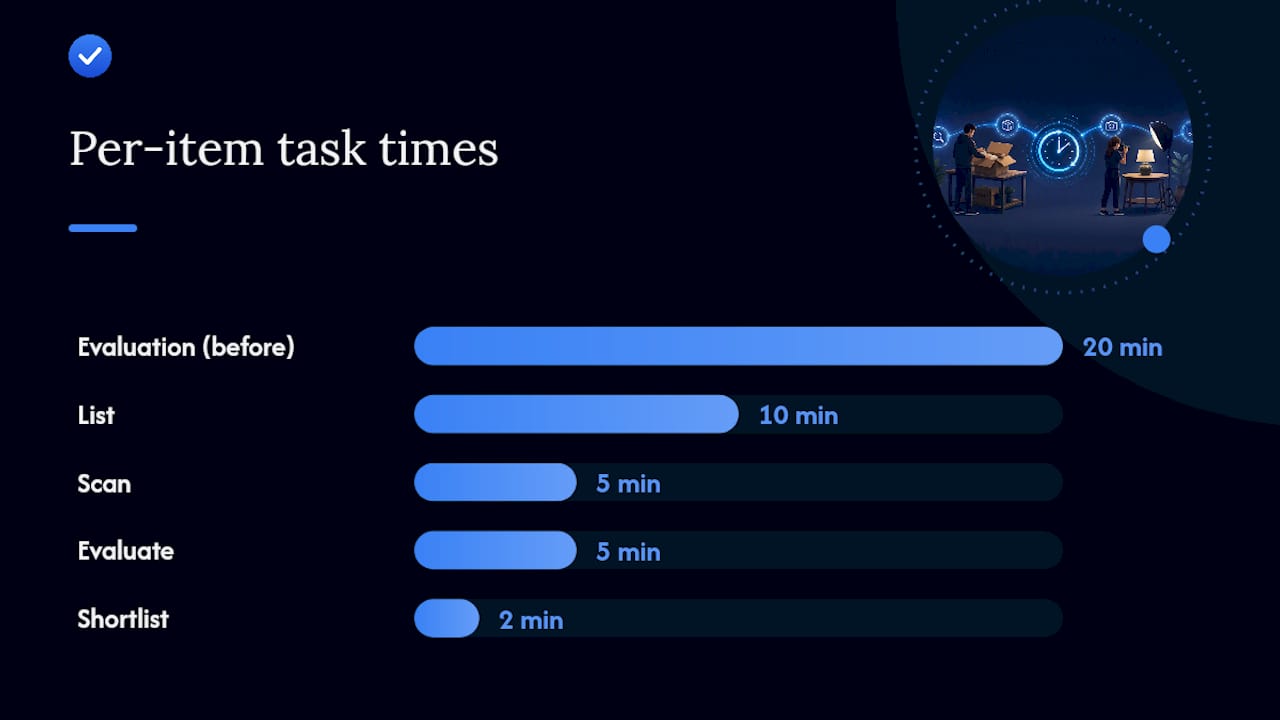
The right tools cut evaluation time from 20 minutes to 5. Here's what actually moves the needle.
Core tool stack:
- eBay sold listings: Your primary price-check source. Filter by "Sold" and sort by most recent. Free.
- Amazon seller app: Barcode scanner for books and media. Shows current buy box price instantly in-store. Free.
- Bricklink: LEGO set inventory checker and price guide. Free.
- Legit Check app: Sneaker and streetwear authentication reference. Free tier available.
- Dealflip AI listing analyzer: Inspects Facebook Marketplace listings for valuation signals and scam risk flags, so you spend less time on bad leads.
- Dealflip AI deal finder: Real-time alerts for new Facebook Marketplace listings that match your category and price presets, so you see deals before other flippers do.
Sample micro-workflow:
- Scan (5 minutes): Run your saved search alerts on Facebook Marketplace or use Dealflip AI's deal finder to surface fresh listings in your target categories.
- Shortlist (2 minutes): Apply the 3x rule. If the asking price is more than one-third of the average sold comp, skip it unless condition is exceptional.
- Evaluate (5 minutes): Run the five-step checklist. Plug numbers into the profit calculator. If net margin clears 30%, add it to your buy list.
- List (10 minutes): Use your title template, shoot 4 photos, price 5–10% below the lowest active comp, and post to your primary platform. Cross-list to a second platform if the item has national demand.
- Relist/price-drop cadence: If no sale in 3 days, drop price by 10%. If no sale in 7 days, cross-list to a national platform or drop another 10%.
Pro Tip: Set up category-specific saved searches on Facebook Marketplace for your top 3 item types. Check them every morning before 9 AM. Motivated sellers post overnight and early morning, and the best deals disappear within hours.
Automation handles the scanning and alerting; manual inspection still wins at the point of purchase. No algorithm replaces testing a tool under load or checking a sneaker's stitching in person. Use Dealflip AI's Facebook Marketplace tools to speed discovery and valuation, then apply your own judgment at the moment of purchase.
The Dealflip AI blog on fastest flip categories also covers category-specific valuation benchmarks worth bookmarking for your top two or three item types.
8. Realistic expectations: what fast local flipping actually looks like
Most new flippers expect to clear $500 their first week. The reality is more useful than that.
Your first month, aim for $25–$100 net profit per flip and 2–4 flips. That's $50–$400 in your pocket while you learn which categories work in your specific market. Some cities have deep demand for power tools; others move baby gear faster. You won't know until you test.
The Business Insider profile of Caleb Ashton illustrates the realistic path: start with a small seed budget, treat every flip as a learning loop, and reinvest 100% of early profits into inventory. He focused on video games because the comps were easy to verify and the sell times were short. That's the right instinct. Fast-turn categories teach you the rhythm of sourcing, evaluating, listing, and closing before you commit larger capital to higher-margin holds.
Pairing a fast-turn category with a higher-margin one is the move that accelerates growth. Video games or books keep cash flowing weekly. Outdoor clothing or vintage kitchenware builds larger single-flip profits. Together, they balance your cash position and your learning curve.
Speed versus margin is a real trade-off as you scale. As your sourcing eye sharpens, shift more capital toward the higher-absolute-profit categories and use fast-turn items to keep cash moving between bigger buys.
One honest note on thrift-bin sourcing: the Goodwill Bins can produce extraordinary finds. A Portland teen paid roughly $3 for a historic Lakers jacket that later reached six-figure auction estimates. Those finds are genuinely one-in-a-million. Build your business on repeatable $30–$100 flips, and treat any Bins windfall as a bonus, not a strategy.
Dealflip AI speeds your path from listing to profit
Finding high-ROI local items fast comes down to seeing deals before other flippers do and knowing your numbers before you commit. Dealflip AI does both. Its real-time alerts surface fresh Facebook Marketplace listings in your target categories the moment they go live. Its listing scorer evaluates each deal on price vs. resale value, profit potential, and scam risk signals, so you spend your time on the listings worth pursuing. The flip profit calculator runs your buy/sell/fee math in seconds, and the cross-listing profit calculator shows you which platform nets the most after fees before you list. Users report finding deals they would have missed and avoiding scam listings that looked legitimate at first glance.
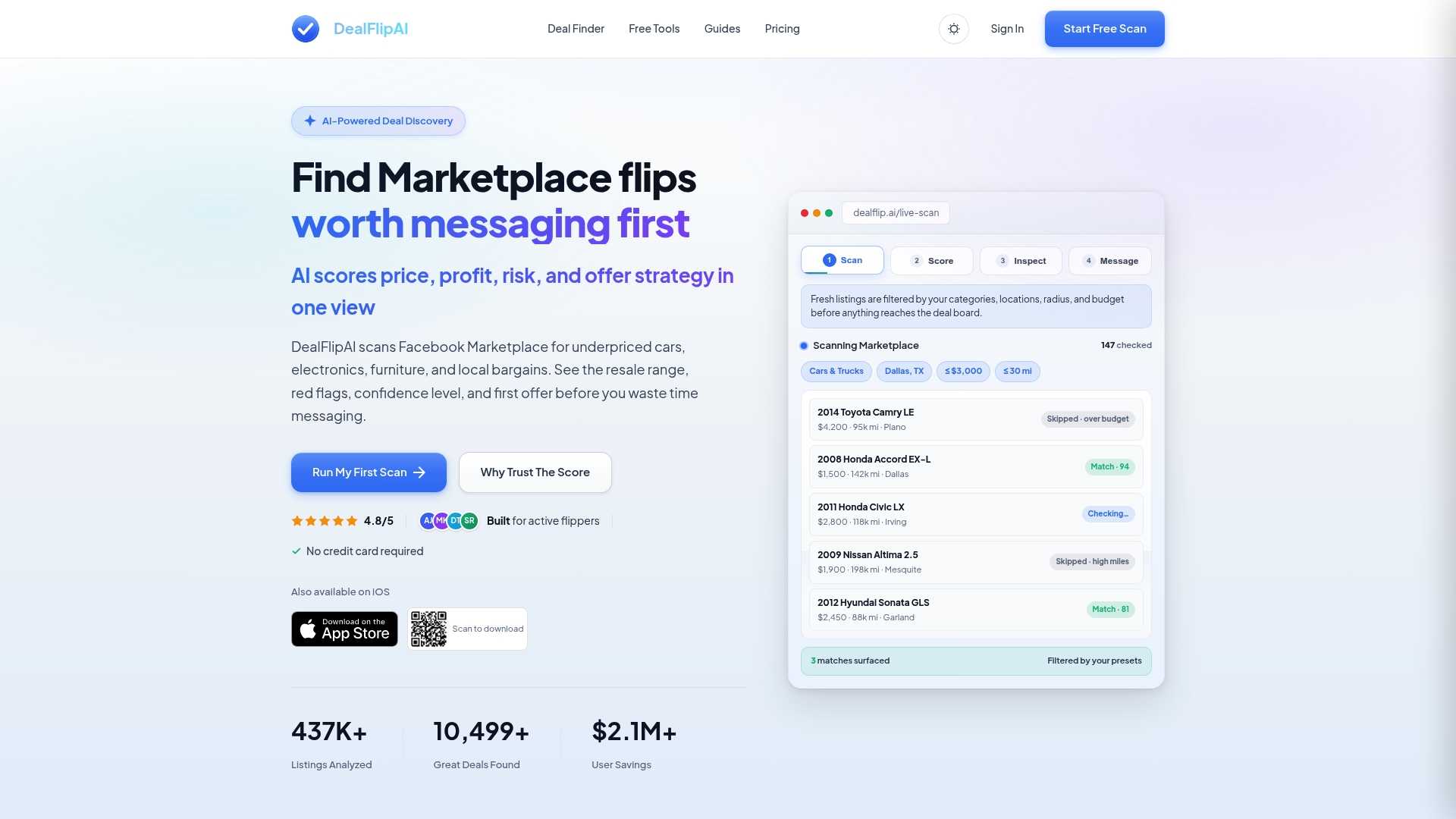
Try the listing analyzer free on your next Facebook Marketplace find and see the deal score before you message the seller.
Sources
A short list of resources to verify prices, check marketplace rules, and run the tools referenced above.
- Best Products to Buy & Sell for Profit (Fit Small Business)
- Man turns side hustle into video game resale business (Business Insider)
- Portland teen thrifted a historic Lakers jacket that later hit auction (OregonLive)