
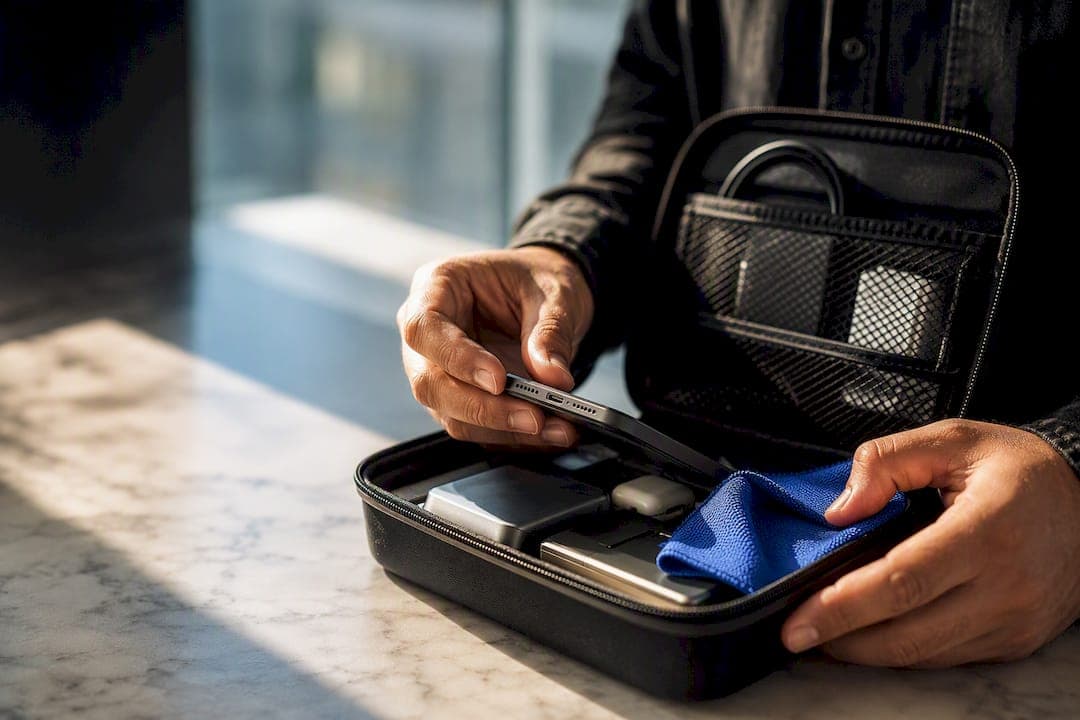
Yes, flipping electronics locally is a repeatable way to make money, but only if you treat it like a business, not a hobby. Success comes down to three habits: sourcing faster than the next buyer, testing every device before you hand over cash, and pricing with fees and repair costs already subtracted. Set your alerts, pack a test kit, and run a quick comps check before your next pickup.
TL;DR:
- Successful flipping depends on sourcing quickly through alerts, bundles, and filters, with a separate test kit to evaluate devices on the spot.
- Phones and laptops must be tested for blacklisting, account removal, and hardware faults using a kit that includes a charger, SIM, battery meter, and diagnostic apps.
- The maximum buy price should be calculated by subtracting platform fees, shipping, repair costs, and your profit target from the expected resale value.
- Safety measures include meeting buyers or sellers in public, verifying IMEI or serial numbers, and using digital payments to maintain a paper trail.
- Automating alerts, comps, and scam signals with AI tools adds speed and confidence to each step, improving margins and reducing risk.
Table of Contents
- How to Flip Electronics Locally in the Next 10 Minutes
- Where to Find the Best Local Electronics to Flip
- How Do You Test Electronics Before You Buy Them Locally?
- Pricing and Fee Math: What Can You Actually Pay?
- Staying Safe and Negotiating Without Losing Your Margin
- Your Daily Workflow and the Tools That Speed It Up
- What Local Electronics Flipping Actually Pays
- Try DealFlipAI's Free Tools on Your Next Flip
- Sources
How to Flip Electronics Locally in the Next 10 Minutes
You don't need weeks of planning to start. You need alerts, a script, and a bag.
Here's the fast setup:
- Set "just posted" alerts on your marketplace app for your target categories, plus keyword variants (misspellings like "iphon" or "macbok" catch listings other buyers miss).
- Save bundle keywords ("lot", "bundle", "estate", "moving sale") since bundles often hide underpriced individual items.
- Draft five message templates you can send within five minutes of a listing going live: ask about original box/receipt, battery health, reason for selling, whether it's still under warranty, and if you can test it in person before paying.
- Pack a test kit: charger, SIM card, portable battery meter, small screwdriver, and a printed or saved test checklist.
- Set a meeting-safety rule: public locations only, daylight hours, and tell someone where you're going.
Speed matters more than most new flippers realize. Buyers who search every 30 to 60 minutes or automate alerts land the best local bargains before anyone else even sees them.
Pro Tip: Save your five message templates as text replacements on your phone. Typing "iphonecheck" and having it expand into your full inspection request saves you critical seconds when a hot listing drops.
Where to Find the Best Local Electronics to Flip
Not every platform deserves equal attention, and not every category turns at the same speed.
- Facebook Marketplace remains the highest-volume source for local electronics, though it also carries the highest scam exposure of any major platform, so verification steps aren't optional.
- Neighborhood apps and community boards tend to have less competition and more motivated sellers who just want items gone.
- Estate sales and moving sales are reliable sources for bundles, where a mispriced lot of accessories can hide a genuinely undervalued phone or laptop.
For categories, phones and laptops turn fastest year-round because demand never really dips. Game consoles spike hard around back-to-school and the holiday season, so buy them cheap in the off months. Bundles (a phone plus a case plus a charger) often sell below the sum of their parts, since sellers price the lot for convenience rather than value. When searching, try misspellings, filter by "just posted," and scan bundle listings closely instead of skipping past them.
How Do You Test Electronics Before You Buy Them Locally?
This is where flippers either protect their margin or lose it. A device that looks fine in photos can be worthless within a day if it's locked, blacklisted, or hiding a hardware fault.
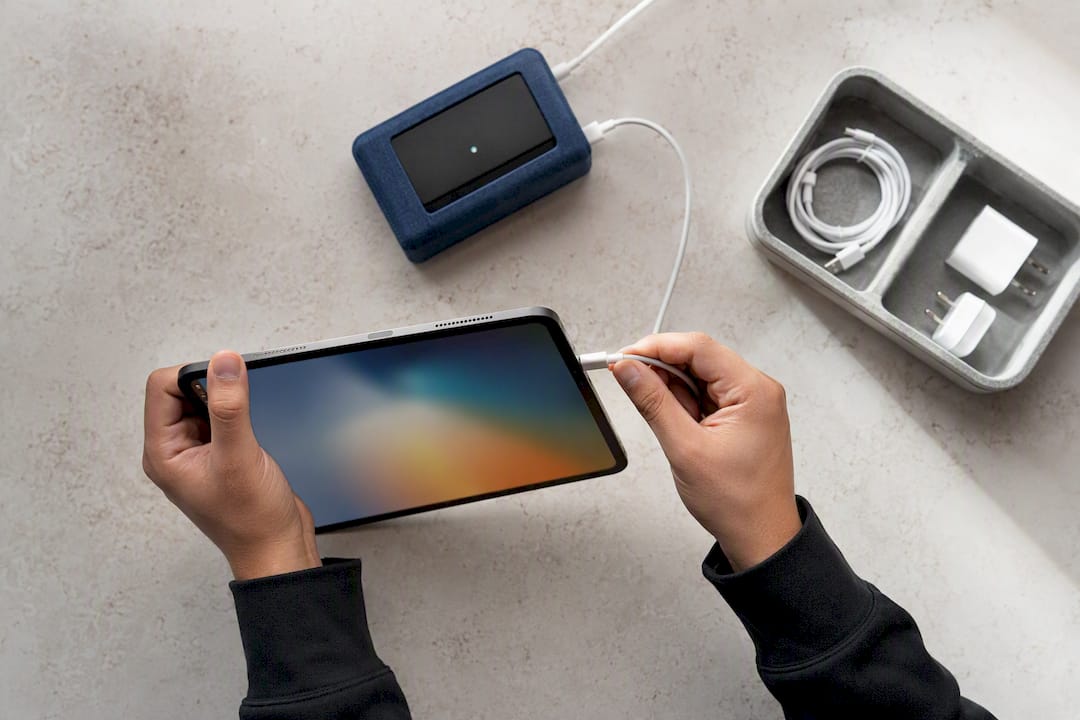
Bring this kit every time: a charger, a spare SIM card, a portable battery meter, a small screwdriver, and a phone with a diagnostic app or two installed. A simple test kit and short test script cuts post-purchase defects dramatically, because you catch problems on the spot instead of after you've already paid.
Phones:
- Check the IMEI on the manufacturer or carrier portal to confirm it isn't blacklisted or reported lost.
- Insist the seller signs out of iCloud or their Google account and performs a factory reset in front of you.
- Check battery health in settings, test the camera, mic, and speakers, and inspect the screen for dead pixels or discoloration.
Laptops:
- Boot it cold and watch startup time and fan noise.
- Run a battery discharge test if you have five extra minutes, and confirm the charger actually charges it.
- Check the screen with a dead pixel test, test every key on the keyboard, and confirm the drive shows up correctly in system settings.
Consoles: Power on with a game inserted, test both controllers, check HDMI output for artifacts, and confirm all cables and accessories are present.
Document everything with photos and a quick note on your phone. A phone locked to another account is usually unsellable, so treat activation lock as an automatic walkaway, not a negotiating point.
Pricing and Fee Math: What Can You Actually Pay?
Your maximum buy price isn't the resale value. It's the resale value minus everything that eats into it.
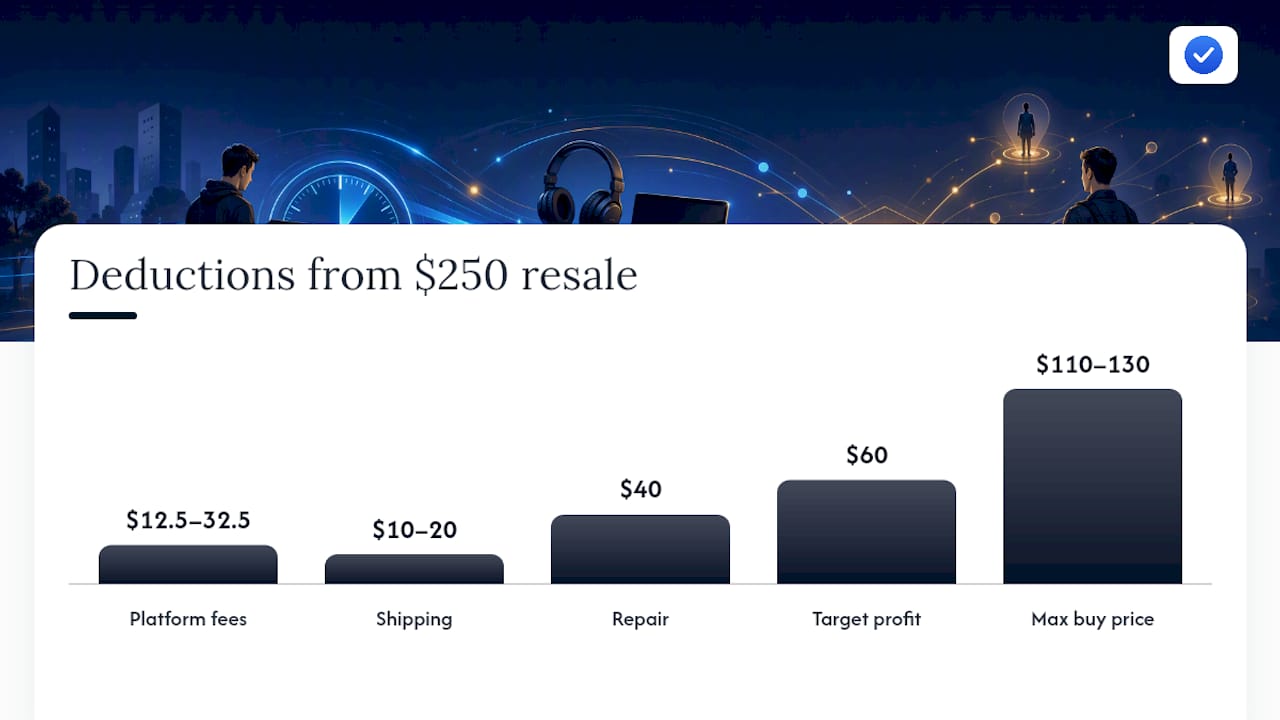
The formula: Buy Price = Target Resale Price − Platform Fees − Shipping (if applicable) − Repair Costs − Target Profit.
Say a used iPhone sells for $250 in your area. Marketplace fees run roughly 5 to 13% depending on the platform, shipping (if you ship instead of meeting locally) can run $10 to $20, and a cracked screen repair might cost $40. If you want a $60 profit, your maximum buy price lands around $110 to $130 after subtracting those costs.
For a laptop reselling at $400, a bad battery swap might cost $50, platform fees could take $30 to $50, and a $75 profit target pushes your ceiling down to roughly $225 to $245.
A few things change the math fast:
- Fees vary by channel. Building fees, shipping, and repair allowances into your buy price up front prevents the nasty surprise of a "profitable" flip that actually loses money.
- Cross-listing across two or three platforms increases exposure but adds relisting time and sometimes double-selling risk.
- Local-only, cash-and-carry deals skip shipping and payment fees entirely, which is often worth accepting a slightly lower sale price for faster turnover.
Pro Tip: Keep a simple spreadsheet with columns for buy price, repair cost, channel, and final sale price. After 20 flips, you'll know exactly which categories to keep buying and which to drop.
Staying Safe and Negotiating Without Losing Your Margin
Meet in public, well-lit locations, ideally near a police station's designated exchange zone if your area has one. Photograph the item and the seller's ID or profile before handing over cash, and prefer digital payments with a paper trail over cash when the amount is significant.
- Watch for sellers who refuse in-person testing, push for shipping first, or won't provide an IMEI or serial number.
- Counterfeit chargers and accessories are common in bundle listings, so inspect brand markings closely.
- Verify the IMEI or serial number on the spot using your phone before any money changes hands.
When negotiating, say something like, "I can do $X once I've confirmed the battery health and IMEI clear." That phrase does two things at once: it signals you're a serious buyer and it keeps your offer conditional on the item passing inspection.
Your Daily Workflow and the Tools That Speed It Up
A repeatable routine beats sporadic bursts of searching. Most consistent flippers scan new listings every 30 to 60 minutes during peak hours, set a hard three-minute decision window per listing, and log every purchase immediately.
- Use a quick sold-comps lookup before messaging any seller, so you're not negotiating blind.
- Keep an IMEI checker and a browser-based dead-pixel or mic test bookmarked for pickups.
- Automate your alerts for fresh listings instead of manually refreshing the marketplace all day.
An AI-powered platform fits directly into this cadence. Its deal scores flag underpriced listings before you waste time messaging duds, scam signals flag suspicious IMEI patterns and pricing anomalies, and suggested first-offer calculators give you a number to open with instead of guessing.
| Workflow Step | Manual Approach | Tool-Assisted Approach |
|---|---|---|
| Spotting deals | Refresh marketplace repeatedly | Automated deal alerts |
| Pricing check | Search sold listings manually | Instant comps and deal score |
| Risk check | Eyeball the listing for red flags | Automated scam signal flags |
| Opening offer | Guess a number | Suggested first-offer calculation |
What Local Electronics Flipping Actually Pays
Net margins on local electronics flips typically land in a moderate to good range once you subtract repairs, fees, and your time. Most phones and laptops sell within one to two weeks if priced against real comps, but consoles and niche gadgets can sit for a month during off-season stretches.
The part beginners underestimate is time cost, not repair cost. Testing, photographing, messaging, and meeting eats hours that never show up in your profit spreadsheet. That's usually the real reason operators eventually shift toward wholesale lots or hire help. Bring in tooling or an assistant once you're turning down more good listings than you can physically pick up.
— Walsh Pex
Try DealFlipAI's Free Tools on Your Next Flip
You already have the checklist. DealFlipAI gives you the numbers to back it up, without the manual comps digging this guide just walked you through. The Facebook Marketplace Listing Analyzer scores a listing's profit potential and flags scam risk the moment you paste in a link, which maps directly to the inspection and safety steps above.
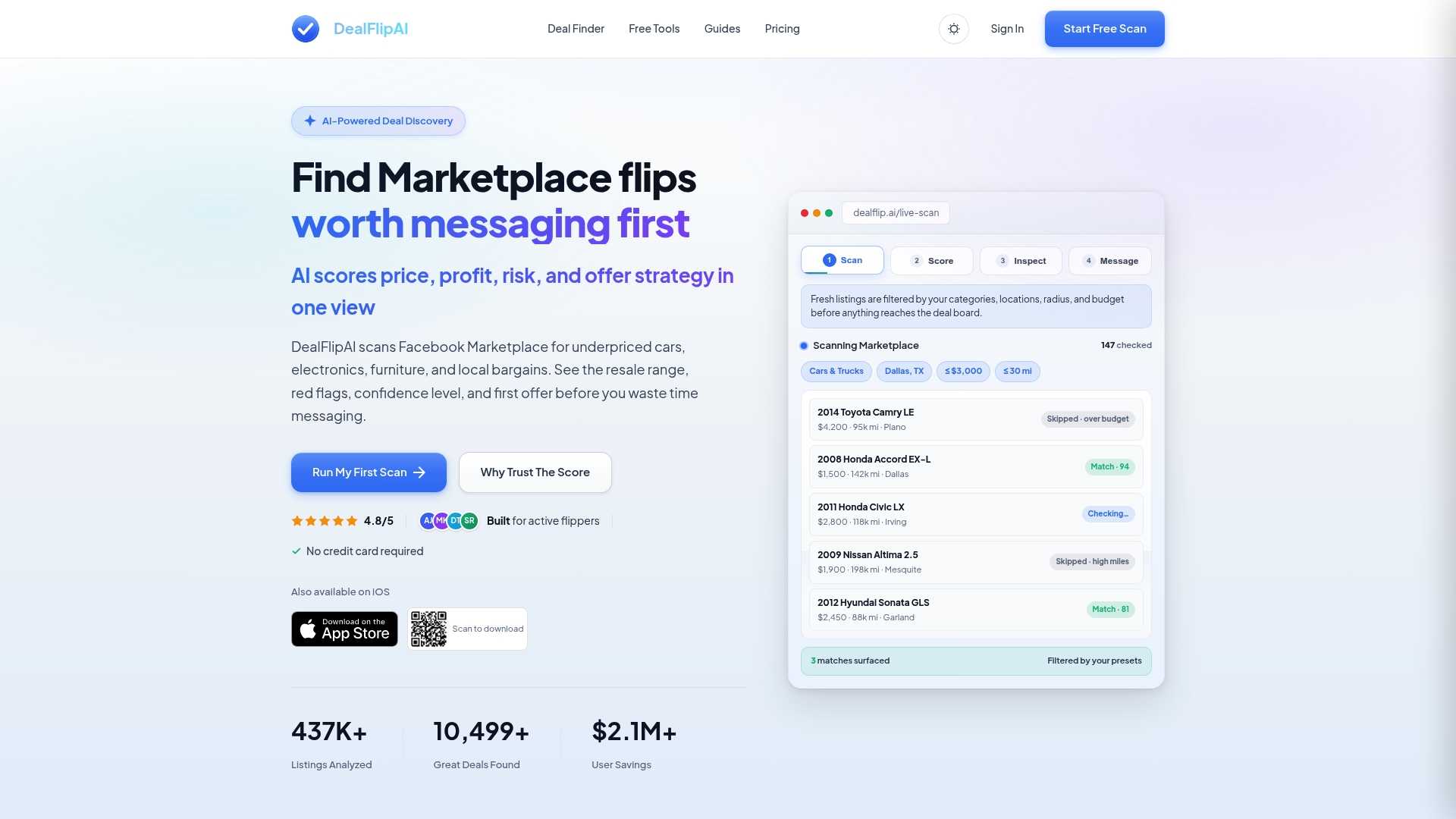
For pricing math, the flip profit calculator runs the buy-price formula from this guide automatically, factoring in fees and your target margin so you're not doing subtraction on your phone at a stranger's kitchen table. Deal alerts notify you the moment a matching listing goes live, which is how you win the 30 to 60 minute window that separates first responders from everyone else.
A free tier offers a limited number of scans and lookups each month, enough to test whether the scoring matches your own instincts before committing to anything. Run your next potential flip through the analyzer before you message the seller.
Sources
- How scammers use Facebook Marketplace—and how to avoid them
- How to start a resale business — what sells and how to price it
- Electronics deal hunting guide