

Comparable listings anchor negotiations by establishing a data-backed reference point that pulls price discussions away from a seller's asking price and toward actual market value. In real estate and resale markets, this technique is known as anchoring, and it works because the first number introduced in any negotiation exerts a powerful psychological pull on every number that follows. Resellers and investors who understand how comparable listings anchor negotiations gain a measurable edge: their offers are harder to dismiss, their counteroffers carry weight, and their walk-away decisions stay grounded in data rather than emotion. Dealflip AI is built around this exact principle, scoring listings against real market data so you always negotiate from a position of knowledge.
How do comparable listings influence buyer and seller price perceptions?
Anchoring bias is the documented tendency for people to rely too heavily on the first number they see. Anchoring bias causes people to insufficiently adjust from an initial figure, even when they know it may be irrelevant. In a negotiation, that first number is almost always the seller's list price, and it skews perception for both sides.
Even experienced investors fall into this trap. A seller who lists at $450,000 has already framed the conversation. Every counteroffer, every concession, and every "final" number gets measured against that $450,000 anchor. The buyer who walks in without comparable sales data is negotiating on the seller's terms from the start.
Comparable listings break this cycle. When you present three to five recently closed sales that support a lower valuation, you introduce a competing anchor grounded in market reality. Data-backed offers shift the conversation from subjective opinion to objective evidence, placing the burden of proof on the seller to justify why their property commands a premium above the comps.
"Comparable sales data does not just support your offer. It reframes the entire negotiation around what the market has actually paid, not what the seller hopes to receive."
This reframing is the core power of using comparable listings as anchors. A seller who cannot point to a single closed sale above your comp-derived value has no factual ground to stand on. Their emotional attachment to their asking price becomes the outlier, not your offer.
What criteria define effective comparable listings for anchoring negotiations?
Not every listing qualifies as a strong anchor. Weak comps undermine your position. Strong comps make your offer nearly impossible to argue against. The difference comes down to four specific criteria.
-
Quantity. Use 3–5 comparable sales from the recent market. One comp is anecdotal. Three to five comps form a pattern that sellers and agents recognize as a legitimate market analysis.
-
Recency. Comps must come from the last 90 days. Markets shift quickly. A sale from eight months ago reflects different conditions and weakens your anchor considerably. Stick to the 90-day window to maintain credibility.
-
Geographic proximity. Target sales within a 0.5 to 1-mile radius of your subject property. Neighborhood dynamics, school zones, and local demand all affect value. A comp from two miles away may represent a completely different market segment.
-
Property similarity. Match on size, age, and condition. A 1,400-square-foot home from 1985 in average condition is not comparable to a 1,600-square-foot home from 2010 that was recently renovated. Mismatched comps invite legitimate pushback from sellers.
-
Market condition adjustments. Account for whether the market has moved since the comp closed. Rising markets require upward adjustments. Cooling markets may require downward ones. Retail analytics approaches to pricing show that ignoring market direction is one of the most common valuation errors buyers make.
Pro Tip: Before you look at any listing price, compile your comps first. Reviewing the asking price before your comps are ready exposes you to anchoring bias before you even make an offer.
How to leverage comparable listings data to frame initial offers and counteroffers
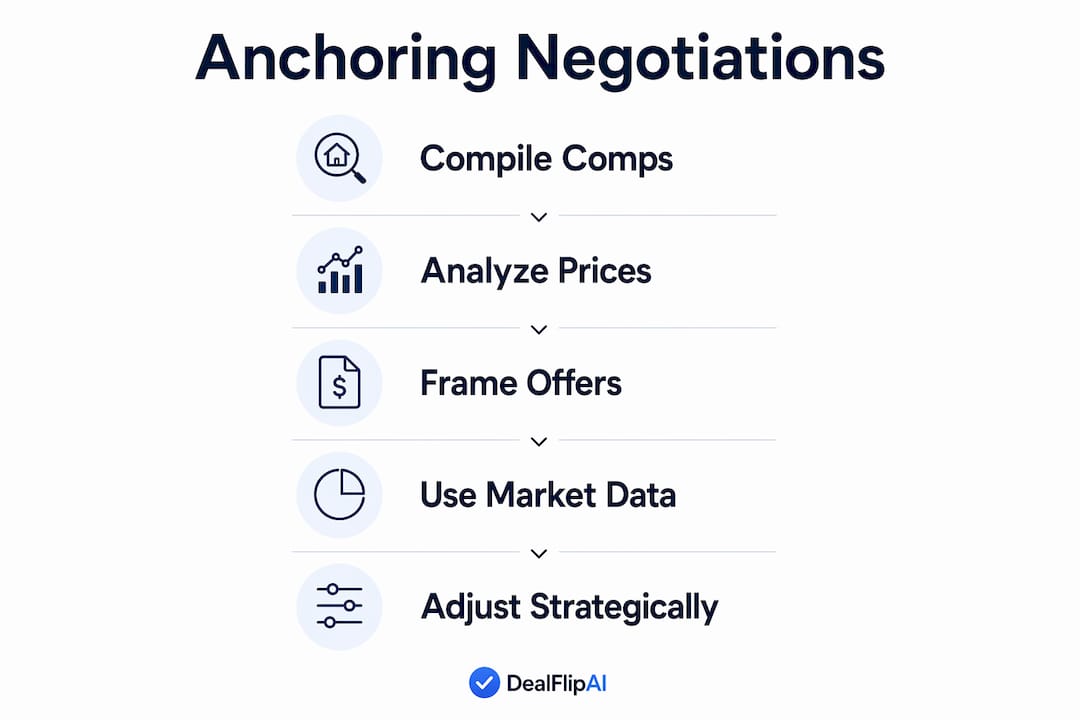
The tactical use of comps in offer framing separates casual buyers from serious investors. The goal is to anchor your offer to comp-derived value, not to the seller's list price.

Anchor to comps, not to the list price
Experienced investors calculate fair-value anchors from recent comparable sales before they ever look at the asking price. This prevents the list price from setting a psychological ceiling on what they consider "reasonable." If your comps support $380,000 and the seller is asking $415,000, your anchor is $380,000, full stop.
Use days on market as leverage
Time on market is one of the most underused negotiation tools available. Listings past 60 days on market justify offers 7–10% below list price when supported by comps and inspection data. That is a significant discount range, and it is entirely defensible when you present the data clearly. For properties in the 30–60 day window, a 3–7% reduction below list is appropriate with comp support.
The first four weeks on market represent the critical window where sellers hold the most leverage. After that window closes, price cuts become common and your comp-backed offer gains more traction.
Make your offer precise
A precise offer signals thorough research. Offering $432,500 instead of $430,000 signals that you arrived at that number through detailed market analysis, not a round-number guess. Sellers and agents recognize this signal. It discourages large counteroffers because it implies you have done the math and know exactly what the property is worth.
Here is how comp-based offer framing compares to list-price-based framing:
| Approach | Starting point | Leverage source | Seller's burden |
|---|---|---|---|
| List-price anchoring | Seller's asking price | Emotional attachment | Buyer must justify discount |
| Comp-based anchoring | Closed market sales | Objective market data | Seller must justify premium |
| Days-on-market leverage | Time + comps combined | Market fatigue + data | Seller must explain stale listing |
Pro Tip: When presenting comps to a seller or agent, organize them in a simple one-page summary showing address, close date, price per square foot, and days on market. A clean presentation signals professionalism and makes your anchor harder to dismiss.
- Present comps before stating your offer, not after. This sets the market context first.
- Include concessions like closing cost contributions or repair credits in your comp-adjusted offer to add flexibility without raising the headline price.
- Communicate your anchor calmly and factually. Emotional delivery undermines the data.
- Use the AI offer suggestion tool from Dealflip AI to generate comp-backed first offers based on real market data.
What are common pitfalls and advanced strategies in anchoring negotiations?
Even well-researched anchors can backfire. Knowing the failure modes is as important as knowing the tactics.
Pitfalls to avoid
- Over-precision that reads as inflexibility. Extreme precision in offers signals expertise but can also signal that you have no room to move. Balance a precise number with a willingness to discuss concessions.
- Using outdated or mismatched comps. A comp from 120 days ago or from a different neighborhood gives the seller an easy rebuttal. Weak comps destroy your credibility faster than no comps at all.
- Anchoring too low in competitive markets. In a seller's market with multiple offers, an extreme low anchor can remove you from consideration entirely. Read the market before setting your anchor range.
- Failing to set a walk-away ceiling. Without a pre-committed maximum, loss aversion takes over. You start thinking "just $5,000 more" and end up paying well above your comp-derived value.
Advanced strategies
Setting a hard walk-away ceiling in writing before negotiations begin is one of the most effective disciplines an investor can practice. Write the number down. Commit to it. This pre-commitment prevents the emotional creep that erodes negotiation leverage in the final stages of a deal.
Deciding when to share your comps publicly versus keeping them private is also a strategic choice. In a slow market, presenting your comps openly shifts the burden of proof to the seller immediately. In a competitive market, you may want to keep your comp analysis internal and simply present a confident, precise offer without explaining every calculation.
Dealflip AI addresses both scenarios. Its listing analyzer tool pulls comparable market data and scores listings by profit potential and risk, so you arrive at every negotiation with a clear, defensible anchor already calculated. That kind of preparation is what separates resellers who consistently profit from those who overpay.
Key takeaways
Comparable listings anchor negotiations most effectively when they are recent, geographically tight, and presented before the seller's list price has a chance to set the psychological frame.
| Point | Details |
|---|---|
| Build comps before viewing list price | Reviewing asking price first exposes you to anchoring bias before negotiations start. |
| Use 3–5 comps within 90 days | This range creates a credible market pattern that sellers and agents cannot easily dismiss. |
| Precise offers signal due diligence | A specific number like $432,500 implies detailed analysis and discourages large counteroffers. |
| Days on market expand your discount range | Properties past 60 days justify 7–10% below list when supported by comp data. |
| Set a written walk-away ceiling | Pre-committing to a maximum prevents loss aversion from pushing offers above comp-derived value. |
Why I think most resellers leave money on the table in negotiations
After watching hundreds of resale deals play out, the pattern is consistent. Resellers who lose negotiation leverage almost never lack information. They lack the discipline to use it first.
The mistake I see most often is this: a reseller finds a promising listing, gets excited, and opens with an offer based on gut feel or a rough percentage below asking price. The seller counters. The reseller adjusts. By the third round, they are negotiating on the seller's terms entirely, and the comp data they could have used is sitting unused on their phone.
The resellers who consistently win use comps as their opening move, not a backup argument. They present market data before they present a number. They let the comps do the heavy lifting so the conversation starts on their terms. That shift in sequencing changes everything.
I have also noticed that AI tools are changing the speed at which resellers can build credible anchors. What used to take an hour of manual research now takes minutes. That speed matters because the best deals move fast. Resellers who can pull comp-backed offer data in real time are simply better positioned than those who rely on memory or instinct. The signs of an undervalued listing are often visible in the data before they are visible to the eye. Train yourself to look there first.
— Walsh Pex
Sharpen your negotiation anchors with Dealflip AI
Resellers who negotiate with data consistently outperform those who negotiate on instinct. Dealflip AI gives you the tools to build that data edge quickly.
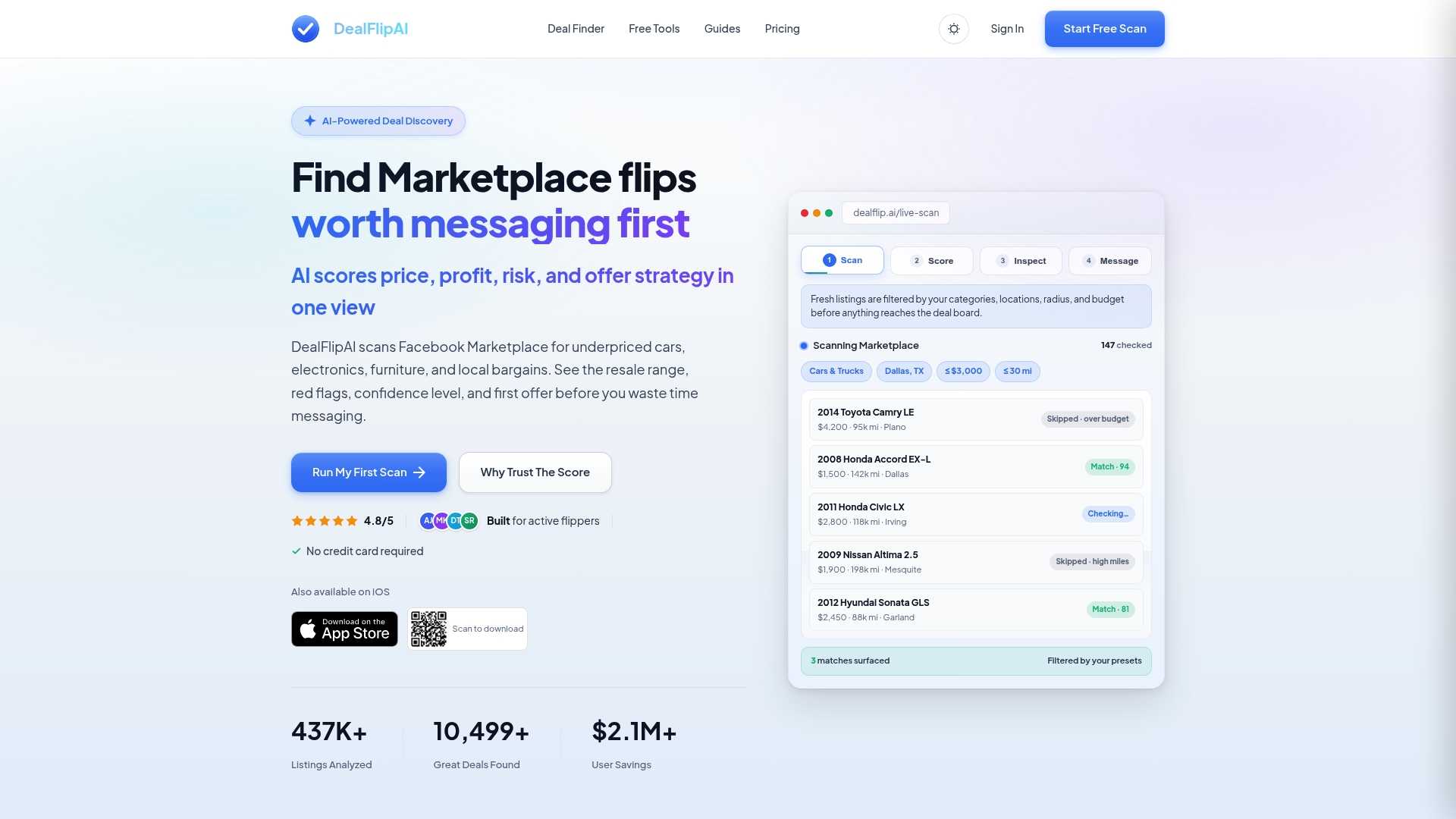
The free reseller tools suite includes a listing analyzer, a value estimator, and an AI offer suggestion tool that calculates comp-backed first offers based on real market signals. You can identify undervalued listings, assess profit potential, and arrive at every negotiation with a precise, defensible anchor already in hand. Dealflip AI also flags scam risks and sends real-time alerts for fresh listings, so you act before the competition does. Put the data to work on your next deal.
FAQ
How do comparable listings anchor negotiations?
Comparable listings set a data-backed reference point that frames price discussions around actual market value rather than a seller's asking price. Anchoring bias causes all subsequent numbers in a negotiation to be measured against the first anchor introduced, so presenting comps early shifts that anchor in your favor.
How many comparable sales should I use in a negotiation?
Use 3–5 recently closed comparable sales from the last 90 days within a 0.5 to 1-mile radius. This range creates a credible market pattern rather than a single anecdotal data point.
When does days on market increase my negotiation leverage?
Properties listed for 30–60 days support offers 3–7% below list price with comp backing. Listings past 60 days justify 7–10% below list when combined with comparable sales data and inspection findings.
Should I share my comparable listings with the seller?
In a slow market, presenting comps openly shifts the burden of proof to the seller immediately. In a competitive market, keep your analysis internal and lead with a precise, confident offer instead.
How does Dealflip AI help with comparable listing analysis?
Dealflip AI scores listings by price, profit potential, and risk using real market data, and its offer suggestion tool calculates comp-backed first offers automatically. This gives resellers a ready-made anchor before they enter any negotiation.