

Listing transparency is the practice of sharing complete, accurate details about a marketplace item upfront, including price, condition, fees, and terms, so buyers can evaluate it without back-and-forth. For resellers and flippers, this practice directly cuts the time spent on deal evaluation. Properties that implemented fee transparency measures saw a 73% increase in page views and a 96% increase in leads. That kind of engagement jump shows what happens when guesswork disappears from a listing. Dealflip AI applies this same logic to Facebook Marketplace, scoring listings on price, profit potential, and risk so you can decide faster and move on.
How listing transparency saves time through clearer pricing
Clear pricing is the fastest way to filter out bad deals before they waste your afternoon. When a listing shows the full cost upfront, including platform fees, shipping, and any known defects, you skip the message thread where you ask five questions and wait two days for answers. That friction is where most resellers lose hours every week.
The data backs this up. Fee transparency measures not only drove a 73% increase in page views but also produced a 7.8% rise in net operating income for communities that adopted them. More qualified leads arrived earlier in the process. That same pattern applies to marketplace flipping: when a listing shows a clear price and condition, the flippers who respond are serious, and the ones who aren't move on without wasting anyone's time.
Total cost displays and price calculators are the most practical tools for achieving this. A listing that shows "$85 asking price, estimated resale $140 on eBay, platform fee $14" gives you a decision in seconds. Without that breakdown, you are doing mental math on incomplete information, which slows you down and increases the chance of a bad buy.
Pro Tip: Add a total cost line to every listing you evaluate. Use a flip profit calculator to run the numbers before you message a seller, not after.
| Metric | With fee transparency | Without fee transparency |
|---|---|---|
| Page views | +73% | Baseline |
| Lead volume | +96% | Baseline |
| Net operating income | +7.8% | Baseline |
| Decision speed | Faster, fewer questions | Slower, more back-and-forth |
| Delinquency rate | Decreased | Higher |
What operational bottlenecks does transparency eliminate?
Manual offer management is one of the biggest time drains in reselling. When you track offers through a mix of text messages, email threads, and memory, things fall apart fast. Messages get buried, timestamps get lost, and you forget which seller said what.

Centralized offer management platforms solve this by automating tracking and communication. An audit trail shows every offer, every response, and every timestamp in one place. You stop hunting through your inbox and start making decisions with full context.
Here is where transparency eliminates specific bottlenecks in your workflow:
- Lost messages. A centralized dashboard keeps every offer thread in one place, so nothing disappears into a notification pile.
- Unclear timelines. Automatic timestamps show exactly when an offer was made and when a response is due, removing ambiguity from every negotiation.
- Negotiation friction. When contingencies and deadlines are spelled out upfront, sellers and buyers spend less time arguing over terms they never agreed on clearly.
- Slow decisions. Automated notifications alert you the moment a seller responds, so you are not checking manually every few hours.
- Repeated questions. A listing that answers common questions upfront cuts the number of messages you send before making an offer.
Offer management systems with automatic timestamps attract stronger offers earlier because cooperators trust the process. That trust shortens deal cycles. You spend less time chasing and more time closing.
Pro Tip: Build a set of standardized message templates for each stage of your offer process. A template for initial contact, one for counter-offers, and one for closing confirmation cuts your response time in half.
Why open listing data reduces wasted evaluation time
Private listings cost you money in two ways: you overpay, and you wait longer. Private non-transparent listings lead buyers to overpay by 10–20% compared to open listings, and they extend vacancy days because fewer qualified buyers ever see the item. For a flipper working on thin margins, a 10% overpayment on a $200 item wipes out your profit entirely.
Open listings give you benchmarkable data. When a listing includes condition details, comparable sale prices, and clear fee structures, you can check it against market value in minutes. Tools like Dealflip AI's market value estimator pull comparable data so you know whether a price is fair before you spend time negotiating.
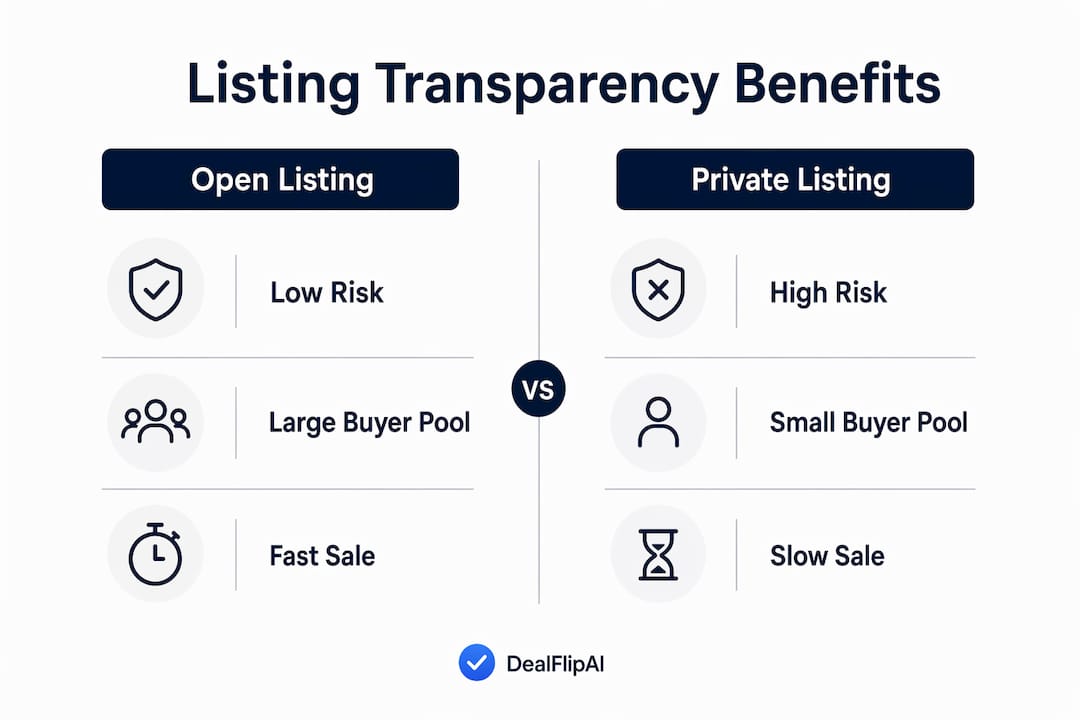
Open listings also decrease vacancy days by creating transparent paper trails that protect both parties and promote fair competition. More qualified buyers reach the listing, which means faster sales and less time holding inventory. For resellers, holding time is a hidden cost. Every day an item sits unsold is a day your capital is tied up.
The contrast between private and open listings is stark when you look at the full picture. Private listings offer short-term control but reduce competition and market leverage. Full disclosure builds long-term trust and speeds deals. That is not a trade-off worth making when your income depends on volume and speed.
| Factor | Open listing | Private listing |
|---|---|---|
| Overpayment risk | Low | 10–20% higher |
| Buyer pool size | Wide | Restricted |
| Vacancy or hold time | Shorter | Longer |
| Price benchmarking | Easy | Difficult |
| Trust and paper trail | Strong | Weak |
How organizational transparency cuts decision-making time
Transparency is not just about what a listing says. It also applies to how you and your team operate. When everyone working on deal evaluation shares the same goals, data, and process, decisions happen faster and mistakes get caught sooner.
Rapid onboarding with full transparency reduces ramp-up time and prevents employee turnover, which is especially damaging in small reselling operations. When a new partner or assistant joins your flipping operation, clear documentation of your criteria, pricing rules, and offer thresholds gets them productive immediately. Without that clarity, they spend weeks learning by trial and error.
Teams that share clear company goals and operational challenges cut delays and improve processes continuously. In a reselling context, this means sharing your deal criteria openly, documenting why you passed on specific listings, and reviewing what worked each week. That feedback loop shortens the time it takes to spot a good deal.
Transparency also shifts the culture from blame to problem-solving. When a bad buy happens, a transparent team asks "what did the listing hide?" rather than "who made the mistake?" That question leads to better filters, better checklists, and faster evaluation next time. You can filter low-quality listings faster when your whole operation learns from each deal together.
Key Takeaways
Listing transparency saves time by removing the uncertainty that slows every stage of deal evaluation, from first contact to final offer.
| Point | Details |
|---|---|
| Clear pricing cuts evaluation time | Upfront fee and condition details let you decide in seconds, not days. |
| Open listings reduce overpayment risk | Private listings carry a 10–20% overpayment risk; open data gives you benchmarks. |
| Centralized offer management saves hours | Audit trails and automated timestamps eliminate lost messages and unclear timelines. |
| Team transparency speeds decisions | Shared goals and documented criteria reduce ramp-up time and repeat mistakes. |
| Transparent listings attract better offers | Fee disclosure drives higher lead quality and faster deal cycles. |
Transparency is the edge most flippers ignore
Walsh Pex here. After years of watching resellers burn time on listings that should have taken thirty seconds to evaluate, I've come to one firm conclusion: most flippers treat transparency as a seller's problem, not their own. That is a costly mistake.
The flippers who move fastest are not the ones with the best instincts. They are the ones who pre-inspect and disclose everything they know about a deal before they even make an offer. They turn hidden risks into visible factors. That removes the negotiation leverage that sellers use to stall or inflate prices.
What I have also learned is that data alone does not close deals. Reading human motivation matters just as much as reading a price history. A seller who lists at $150 but responds within two minutes at 9 PM is probably motivated. That signal is not in the listing. Transparency gives you the data foundation, but empathy fills the gaps.
My honest advice: do not overcomplicate your transparency system. A clear checklist, a reliable item value benchmark, and a consistent offer template will outperform any elaborate process. The goal is to make good decisions fast, not to build a perfect system slowly.
— Walsh Pex
Dealflip AI puts listing transparency to work for you
Spending less time evaluating listings means spending more time closing profitable deals. Dealflip AI gives you the tools to make that shift without building a manual process from scratch.
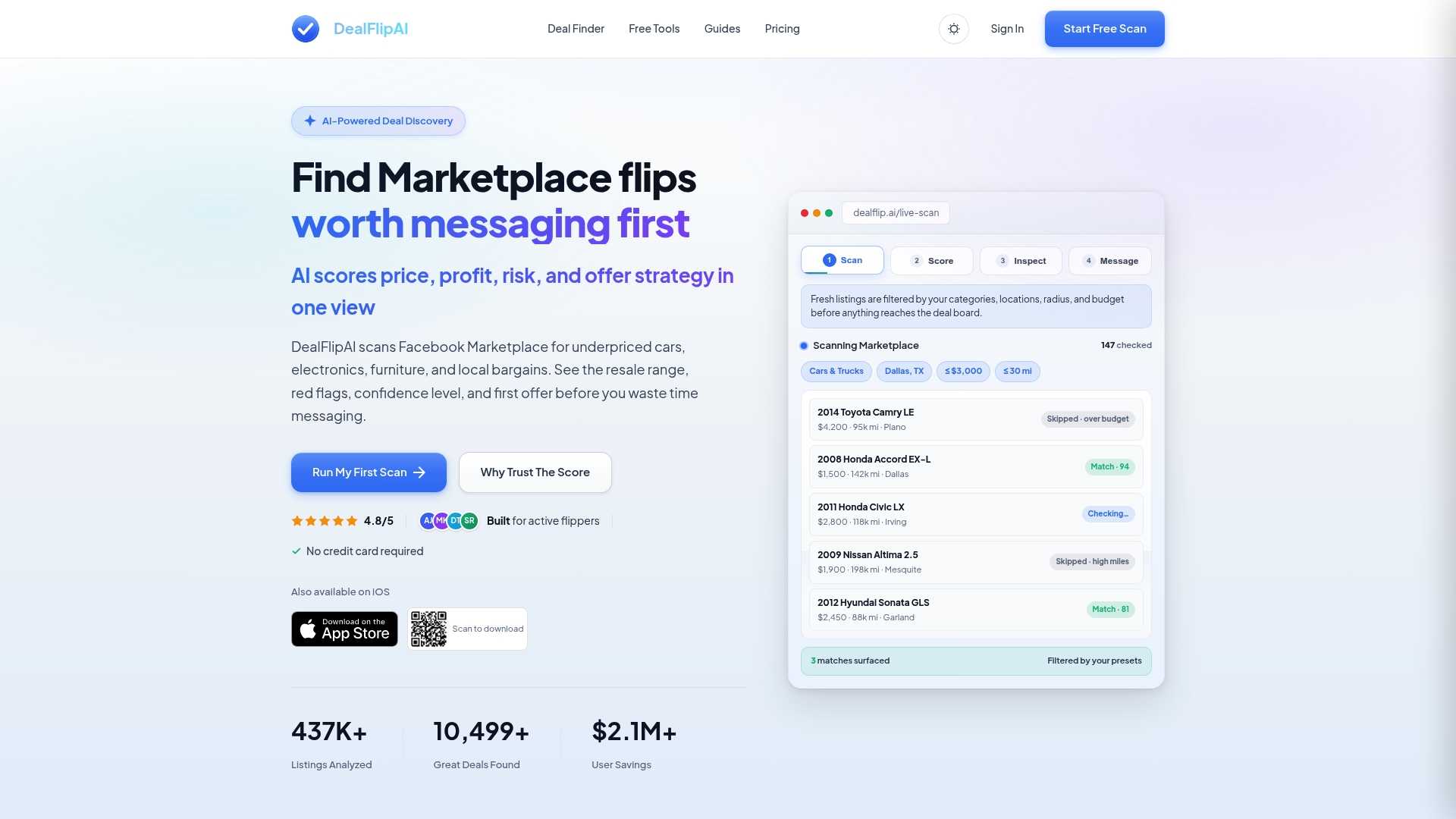
The Listing Analyzer scores every Facebook Marketplace listing on price, profit potential, and risk factors, so you see the full picture in seconds. The AI Offer Suggestion Tool calculates your optimal first offer based on market data and seller signals, cutting the guesswork out of negotiation. Both tools apply the same transparency principles covered in this article: clear data, fast decisions, and no wasted time. Start with Dealflip AI's free deal-finding guide to see how transparent data changes the way you evaluate every listing.
FAQ
What is listing transparency in reselling?
Listing transparency is the practice of sharing complete details about an item upfront, including price, condition, fees, and terms. It lets resellers evaluate a deal quickly without sending multiple messages to gather basic information.
How does transparent pricing improve efficiency?
Transparent pricing removes the back-and-forth that slows deal evaluation. Properties with fee transparency saw a 96% increase in leads, showing that clear pricing attracts qualified buyers faster.
Why do private listings waste more time?
Private listings carry a 10–20% overpayment risk and extend hold times because fewer qualified buyers see them. Open listings give you benchmarkable data and faster deal cycles.
How does offer management transparency save time?
Centralized offer platforms with audit trails eliminate lost messages and unclear timelines. Automated timestamps and notifications mean you spend less time chasing updates and more time negotiating.
Can transparency help a solo reseller, not just teams?
Yes. Even solo flippers benefit from transparent checklists, documented criteria, and clear pricing tools. These practices reduce the mental load of each evaluation and help you make faster, more consistent decisions across every listing you review.