

Item condition is the primary quality signal that determines how much you should offer for any secondhand item. The role of item condition in offer making goes beyond a simple label. It sets your pricing floor, shapes your risk calculation, and directly affects whether a seller accepts or ignores your offer. Condition-based pricing strategies, used by experienced flippers on Facebook Marketplace, rely on recognized grading tiers and market data to anchor every offer in reality. Tools like Dealflip AI apply these same frameworks automatically, scoring listings by condition, price, and profit potential so you can move fast and offer smart.
How does item condition impact pricing on resale platforms?
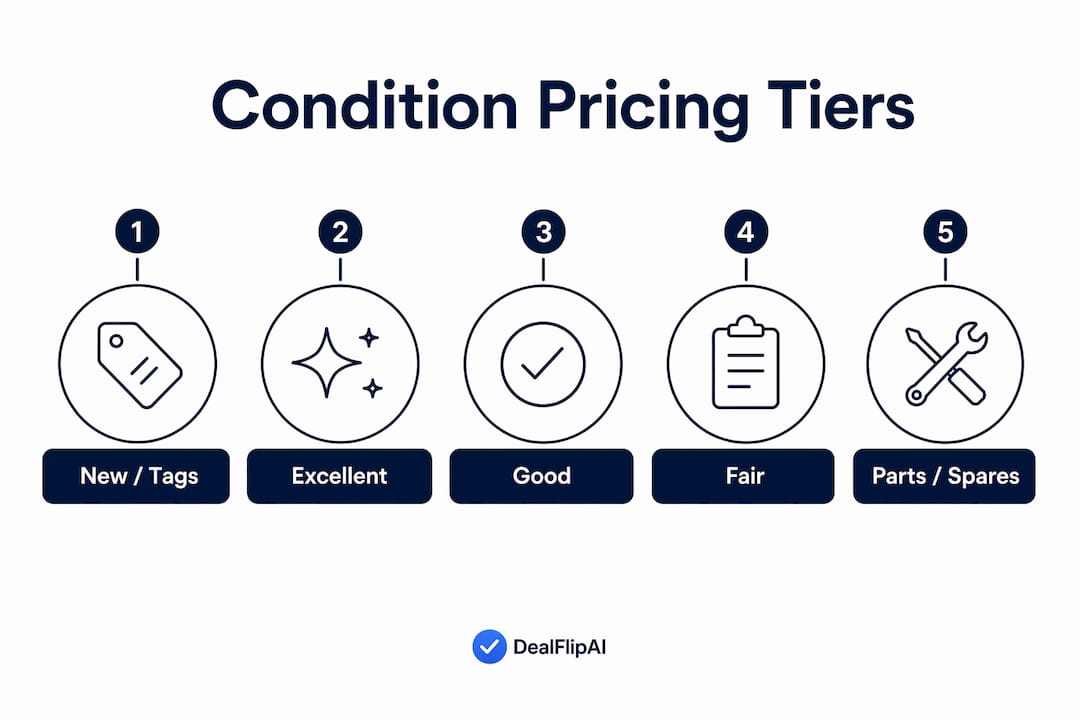
Secondhand pricing follows predictable bands tied to condition tiers. Price bands by condition run from New/With Tags at 60–80% of the original retail price (RRP) down to Parts/Spares at just 5–15% of RRP. Each tier reflects a real drop in buyer confidence and expected lifespan.
Here is how those tiers map to typical price ranges:
| Condition Tier | Typical % of RRP | Notes |
|---|---|---|
| New / With Tags | 60–80% | Unused, original packaging or tags present |
| Like New | 45–65% | No visible wear, may lack original box |
| Very Good | 35–50% | Minor signs of use, fully functional |
| Good | 25–40% | Visible wear, all parts present |
| Fair | 15–25% | Significant wear or minor defects |
| Parts / Spares | 5–15% | Non-functional or incomplete |
These ranges give you a starting anchor, but they are not fixed rules. Electronics and fashion behave differently. A "Good" condition iPhone from a top brand may still fetch 40% of RRP because demand is high. A "Like New" garment from an unknown label may struggle to reach 30% because brand desirability drives fashion resale more than physical state. Knowing which category you are in changes how you weight condition in your offer.
One overlooked example: assembled flat-pack furniture sells for less than unassembled versions of the same item. Assembled furniture loses value because buyers factor in transport difficulty and reassembly risk, even when the physical condition is identical. That is condition valuation working in a non-obvious direction.

What nuances affect evaluating item condition beyond standard tiers?
Condition labels are subjective. One seller's "Like New" is another seller's "Very Good." Label subjectivity requires visual verification of specific red flags before you commit to any offer price.
Watch for these warning signs when you evaluate a listing:
- Missing accessories or manuals: A laptop without its charger or a camera without its lens cap signals incomplete condition, which drops the item at least one tier.
- Blurry or low-light photos: Sellers hiding flaws use poor photography. If you cannot see the corners, seams, or ports clearly, assume the worst.
- Functional wear not mentioned: Sticky keys, a cracked hinge, or a battery that drains fast are functional issues that cosmetic descriptions often skip.
- Vague language: Phrases like "minor marks" or "light use" without photos are red flags. Demand specifics before offering.
- No original packaging for electronics: Missing boxes reduce resale value further down the chain, which affects your own exit price.
Pro Tip: Ask the seller for a short video of the item powered on and functioning. This single step eliminates most functional condition disputes before you make an offer.
Fashion resale adds another layer. Project Rewear 2026 found no significant link between physical condition and resale value in clothing. Premium pricing concentrates in top brand segments regardless of wear. A well-worn Supreme hoodie outprices a pristine generic one every time. For electronics, the reverse is often true. Condition matters more when brand differentiation is lower. Understanding this split helps you calibrate how much weight to give condition when evaluating item quality in negotiations.
For a deeper look at how laptop resale value shifts with brand and condition, the electronics category shows this dynamic clearly.
How does item condition interact with seller credibility and market dynamics?
Condition does not work alone. A 2026 deep learning model achieved 79.2% accuracy predicting resale outcomes by combining condition signals with seller trust and pricing transparency. Imagery and favorites ranked lower as predictors. That finding matters for how you read listings.
"Seller trust, clear pricing, and detailed descriptions are stronger predictors of transaction success than images or favorites. Condition quality above a threshold positively influences prices, but credibility carries the heavier weight in final outcomes."
Integrating Visual and Textual Features for Predicting Outcomes in Secondhand Marketplaces, 2026
This has a practical implication. Once an item clears a minimum condition threshold, pushing for a lower offer based on minor cosmetic flaws may not work if the seller has strong ratings and a history of accurate descriptions. Diminishing returns on condition set in above that threshold. A seller with 200 five-star reviews and a "Very Good" item will resist a "Good" price offer, and they have the credibility to back it up.
Marketplace-certified sellers can partially offset condition penalties through reputation alone. Credibility reduces condition penalties in final accepted prices, meaning you may pay slightly more when buying from a trusted source. That premium is often worth it. You get more accurate condition disclosures, lower dispute risk, and a cleaner resale path. Factor seller credibility into your offer ceiling, not just the item's physical state. You can learn more about spotting unreliable sellers in this guide on avoiding ghost sellers on online marketplaces.
How to strategically evaluate and leverage item condition when making offers?
A structured approach to condition assessment protects your margins and increases offer acceptance. Use this process before sending any offer on Facebook Marketplace.
- Assess functionality first. Power on electronics, check zippers on clothing, test drawers on furniture. Functional issues drop value more than cosmetic ones. If you cannot test in person, ask for a video.
- Check completeness. List every accessory the item should include: charger, remote, manual, original box. Missing items justify a lower offer. Price each missing component separately using current retail cost.
- Document cosmetic flaws from photos. Note scratches, stains, cracks, or fading. Map these to the condition tier table and identify where the item actually sits versus where the seller labeled it.
- Calculate your risk-adjusted offer. Start with the RRP percentage for the true condition tier. Subtract your target profit margin and estimated selling fees. Risk-based pricing adjustments before sending an offer produce more credible bids than generic lowballing.
- Reference comparable sales in your message. Sellers respond better to offers backed by evidence. Mention a similar listing you found at a lower price. This signals you know the market and are not guessing.
- Time your offer strategically. Listings older than two weeks signal a seller who has not found a buyer. Stale listings give you more room to negotiate based on condition.
Pro Tip: Sellers often set automatic acceptance thresholds at 85–92% of their listing price. Offers near auto-accept thresholds paired with a message mentioning prompt pickup and comparable sales close faster than silent lowball bids.
Your message tone matters as much as the number. Acknowledge the item's positive condition aspects before citing flaws. A message that reads "I can see it's in great shape overall, though I noticed the charger is missing" lands better than a blunt discount request. This approach reflects condition knowledge without insulting the seller, which increases acceptance rates. For more on this, the counter-offer negotiation guide covers messaging frameworks in detail.
Key Takeaways
The role of item condition in offer making is to anchor your pricing, define your risk, and signal your credibility as a buyer. Every offer you make should start with a verified condition assessment, not a seller's label.
| Point | Details |
|---|---|
| Condition sets your price anchor | Use RRP percentage bands by tier to calculate your starting offer before negotiating. |
| Labels require verification | Always check photos, ask for videos, and list missing accessories before committing to a price. |
| Brand outweighs condition in fashion | In clothing resale, brand desirability matters more than physical state when setting offer prices. |
| Seller credibility adjusts your ceiling | Trusted sellers with strong ratings can resist condition-based discounts. Factor reputation into your offer. |
| Message strategy closes deals | Reference comparable sales and acknowledge condition positives to increase offer acceptance rates. |
Condition still matters more than most flippers admit
Walsh Pex here. After years of flipping on Facebook Marketplace, I have watched resellers make the same mistake repeatedly. They focus on the item's label and ignore everything underneath it. A seller writes "Good condition" and the buyer offers 30% of RRP without ever asking a single follow-up question. That is not condition-based pricing. That is guessing with extra steps.
The most profitable flips I have made came from spotting a mislabeled item. A "Fair" condition label on a piece of furniture that was actually "Very Good" with one small scratch. The seller priced it at Fair. I offered at Fair. I sold it at Very Good. That gap is where the money lives.
What I have also learned is that condition matters differently depending on where you are in the deal. When you are buying, condition is a discount tool. When you are selling, condition is a marketing claim. The best flippers I know treat condition assessment as a skill they practice, not a checkbox they tick. They know what wear looks like on a specific brand of sneaker versus a generic one. They know which electronics categories punish missing accessories hardest.
My honest advice: stop relying on seller labels entirely. Build your own condition checklist for each category you flip. Electronics, furniture, and fashion each have different failure points. The resellers who consistently profit are the ones who know exactly what to look for before they send a single dollar.
— Walsh Pex
How Dealflip AI helps you price offers by condition
Dealflip AI takes the guesswork out of condition-based offer pricing on Facebook Marketplace. The platform scores each listing by price, profit potential, and risk factors, including condition signals pulled directly from the listing description and photos.
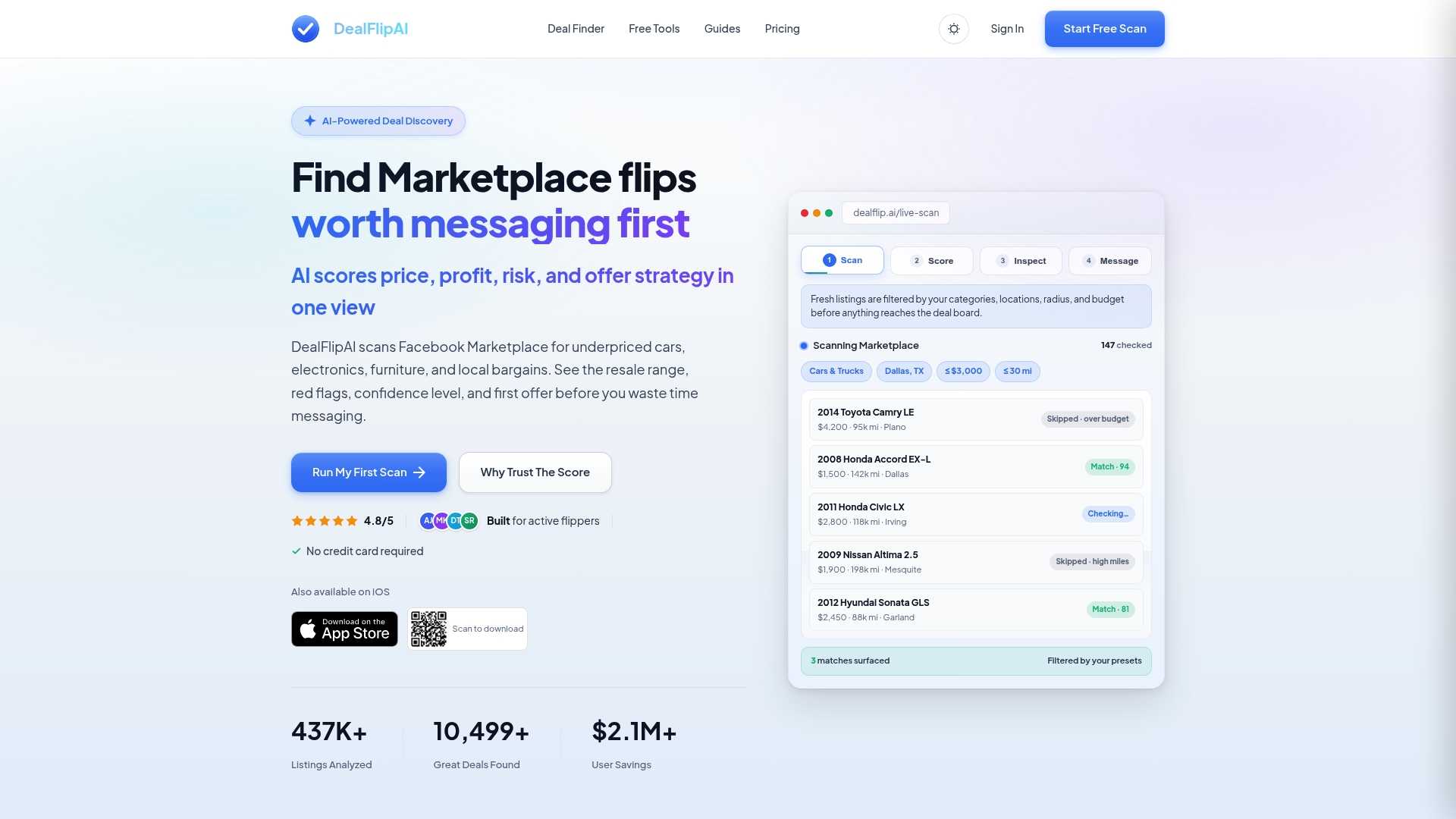
You can run any listing through the Facebook Marketplace listing analyzer to get a condition-adjusted deal score in seconds. Dealflip AI also suggests an optimal first offer based on current market data and seller signals, so you are not starting from a blank page. For resellers who want to find profitable deals faster, the Facebook Marketplace deal finder surfaces undervalued listings before other buyers see them. Condition evaluation is built into every score, so you always know what you are actually buying.
FAQ
What is the role of item condition in offer making?
Item condition is the primary factor that determines your offer price on secondhand platforms. It signals quality, risk, and expected lifespan, which directly affects how much a buyer should pay and whether a seller will accept.
How does condition affect the price I should offer?
Condition tiers correspond to price bands ranging from 60–80% of RRP for New items down to 5–15% for Parts/Spares. Use these bands as your starting anchor before adjusting for brand, missing accessories, and seller credibility.
Does condition matter more than brand in resale?
In fashion, brand perception outweighs physical condition as a pricing driver. In electronics and furniture, condition carries more weight, especially when brand differentiation between listings is low.
How do I verify condition before making an offer?
Check all listing photos for wear points, ask for a video of the item functioning, and list every missing accessory. Verifying key condition indicators before you offer protects your margin and prevents costly surprises.
Can a seller's reputation offset a lower condition rating?
Yes. Marketplace data shows that credibility partially offsets condition penalties in final accepted prices. A trusted seller with minor flaws will resist deeper discounts, and their accurate descriptions reduce your risk of a bad deal.