
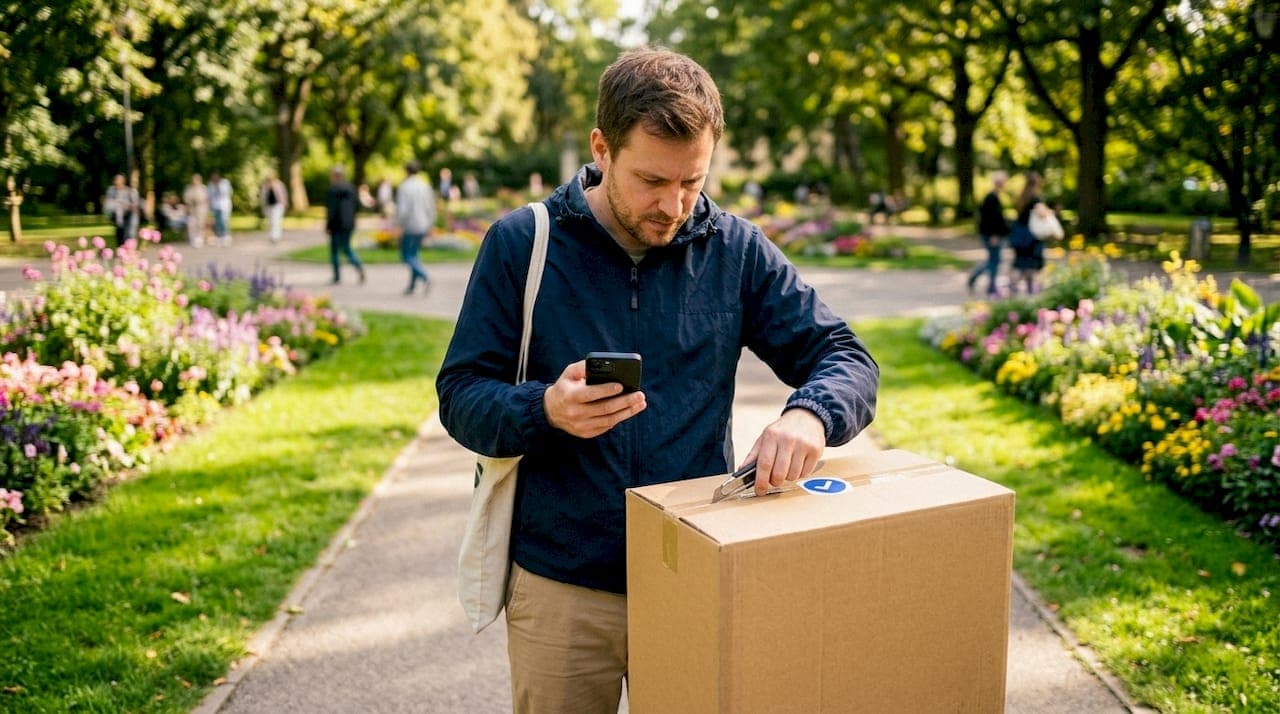
Local pickup deal sourcing is defined as the practice of acquiring resale inventory directly from sellers in your area, bypassing shipping entirely to inspect, negotiate, and take possession on the spot. The benefits of local pickup deal sourcing are concrete: typical ROI ranges from 50% to 150% on favorable items, compared to 30–50% in traditional retail arbitrage. That gap exists because you eliminate shipping fees, reduce return risk to near zero, and gain face-to-face negotiation leverage that online bidding cannot replicate. Tools like Dealflip AI make this approach even more effective by scoring Facebook Marketplace listings for profit potential and risk before you ever leave the house.
1. What are the top benefits of local pickup deal sourcing?
Local pickup deal sourcing delivers five advantages that directly affect your bottom line. Each one compounds the others, which is why experienced resellers treat local sourcing as a primary channel rather than a fallback.
- Higher ROI. Sellers optimizing local pickup report ROI of 50–150% on strong SKUs. Shipping-dependent deals rarely clear 50% once labels, packaging, and return risk are factored in.
- Zero shipping cost. Every dollar you save on freight goes directly to margin. On a $40 item, a $12 shipping fee represents a 30% cost reduction just by picking it up yourself.
- Immediate inspection. You see the item before you pay. That single fact eliminates the most common source of reseller losses: items that arrive in worse condition than listed.
- Face-to-face negotiation. Sellers drop their price more readily in person than over chat. Rapport, body language, and real-time condition assessment all work in your favor.
- Access to off-market deals. Proprietary local sourcing gives you early access to motivated sellers before listings attract competing offers. You negotiate based on certainty, not a bidding war.
- Scheduling control. You pick the time and place. That flexibility lets you batch multiple pickups in one trip, cutting your per-deal time cost significantly.
Pro Tip: Before you drive to any pickup, run the listing through a free margin calculator to confirm the deal clears your minimum ROI threshold after fuel and time costs.
2. How local pickup deal sourcing reduces risk for resellers

Shipping introduces three risks that local pickup eliminates entirely: transit damage, misdescription disputes, and return logistics costs. Each one can turn a profitable deal into a loss.
Local pickup produces nearly zero return rates compared to 12% for shipping-only fulfillment. That 12% figure is not just a refund. It includes return label costs, restocking time, potential item damage in transit back, and the opportunity cost of capital tied up in a dead deal.
Fragile and bulky items carry the highest shipping risk. Furniture, electronics, glassware, and large appliances all face return risk above 5–10% when shipped, which triggers expensive label and restocking fees. Picking them up locally removes that risk category entirely.
Face-to-face verification also protects you from fraud. You confirm serial numbers, test power-on functionality, and check for hidden damage before any money changes hands. That verification step is the single most effective fraud prevention tool available to a reseller.
3. Negotiation advantages you only get in person
The inspection phase is a second negotiation opportunity, not just a formality. Successful local flippers arrive prepared with test tools, power banks, and measuring tapes to verify listing accuracy on the spot.
When you find a discrepancy between the listing and the actual item, you have immediate grounds to renegotiate. A seller who listed a TV as "excellent condition" but has a small screen scratch will often accept $20–$30 less rather than relist and wait. That renegotiation window does not exist in a shipped transaction.
Investors allocate 30–40% of their sourcing time to proprietary local deals precisely because they command double-digit discounts unavailable in brokered or auction-style marketplaces. The same principle applies to resellers on Facebook Marketplace. Motivated sellers want a fast, certain close, and you can offer that in person.
Pro Tip: Bring a phone with sold comps already pulled for the item. Showing a seller real market data is the most persuasive negotiation tool you have.
4. How technology improves local pickup sourcing efficiency
Manual searching for local deals is slow and inconsistent. Scaling local pickup sourcing requires automated scanning tools that monitor platforms around the clock and alert you the moment a high-ROI listing appears.
Dealflip AI does exactly that for Facebook Marketplace. It scores listings by price, profit potential, and risk factors, then sends real-time alerts so you see deals before most manual searchers even open the app. Time-to-offer is critical because profitable local listings disappear fast.
The platform also provides margin calculations and scam detection before you commit. You know your expected ROI, the risk score, and a suggested first offer before you message the seller. That preparation turns every pickup into a data-backed decision rather than a gut call.
- 24/7 deal alerts catch listings the moment they go live, not hours later.
- AI risk scoring flags listings with signs of fraud, misdescription, or overpricing.
- Margin analysis calculates net profit after all costs, including fuel and time.
- Suggested first offers give you a starting point grounded in real market data.
For resellers who want to find good deals on Facebook Marketplace without spending hours scrolling, automation is the practical answer.
5. Why offering local pickup alongside shipping increases your sales
Treating local pickup and shipping as competing options limits your revenue. Offering both fulfillment methods increases sales by 30–45% and expands your buyer pool to include both local and distant customers.
About 40% of buyers consider both options acceptable. That means a listing with only one option automatically excludes a significant share of potential buyers. Sellers who accommodate both capture substantially higher sales volume.
Local pickup buyers also return items less often because they inspect before paying. That lower return rate improves your seller metrics and reduces the time you spend processing refunds.
| Fulfillment option | Return rate | Buyer reach | Negotiation opportunity |
|---|---|---|---|
| Local pickup only | Near zero | Local area | High (in-person) |
| Shipping only | ~12% | National/global | Low (post-sale disputes) |
| Both options | Near zero for local buyers | Maximum | High for local buyers |
A simple strategy for incentivizing local pickup: offer a modest $5–$10 discount for buyers who choose it. You save on shipping materials and time, and the buyer gets a better price. Both sides win.
6. When to choose local pickup over shipping for a deal
Not every item belongs in the local pickup category. The decision depends on item characteristics, your true landed cost, and the risk profile of the transaction.
Choose local pickup when:
- The item is bulky or fragile (furniture, large electronics, glassware).
- Condition is critical and hard to verify from photos alone.
- Shipping costs would exceed 15–20% of the item's resale value.
- The seller is motivated and likely to negotiate in person.
- The item is difficult or expensive to replace if damaged in transit.
Choose shipping when:
- The item is small, standardized, and ships safely in a padded envelope.
- Demand is national and local buyers are scarce.
- Your time cost for pickup exceeds the shipping fee savings.
Landed cost is the key metric for every sourcing decision. A discounted online price often becomes more expensive than a local purchase once you add shipping fees, return risk, packaging, and time. Calculate fuel, drive time, and opportunity cost as real variable expenses before making an offer.
Hidden logistics costs like vehicle maintenance and the opportunity cost of your time must come out of your margin before you set your offer price. Resellers who skip this step consistently overpay.
For sellers managing direct communication with local buyers, having a reliable messaging and CRM system keeps coordination fast and professional, which reduces no-shows and wasted trips.
Key takeaways
Local pickup deal sourcing delivers higher ROI, lower return rates, and stronger negotiation outcomes than shipped deals, making it the most profitable sourcing channel for resellers working Facebook Marketplace.
| Point | Details |
|---|---|
| ROI advantage | Local pickup deals yield 50–150% ROI versus 30–50% for traditional retail arbitrage. |
| Return rate reduction | Local pickup produces near-zero returns compared to 12% for shipping-only fulfillment. |
| Inspection as negotiation | Arriving with test tools lets you renegotiate on the spot when condition does not match the listing. |
| Automation is required to scale | Automated alerts from tools like Dealflip AI beat manual search speed for finite local inventory. |
| Dual fulfillment wins | Offering both local pickup and shipping increases sales by 30–45% and expands your buyer pool. |
Why I think most resellers undervalue the inspection moment
Walsh Pex here. After years of watching resellers operate, the single most underused advantage in local pickup is the inspection phase itself. Most buyers treat it as a box to check. The best resellers treat it as a second negotiation.
The preparation gap is real. Showing up with a power bank to test electronics, a tape measure for furniture, or a phone loaded with sold comps transforms you from a passive buyer into an informed one. Sellers notice. When you can point to a specific flaw and a specific comparable sale, you negotiate from a position of knowledge, not hope.
The other thing I see resellers miss is the true cost of their time. Driving 25 minutes each way for a $15 net profit is not a win. Factor fuel, time, and wear on your vehicle into every deal before you commit. Tools like Dealflip AI make this calculation automatic, which is why I think automation is not optional for anyone trying to scale local sourcing. It is the difference between a hobby and a business.
The market in 2026 rewards resellers who treat local pickup as a system, not a series of one-off transactions. Build the habits, use the tools, and your sourcing operation will run faster and more profitably than most of your competition.
— Walsh Pex
Dealflip AI makes local pickup sourcing faster and more profitable
Dealflip AI scans Facebook Marketplace listings around the clock and scores each one for profit potential, risk, and deal quality before you ever message a seller.
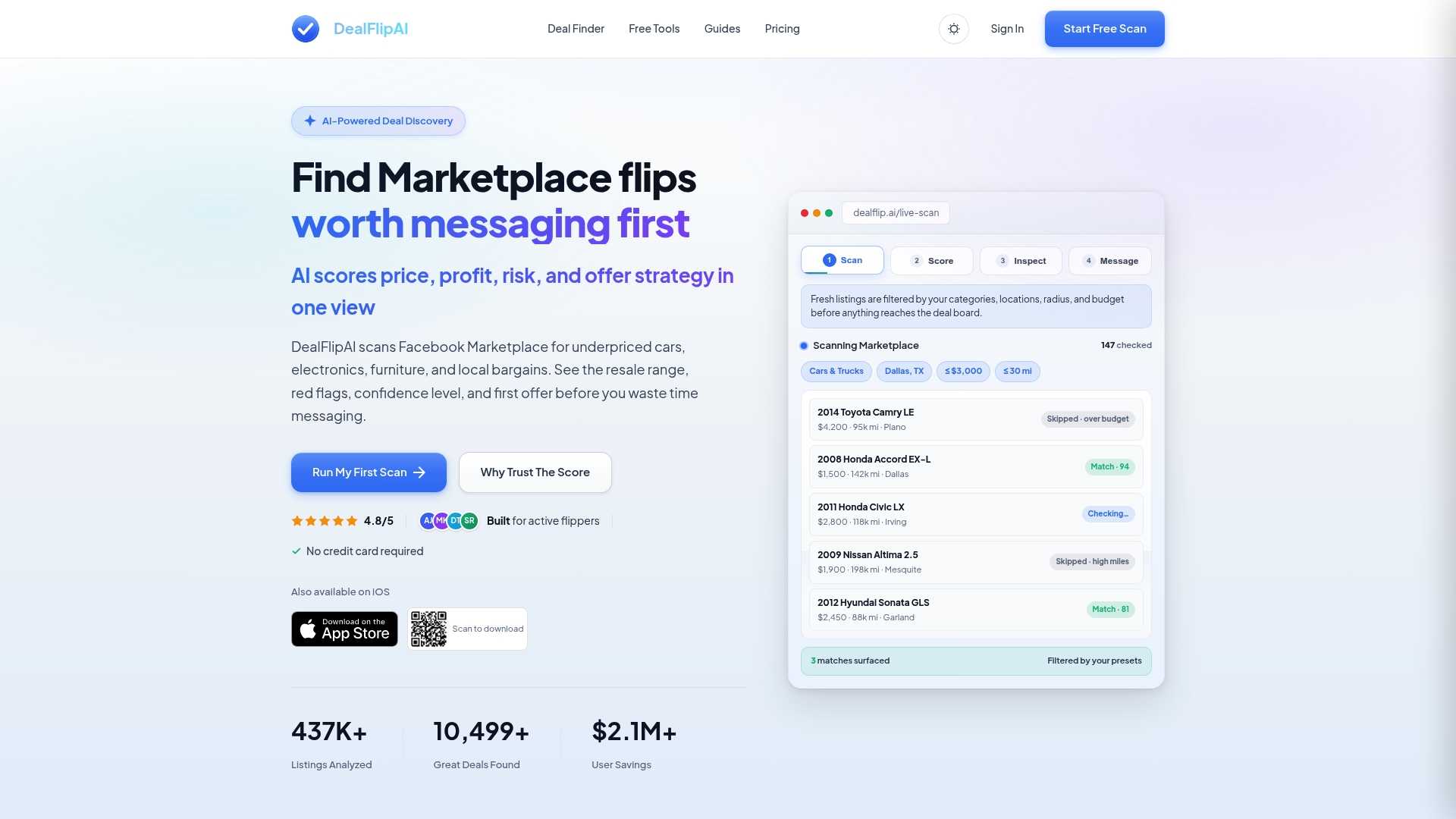
The platform calculates your expected margin, suggests a first offer, and flags scam signals automatically. You spend your time on deals that are already vetted, not on listings that waste your drive. Whether you are sourcing electronics, furniture, or general goods, the Facebook Marketplace deal finder surfaces high-ROI local pickup opportunities the moment they go live. You can also use the free listing analyzer to evaluate any deal in seconds before committing. Dealflip AI supports resellers at every scale, from weekend flippers to full-time buyers running multiple pickups per day.
FAQ
What is local pickup deal sourcing?
Local pickup deal sourcing is the practice of finding and buying resale inventory directly from nearby sellers, skipping shipping entirely to inspect and negotiate in person. It is the standard term for what resellers call "local arbitrage" on platforms like Facebook Marketplace.
Why does local pickup produce higher ROI than shipped deals?
Local pickup eliminates shipping fees, reduces returns to near zero, and enables in-person negotiation, all of which protect margin. ROI on local pickup deals typically ranges from 50% to 150%, compared to 30–50% for traditional retail arbitrage.
Which items are best suited for local pickup sourcing?
Bulky, fragile, or condition-sensitive items like furniture, large electronics, and glassware are the strongest candidates. Return risk above 5–10% on any item category is a clear signal to source locally rather than through shipped transactions.
How does automation help with sourcing deals locally?
Automated tools like Dealflip AI monitor listings 24/7 and send real-time alerts when high-ROI deals appear. Profitable local listings vanish quickly, so automation beats manual search speed and gives you a consistent first-mover advantage.
Should resellers offer both local pickup and shipping?
Yes. Offering both options increases sales by 30–45% and captures buyers who prefer either fulfillment method. Treating them as mutually exclusive leaves a significant share of potential revenue on the table.