

Unreliable marketplace posts are listings that misrepresent a product's condition, authenticity, or value through vague details, unverifiable claims, or suspicious pricing. The categories unreliable marketplace posts fall into most often include electronics, branded fashion, and collectibles, where fraud and defects are hardest to detect before purchase. Platforms like Facebook Marketplace, eBay, and Gumtree all carry these risks, and organizations like Scamwatch and Consumer Advisory have documented the patterns clearly. Dealflip AI was built specifically to help resellers and buyers cut through the noise and spot these red flags fast.
1. which product categories have the highest rate of unreliable posts?
Electronics and branded goods carry the highest risk of counterfeit and defective listings across all major marketplace platforms. Category risk levels vary significantly by product type, with electronics, luxury fashion, and collectibles sitting at the top of the danger list. That concentration matters because these categories attract the most fraud attempts precisely because the items are high value and hard to verify without hands-on inspection.
- Electronics: Smartphones, laptops, and audio gear are frequently listed with false specs, cloned branding, or hidden damage. Counterfeit chargers and batteries are especially common.
- Branded fashion and accessories: Designer handbags, sneakers, and watches are prime targets for fake listings. Sizing inconsistencies and authentication gaps make these posts notoriously unreliable.
- Collectibles and trading cards: Grading fraud and reproduction items flood this category. A listing for a "mint condition" card often lacks any third-party grading documentation.
- Custom or handmade items: These posts are unpredictable by nature. Quality varies wildly, and there is no standardized spec to verify against.
- Low-value standardized goods: Items like basic household supplies or generic tools carry far less risk. The specs are simple, the prices are consistent, and fraud has little payoff.
Understanding which categories carry the most risk lets you allocate your attention where it counts most.
2. red flags inside listings that signal unreliable posts

Vague or missing measurable specifications are the single strongest indicator of an untrustworthy marketplace listing. Spec opacity is a more reliable trust signal than price alone, according to Consumer Advisory. A listing that cannot tell you the wattage of a power tool or the screen resolution of a laptop is hiding something, whether intentionally or not.
Here are the most common listing-level red flags by category:
- Missing measurable specs: No dimensions, weight, wattage, or model number. This is especially damaging in electronics and appliances.
- Unverifiable certification claims: CE, UL, or FCC logos printed on product photos but not traceable to any official registry. These are common in cheap electronics and imported goods.
- Stock or rendered images: Real product photos show wear, serial numbers, and actual condition. Stock photo listings are a documented pattern in counterfeit and defective goods complaints.
- Pricing significantly below market: A $900 laptop listed at $200 is not a deal. It is a signal. Sellers using unrealistically low prices often use phishing links or unusual payment methods to complete the scam.
- Vague delivery information: No shipping carrier named, no estimated timeline, no tracking policy. This is a major red flag in fashion and collectibles categories.
- Keyword stuffing in titles: Listing titles that cram in brand names like "Apple Samsung Sony" to catch search traffic are almost always low-quality or fraudulent posts.
Pro Tip: Search the listing's main photo in Google Images. If it appears on multiple unrelated seller profiles or stock photo sites, treat the listing as unreliable until proven otherwise.
3. how to assess trustworthiness using category and listing details
The most reliable method for evaluating marketplace post reliability is cross-referencing listing claims against verifiable external sources. For electronics, check the model number against the manufacturer's official spec sheet. For fashion, compare the item's label details against brand authentication guides published by GOV.UK and similar consumer protection bodies. Verifiable certifications close the evidence gap that makes high-value branded items so difficult to dispute after purchase.
Use this checklist when evaluating any listing in a high-risk category:
- Check seller history: Account age, total reviews, and response rate all matter. A seller with 200 positive reviews on eBay is meaningfully different from a Facebook Marketplace account created last week.
- Search for duplicate listings: Copy the listing title and search it across platforms. Scammers often post identical listings under multiple profiles.
- Stay on-platform: Keeping communications on-platform reduces scam risk significantly, according to Scamwatch. Any seller pushing you to WhatsApp, Telegram, or personal email is a red flag.
- Avoid unusual payment methods: Wire transfers, cryptocurrency, and gift cards offer no buyer protection. Use platform-supported payment options whenever possible.
- Screenshot everything: Capture the listing, seller profile, and all messages before making contact. Evidence collection before a scammer deletes their profile is the foundation of any effective fraud report.
- Use AI-powered tools: Dealflip AI's listing analyzer scores Facebook Marketplace listings for price accuracy, risk factors, and deal potential in seconds.
Pro Tip: If a seller has zero reviews but a listing that looks too polished, check whether the photos match the account's location. Scammers often copy professional listings from other regions.
4. payment and communication red flags that amplify category risks
Payment and communication tactics are the delivery mechanism for most marketplace fraud. The product category creates the opportunity, but the payment method is where the actual loss happens. Scamwatch and ABC News frame fraud as a funnel that breaks when buyers refuse to leave the platform or use unprotected payment methods.
Watch for these specific patterns:
- Upfront payment via wire transfer or cryptocurrency: ABC News reports that scammers push buyers to pay this way because these transfers are irreversible. Once the money is gone, there is no recourse.
- Fake payment confirmation screenshots: Sellers targeting buyers sometimes send fabricated PayPal or bank confirmation images to claim payment was sent. Always verify directly in your account, never from a screenshot.
- Phishing links disguised as payment portals: Scammers send links that mimic legitimate payment pages to steal login credentials or card details. These often arrive via text or email after initial contact on the platform.
- Pressure and urgency tactics: "I have three other buyers interested" or "This offer expires in one hour" are classic pressure moves. Legitimate sellers do not need to rush you into a decision.
- Requests to move communication off-platform: Any push to continue the transaction via personal messaging apps removes the platform's fraud protection entirely. Scamwatch specifically advises using platform-recommended payment methods and verifying payee identity before sending anything.
These tactics appear across all categories but are most concentrated in electronics, branded goods, and high-value collectibles, exactly the categories already flagged as highest risk.
5. reliable vs. unreliable listings: a category comparison for 2026
The difference between a trustworthy and an untrustworthy marketplace listing often comes down to a handful of specific, observable details. Platform tools and policies improve yearly, but buyer vigilance and category knowledge remain the most critical defense. The table below summarizes what separates reliable from unreliable posts across the most common high-risk categories.
| Category | Reliable Listing Traits | Unreliable Listing Traits |
|---|---|---|
| Electronics | Model number, real photos, verifiable specs, seller history | Missing specs, stock images, new account, price far below market |
| Branded Fashion | Authentication details, multiple real photos, brand tags visible | No tags shown, vague sizing, no return policy, unverifiable brand claims |
| Collectibles | Third-party grading cert, provenance details, clear photos | "Mint condition" with no documentation, reproductions listed as originals |
| Custom/Handmade | Maker's portfolio, process photos, clear materials list | No prior work shown, vague descriptions, no communication history |
| General Goods | Consistent pricing, clear condition notes, fast seller response | Pricing far below comparable listings, slow or evasive responses |
Facebook Marketplace's own policies flag listings that violate commerce standards, but the platform relies heavily on user reports. Knowing these category-specific traits means you catch problems before they become losses.
Key takeaways
Unreliable marketplace posts cluster in specific categories and share measurable red flags that buyers and resellers can learn to spot before any money changes hands.
| Point | Details |
|---|---|
| Highest-risk categories | Electronics, branded fashion, and collectibles carry the most fraud and defect risk. |
| Spec opacity is the top red flag | Missing measurable specs are a stronger warning sign than low price alone. |
| Stay on-platform | Keeping all communication and payment within the marketplace breaks the fraud funnel. |
| Screenshot evidence fast | Capture listing and seller details before scammers can delete their profiles. |
| AI tools speed up evaluation | Dealflip AI's listing analyzer and scam checker reduce manual review time significantly. |
Why category knowledge beats generic scam warnings
I have been evaluating marketplace listings long enough to know that generic advice like "be careful online" does almost nothing for active resellers. What actually changes your outcomes is knowing that a $300 AirPods listing with no serial number visible is not just suspicious. It is almost certainly counterfeit, based on a pattern I have seen dozens of times in the electronics category specifically.
The same logic applies to fashion. I once passed on a "designer" handbag listing that had perfect photos, a reasonable price, and a polite seller. The red flag was a single detail: the interior label font was slightly off from the brand standard. GOV.UK's fake fashion guide covers exactly this kind of detail, and it saved me from a bad buy.
What I have found is that combining category-specific knowledge with AI tools gives you a real edge. Manual checks catch the obvious fakes. AI catches the subtle pricing anomalies and risk signals that human pattern recognition misses at scale. Dealflip AI's scam detection features are built around this exact combination. The goal is not paranoia. It is precision. You want to move fast on good deals and stop cold on bad ones, and that only happens when you know which category signals actually matter.
— Walsh Pex
Stop wasting time on listings that were never worth your time
Every hour you spend manually vetting unreliable posts is an hour you are not flipping. Dealflip AI's free listing analyzer scores Facebook Marketplace listings for deal quality, pricing accuracy, and fraud risk in seconds. The scam checker tool flags suspicious seller signals and payment red flags before you make contact. And the value estimator tells you exactly what a fair price looks like so you never overpay or underbid.
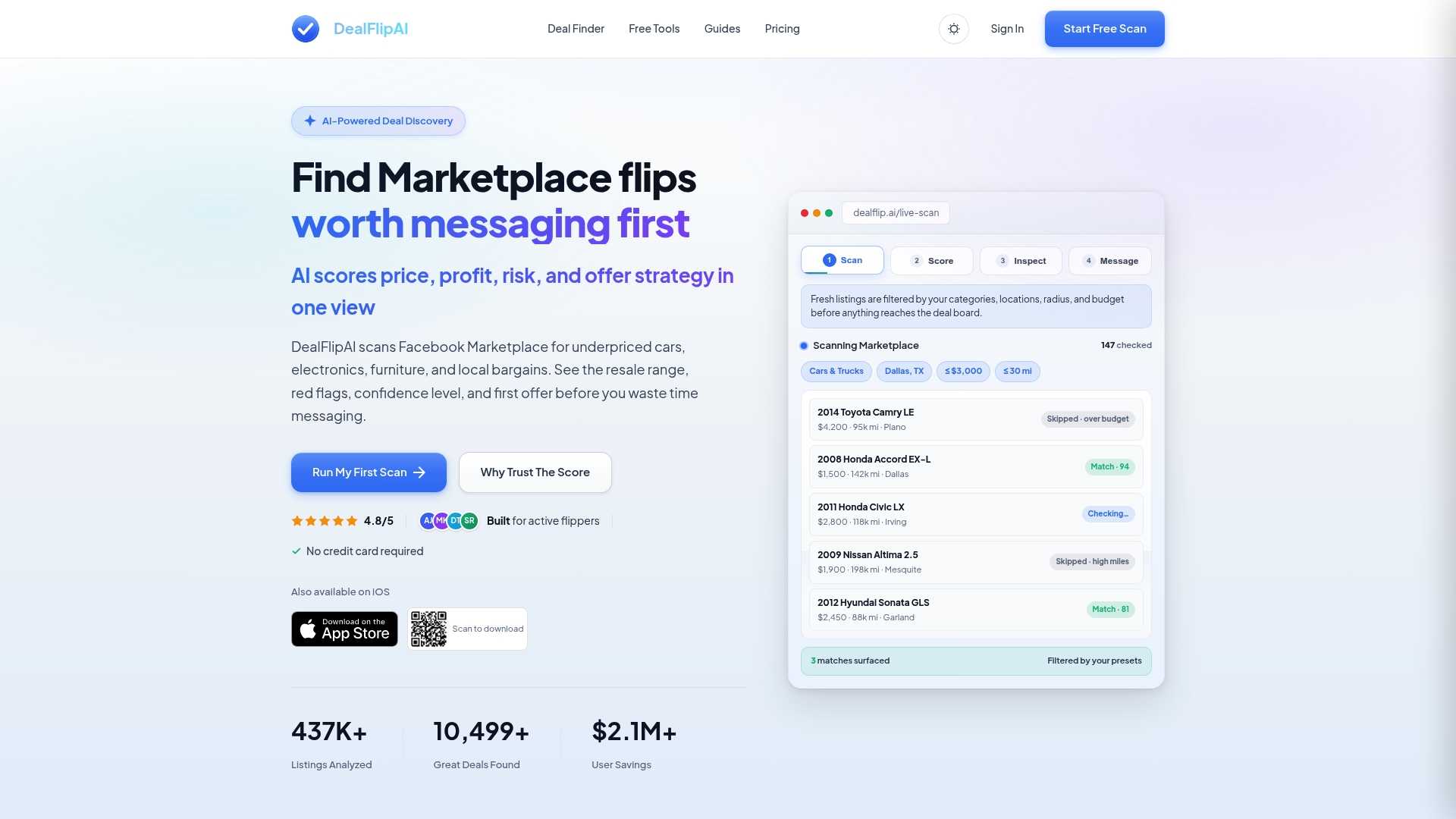
Dealflip AI is free to try and built specifically for resellers who want to find real deals on Facebook Marketplace without the guesswork. Start evaluating smarter today.
FAQ
What categories have the most unreliable marketplace posts?
Electronics, branded fashion, and collectibles consistently show the highest rates of fraud and defective listings. These categories attract scammers because items are high value and difficult to authenticate without physical inspection.
How do i identify fake listings in high-risk categories?
Look for missing measurable specs, stock photos, unverifiable certification claims, and pricing far below market value. Consumer Advisory links these patterns directly to counterfeit and defective goods complaints.
Is it safe to pay outside the marketplace platform?
No. Scamwatch advises using only platform-recommended payment methods. Wire transfers, cryptocurrency, and gift cards offer no buyer protection and are the most common payment methods used in marketplace fraud.
What should i do if i suspect a listing is fraudulent?
Screenshot the listing, seller profile, and all messages immediately. Reporting efficiency increases significantly when you submit a complete evidence packet before the scammer deletes their profile.
Can AI tools help detect unreliable marketplace posts?
Yes. Dealflip AI's listing analyzer and scam checker evaluate Facebook Marketplace listings for pricing anomalies, seller risk signals, and fraud indicators, reducing the time you spend on manual vetting.