

A deal pipeline for resellers is a visual, stage-based system that tracks potential deals from first discovery through final sale. Think of it as your personal control board for every item you are considering buying and flipping. The industry term for this is "sales pipeline," adapted here for the reselling context. Knowing what is deal pipeline for resellers means understanding that healthy pipelines use structured stages like Sourced, Vetted, Offer Submitted, Acquired, and Sold. Successful resellers maintain a pipeline coverage ratio of 3–5x their revenue goal. That ratio gives you a buffer so that even when deals fall through, your income stays consistent. Dealflip AI is built to feed and manage exactly this kind of pipeline for Facebook Marketplace flippers.
What is deal pipeline for resellers, and how does it work?
A deal pipeline is not a to-do list. It is a structured, stage-by-stage map of every deal you are actively tracking, with each stage representing a specific action you have taken or need to take. The stages move a deal from raw opportunity to closed profit, and each one has a clear entry and exit condition.
The standard stages for a reseller pipeline look like this:
- Sourced: You spotted a listing or lead worth investigating. No commitment yet, just a flag.
- Vetted: You checked the item's condition, market value, and profit margin. It passed your minimum threshold.
- Offer Submitted: You made a first offer to the seller. The deal is now active.
- Negotiation: The seller countered, or you are working toward a final price.
- Acquired: You bought the item. It is now inventory.
- Sold: The item sold and cash is in hand. The deal is closed.
Each stage needs an exit criterion. For example, a deal only moves from Vetted to Offer Submitted when your margin calculation clears a set minimum, say 30% after fees. Without exit criteria, your pipeline fills with stale deals that never move. Clear stage definitions prevent pipeline clutter and make your forecasting far more reliable.
Pro Tip: Run a quick triage before formally adding a deal to your pipeline. Score it on two factors: profit potential and risk. Only deals that clear both thresholds earn a spot. This keeps your pipeline lean and focused.

Formal deal registration, even for solo resellers, prevents channel friction and creates predictable deal progression. When every deal is logged with the same data points, patterns emerge. You start to see which sources produce the most closed deals and which stages cause the most drop-off.
How do deal pipeline volume and velocity impact reseller success?
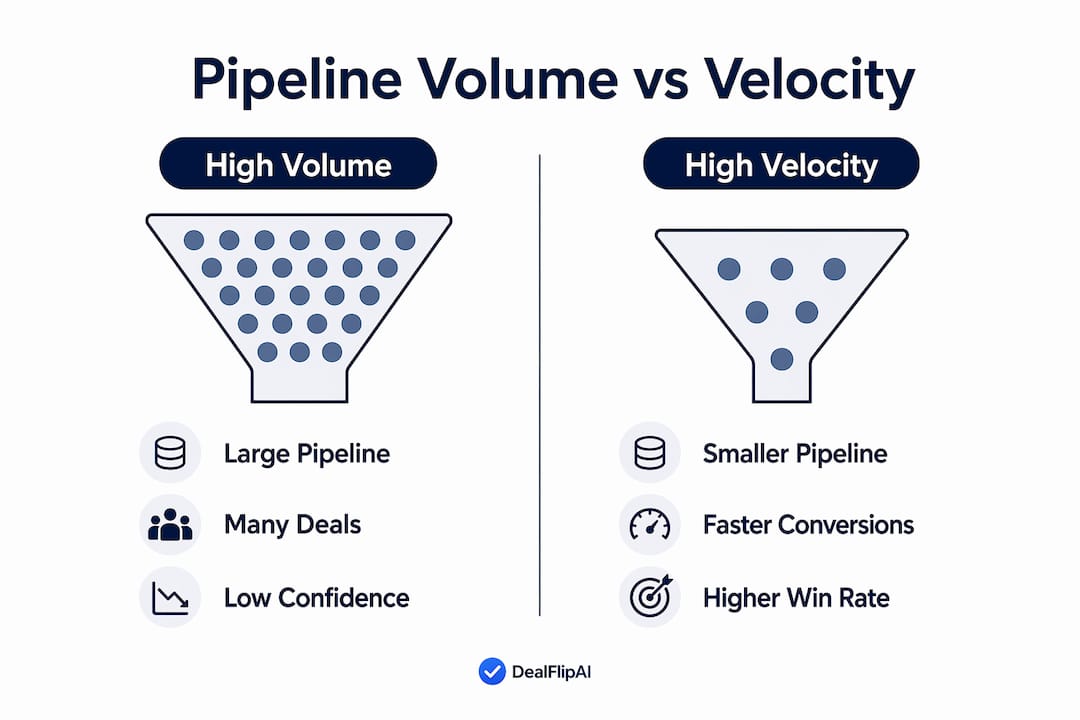
Volume and velocity are two different things, and confusing them is one of the most common mistakes resellers make. Pipeline volume is the total potential value of all deals currently in your pipeline. Velocity is how fast those deals convert into actual profit.
Pipeline velocity is calculated using this formula:
(Number of Opportunities × Average Deal Size × Win Rate) ÷ Sales Cycle Length
Each component tells you something specific. More opportunities raise velocity. A higher win rate raises it further. A shorter sales cycle multiplies the effect. If your velocity is low, you know exactly which lever to pull.
| Metric | High Volume, Low Velocity | Balanced Volume and Velocity |
|---|---|---|
| Pipeline size | Large, many deals | Moderate, curated deals |
| Cash flow | Unpredictable, slow | Consistent, faster |
| Forecasting accuracy | Poor | Reliable |
| Risk level | High (stagnant inventory) | Lower (active turnover) |
| Business outcome | Capital tied up | Profit compounds |
The "Volume Trap" is real. Prioritizing volume without velocity fills your pipeline with low-confidence deals that drain your time and tie up your cash. A reseller with 50 stalled deals is in worse shape than one with 15 active, fast-moving ones.
Pro Tip: Review your pipeline weekly. Any deal that has not moved in 14 days gets a decision: push it forward or cut it. Letting deals sit is the fastest way to kill your velocity.
High pipeline velocity correlates with faster, more predictable revenue. You can improve it by targeting higher-value items, tightening your vetting criteria to raise your win rate, and using tools that surface fresh listings before competition arrives.
What tools and techniques help resellers manage their pipelines?
The best pipeline management starts before any app or spreadsheet. Professional resellers begin with a pre-pipeline triage, manually reviewing leads before formally logging them. This prevents your tracking system from becoming a dumping ground for low-quality leads.
Once a deal clears triage, log it with consistent data fields every time. Logging every deal with data discipline enables you to calculate your average deal size, time to close, and revenue contribution per source. Resellers who skip this step rely on gut feel, and gut feel produces poor forecasting.
Here are the core best practices for pipeline data hygiene:
- Log every deal immediately after triage, not after you make an offer. Early data is the most valuable.
- Use consistent fields: source, asking price, estimated resale value, profit margin, and stage date.
- Set a weekly review cadence to update stages and remove dead deals.
- Track your win rate by source to identify which sourcing channels produce the best returns.
- Use a cross-platform profit calculator to compare net margins across selling platforms before acquiring an item.
AI tools change the game for deal sourcing and scoring. Deal triage methods that assign quick scores based on risk and return help resellers focus on the top 10–20% of opportunities. Dealflip AI applies this logic automatically, scoring Facebook Marketplace listings by price, profit potential, and risk factors so you spend time only on deals worth pursuing.
Dealflip AI also offers real-time deal alerts that notify you when fresh listings matching your criteria appear. Getting to a listing first is a real competitive advantage. The platform's listing analyzer tool lets you run a full deal analysis before committing, feeding clean, scored data directly into your pipeline. For deal advancement techniques that apply across sales contexts, B2B deal advancement frameworks offer useful structure that resellers can adapt.
How should resellers adapt their pipeline strategies in 2026?
The market in 2026 is tighter. Global deal volumes contracted by about 13%, pushing resellers to work smarter rather than simply sourcing more. Competition for the best listings is faster and more data-driven than it was two years ago.
The resellers winning in this environment share a few traits:
- They prioritize deal quality over deal count, keeping pipelines lean and velocity high.
- They use AI tools for target screening and valuation to cut the time between spotting a deal and making an offer.
- They track market demand signals to focus on categories with strong buyer interest and fast turnover.
- They build pipeline resilience by adopting AI-enabled processes that reduce manual research time.
- They review pipeline metrics monthly, not just when sales slow down.
AI-enabled sourcing platforms detect high-potential listings within minutes of posting. That speed matters because the best deals on Facebook Marketplace often sell within hours. A reseller using manual search alone will consistently lose those opportunities to someone with automated alerts and instant scoring. The shift from intuition-based sourcing to data-led pipeline management is not optional in 2026. It is the baseline for staying competitive. AI tools also help with eCommerce listing optimization, which affects how quickly your acquired inventory sells and how that impacts your overall pipeline velocity.
Key Takeaways
A deal pipeline is the single most important system a reseller can build, because it turns random sourcing into a repeatable, measurable process that compounds over time.
| Point | Details |
|---|---|
| Pipeline stages matter | Define clear exit criteria for each stage to prevent clutter and improve forecasting. |
| Velocity beats volume | Track pipeline velocity using the formula: (Opportunities × Deal Size × Win Rate) ÷ Cycle Length. |
| Triage before logging | Score deals on profit potential and risk before adding them to your pipeline. |
| Data discipline pays off | Log every deal consistently to calculate win rates, average deal size, and source performance. |
| AI accelerates sourcing | Use AI tools like Dealflip AI to score listings, detect scams, and get alerts on fresh deals. |
Why most resellers never build a real pipeline
Most resellers I talk to are running on memory and habit. They know which items "feel" right, and they buy based on that feeling. That works until it doesn't, usually when the market shifts or cash flow tightens and they have no data to diagnose the problem.
The shift to evidence-based pipeline management is uncomfortable at first. Logging deals feels like extra work when you just want to go find the next flip. But the resellers I have seen grow past a side income into a real operation all made the same move: they started treating their deal flow like a system, not a series of one-off decisions.
The other mistake I see constantly is pipeline hoarding. Resellers add every promising listing they see, never cut anything, and end up with a bloated list of 80 deals where maybe 10 are real. That is not a pipeline. That is a wish list. A real pipeline is curated. It is ruthless about what stays and what gets cut.
Dealflip AI's scoring and alert tools are the fastest way I have seen to close the gap between "I think this is a good deal" and "I know this is a good deal." The platform does not replace your judgment. It gives your judgment something concrete to work with.
— Walsh Pex
How Dealflip AI fits into your deal pipeline
Dealflip AI is built for resellers who want a faster, more reliable way to fill and manage their deal pipelines on Facebook Marketplace.
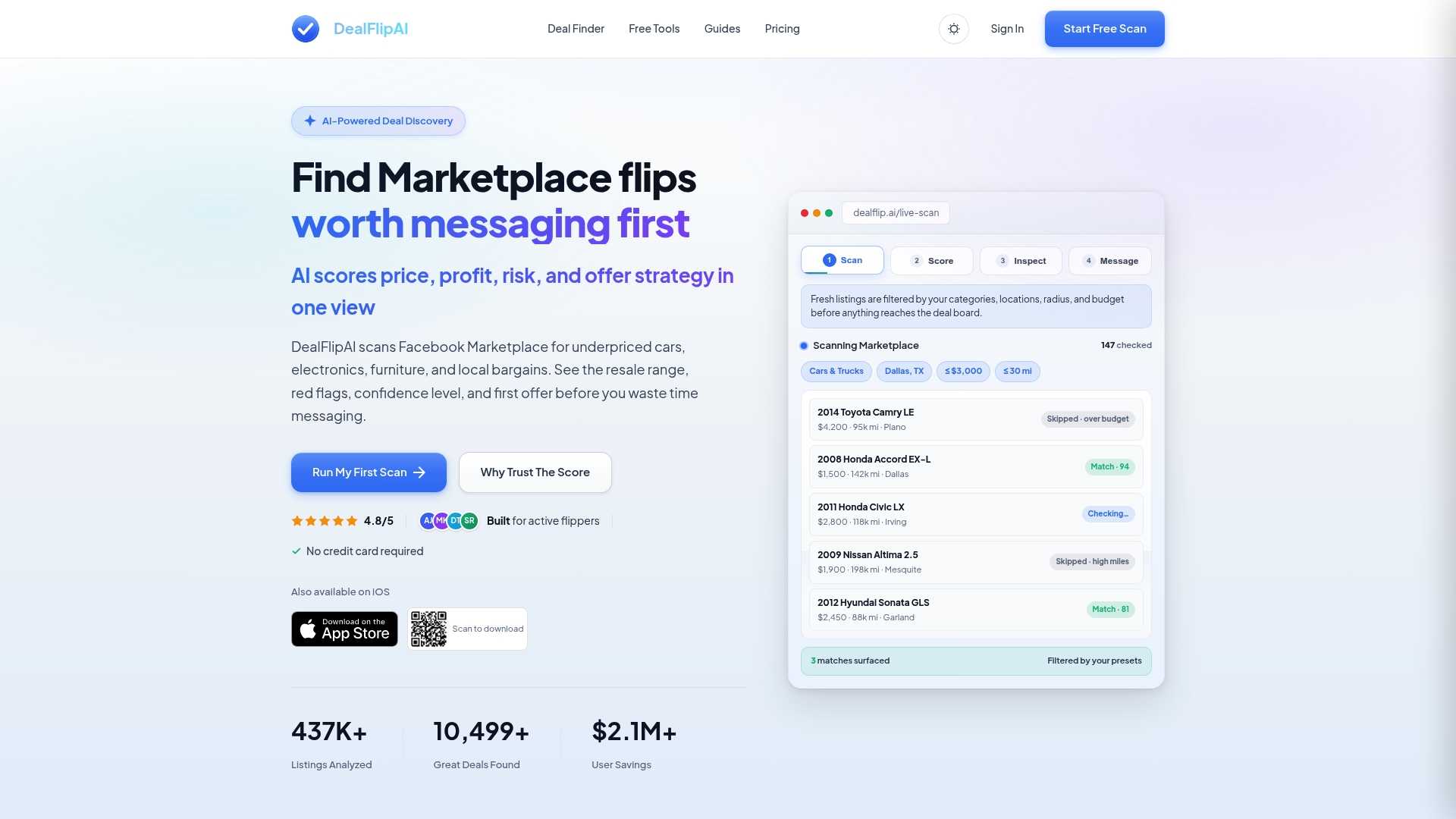
The platform's deal finder surfaces undervalued listings before the crowd finds them. The listing analyzer scores each deal on price, profit potential, and risk so you can make faster, better-informed decisions. The AI offer suggestion tool calculates your optimal first offer based on market data and seller signals, so you negotiate from a position of knowledge. If you want a practical starting point, the guide on how to find good deals on Facebook Marketplace walks through the full sourcing process with Dealflip AI's tools built in.
FAQ
What is a deal pipeline for resellers?
A deal pipeline is a structured, stage-based system that tracks potential deals from sourcing through final sale. It gives resellers a clear view of deal volume, bottlenecks, and expected revenue at any point in time.
What pipeline coverage ratio should resellers target?
A coverage ratio of 3–5x your revenue goal is the standard benchmark. This buffer accounts for deals that fall through and keeps your income consistent.
What is the difference between pipeline volume and pipeline velocity?
Pipeline volume is the total value of deals in your pipeline. Velocity measures how fast those deals convert to profit, calculated by multiplying opportunities, deal size, and win rate, then dividing by sales cycle length.
How do I keep my pipeline from getting cluttered?
Triage deals before logging them by scoring each one on profit potential and risk. Only deals that clear your minimum threshold earn a spot in the pipeline. Review and cut stalled deals weekly.
How does AI help with deal pipeline management?
AI tools score listings automatically, send real-time alerts for fresh deals, and flag risk factors like scams. Top dealmakers embed AI into screening and valuation to speed up decisions and improve outcomes.