

Here's the fastest way to free up cash: stop buying speculatively, reprice or liquidate anything sitting past 30 days, and push your listing speed until fresh inventory sells before it goes stale. That's the whole game. Everything else in reselling is a variation on those three moves.
Most flippers don't have a sourcing problem. They have a working capital problem, cash locked in items that seemed smart at the register but haven't moved in six weeks. The fix isn't more hustle. It's stricter rules.
Run this checklist in the next 72 hours:
- Pause any buy that doesn't clear your max buy price calculator.
- Reprice every item that's been listed more than 30 days.
- Bundle two or three slow movers into one lot listing today.
- Set a 48 to 72 hour listing SLA and actually enforce it.
- Check your sell-through rate against the 70–80% healthy benchmark and see where you actually land.
Key Takeaways
Freeing up cash in a resale business comes down to enforcing a hard max-buy ceiling, converting inventory fast through strict listing SLAs, and cutting losses on aged stock before it drains your capital further.
| Point | Details |
|---|---|
| Set a max buy price | Calculate resale comp minus fees minus target profit before you ever message a seller. |
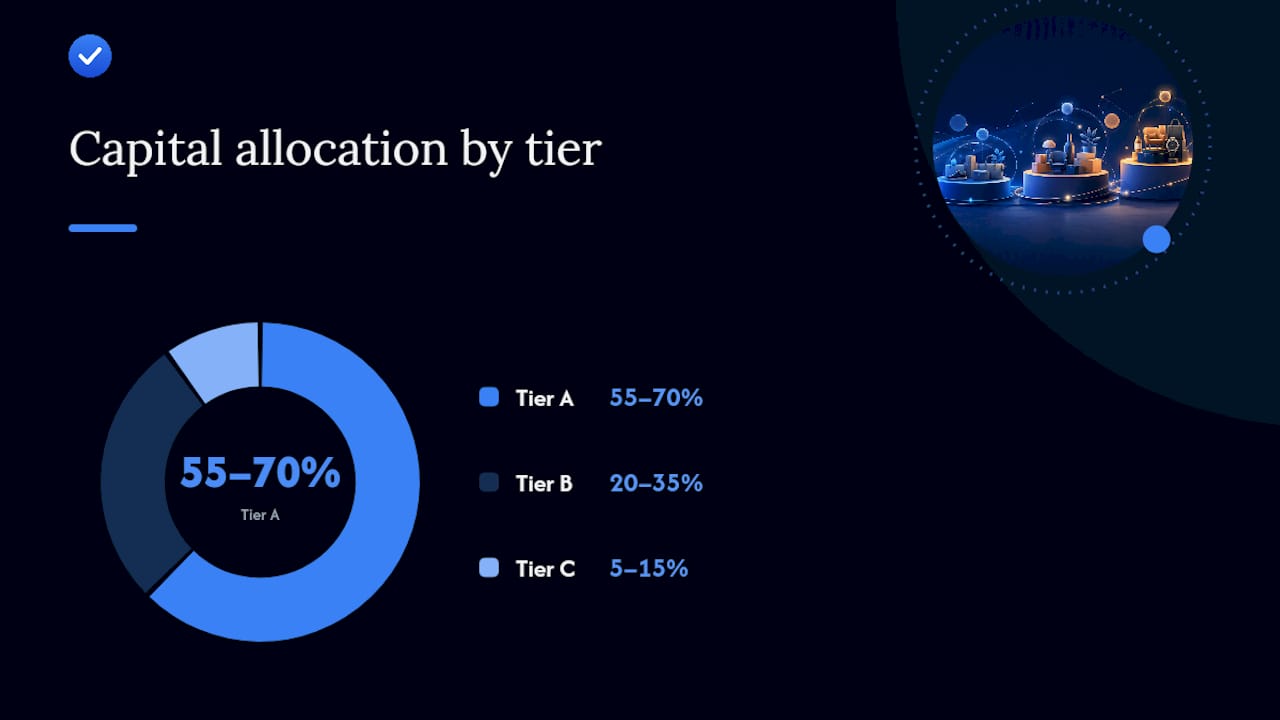
| Allocate capital by tier | Keep 55 to 70% in fast-turn Tier A categories, and cap speculative Tier C buys at 5 to 15%. |
| Enforce a listing SLA | List new inventory within 48 to 72 hours or pause buying in that category. |
| Liquidate on a schedule | Reprice at 30 days, bundle at 45, shift channels at 60, and sell to a broker by 90. |
| Use scoring tools to buy smart | DealFlipAI scores listings, flags scams, and alerts you to fresh deals before the crowd, cutting overpays and idle cash. |
Table of Contents
- Setting Buy Rules That Actually Reduce Capital Tied Up In Inventory
- Where Should You Source Items That Turn Fast?
- How Do You List and Price to Sell Fast?
- Can Deal-Scoring Tools Stop You From Overpaying?
- When Should You Liquidate Aging Inventory?
- What Should Your Daily and Weekly Routine Look Like?
- What I Learned Enforcing a Hard Max-Buy Rule
- Try DealFlipAI to Buy Smarter and Turn Inventory Faster
- Helpful Resources for Freeing Up Resale Capital
- Frequently Asked Questions
- Sources
Setting Buy Rules That Actually Reduce Capital Tied Up In Inventory
You need a number in your head before you ever message a seller, not after you've already fallen in love with the item. That number is your max buy price, and the formula is simple: target resale price, minus fees and shipping, minus your target profit, equals your ceiling.
Say you spot a listing for a used pressure washer. Comps show it resells for $180. Marketplace fees and any shipping run $15. You want a $50 minimum profit. Your max buy price is $115. Anything the seller wants above that number, you walk.
- Pull three to five recent sold comps before naming a number.
- Subtract platform fees, packaging, and any local pickup gas cost.
- Subtract your target profit (aim for at least 40 to 50% ROI on fast-turn categories).
- That remainder is your ceiling. Do not negotiate above it.
Split your buying budget by risk tier. Tiered capital allocation puts 55 to 70% of your active inventory capital in Tier A (fast, proven, low-risk categories), 20 to 35% in Tier B (moderate demand, moderate hold time), and just 5 to 15% in Tier C (speculative or unproven items).
Watch four numbers weekly: sell-through rate, days-to-sell buckets (0 to 7, 8 to 30, 31 to 60, 60 plus), dollars locked in inventory held beyond two months, and your inventory turn rate. A turn rate below 4x annually usually means cash is trapped somewhere in your stock.
Pro Tip: If your listing backlog is longer than your buying pace, stop buying, even if you're staring at a great deal. A great deal you can't list for two weeks isn't a deal. It's a loan you gave yourself.
Where Should You Source Items That Turn Fast?
Not every category deserves your cash. Electronics, small appliances, hand tools, and compact furniture (think dressers and small tables, not sectionals) tend to move in days, not weeks. Electronics alone often sell in 1 to 3 days, which makes them a strong anchor for your Tier A budget.

Categories to treat carefully: oversized furniture, niche collectibles, and anything requiring specialized buyers. They can be profitable, but they hold your cash hostage longer, sometimes weeks past your comfort zone.
A few sourcing habits that keep capital moving:
- Set your search radius tight enough that pickup doesn't eat half a day.
- Check new listings early morning and again in the evening, when sellers post after work.
- Use a negotiation opener that references your comps directly rather than a flat lowball.
- Watch local demand indicators before committing real budget to a new subcategory.
Pro Tip: Testing a subcategory you've never flipped before? Buy one or two units first. If they sell inside your normal window, scale up. If they sit, you just saved yourself from tying up real money in a category that doesn't fit your market.
How Do You List and Price to Sell Fast?
Speed to sale starts with the listing itself. Clear, well-lit photos from multiple angles, an honest condition line, and a title that matches how buyers actually search all shave days off your time-to-sell. Price against real sold comps, not asking prices. Asking prices are wishes.
- Photograph items the same day you acquire them, not "when you get around to it."
- Write a condition line that mentions flaws upfront. It builds trust and cuts down on flaky buyers.
- Price at or slightly under the median of recent sold comps for week one.
- Mark down 10 to 15% at day 7, another 10 to 15% at day 14, if no bites.
Cross-list high-value or slower categories across two or three platforms; keep fast-turn Tier A items focused on your best-performing channel to avoid managing too many threads. Run the numbers on fees before you pick a platform mix using a cross-listing profit calculator.
Pro Tip: Local pickup listings often price a touch higher than shipped ones, buyers pay for convenience, and you skip packaging and shipping costs entirely.
Can Deal-Scoring Tools Stop You From Overpaying?
Manual sourcing means you're scrolling, guessing, and sometimes buying on gut feel at 11 p.m. That's how capital gets tied up in items that looked good but weren't. This is where deal scoring and real-time alerts change the math, not by finding more deals, but by filtering out the bad ones before your cash ever leaves your account.
DealFlipAI scores listings on profit potential, price versus resale value, and risk, then suggests a first offer based on real market data. Combined with scam-detection signals and fresh-listing alerts, it means you're acting on high-confidence opportunities within minutes of them posting instead of hours later, when the margin's already gone. Automation of this kind shifts your time from searching to executing, which is exactly where your capital wants you focused.
Flippers who lean on scored alerts instead of manual scrolling tend to catch underpriced listings before the crowd does, and they walk away from more bad deals because the risk flags show up before the message is even sent.
A simple setup:
- Set your price ceiling and target categories inside the tool.
- Let alerts flag fresh, high-score listings the moment they post.
- Act fast on anything above your confidence threshold; skip anything flagged as risky.
- Keep your buy cap tied to your actual listing throughput, not just your budget.
When Should You Liquidate Aging Inventory?
Age is the enemy of cash flow. The longer something sits, the more it's costing you in tied-up capital, storage space, and opportunity cost. Set triggers by age bucket and stick to them.
- Day 30: Reprice down 10 to 15%. No exceptions.
- Day 45: Bundle with similar items or accessories to move it as a lot.
- Day 60: Shift to an outlet channel or local liquidation group.
- Day 90: Sell to a broker or in a bulk lot, even at a steep discount. Recover the cash and move on.
| Exit Channel | Typical Cost Recovery |
|---|---|
| Bundling with related items | 60–80% |
| Markdown on original platform | 40–70% |
| Outlet or secondary marketplace | 30–60% |
| Liquidation broker | 20–40% |
These recovery ranges come from dead-stock clearance data tracked across resale operations, and the pattern holds: the earlier you act, the more margin you keep.
Pro Tip: Line up a broker or outlet relationship before you're desperate for one. Scrambling to find a buyer at day 90 usually means a worse price than if you'd built the relationship at day 30.
What Should Your Daily and Weekly Routine Look Like?
Keeping capital flowing isn't about working harder; it's about running a short checklist and using tools like a cash flow forecast to monitor freed-up working capital and plan weekly. It's about running the same short checklist every day so nothing quietly ages past your limits.
Daily (15 to 20 minutes):
- Check fresh-listing alerts for anything scoring high on your target categories.
- List anything acquired within your 48 to 72 hour SLA.
- Reprice items crossing the 30-day mark.
- Update your age-bucket tracker.
Weekly:
- Pull sell-through percentage and days-of-supply by category.
- Rebalance capital across your Tier A/B/C buckets.
- Compare intake volume against your actual listing capacity.
- Plan next week's buy budget based on what's moving.
Watch your median days-to-sell, sell-through rate, dollars locked in 60-plus-day stock, and turn rate.
What I Learned Enforcing a Hard Max-Buy Rule
The month I started saying no to deals above my calculated ceiling, my available cash nearly doubled within six weeks, not because I found better deals, but because I stopped tying money up in mediocre ones. The rule feels restrictive at first. It isn't. It's what lets you say yes fast when a real deal shows up.
Pro Tip: When buying volume spikes, batch your photography into one session at the end of each day instead of shooting item by item. It keeps your listing SLA intact even when intake gets busy.
Try DealFlipAI to Buy Smarter and Turn Inventory Faster
Every rule in this guide, the max-buy ceiling, the tier caps, the age triggers, comes down to one thing: knowing a deal's real value before you commit cash to it. That's the exact gap DealFlipAI closes.

The platform scores each Facebook Marketplace listing on profit potential and risk, suggests an optimal first offer based on real comps, and flags scam signals before you ever send a message. Fresh-listing alerts mean you're seeing high-score deals within minutes of posting, not after five other flippers already messaged the seller. Pair that with the built-in listing analyzer and fee calculator, and you've got a max-buy decision made in seconds instead of guesswork.
Set your target categories and price ceilings, turn on alerts, and let the scoring do the filtering. Start with a free scan and see how it fits your buying routine at DealFlipAI's Marketplace deal-finding page.
Helpful Resources for Freeing Up Resale Capital
The buy rules, tier allocation, and liquidation ladder in this guide draw on just-in-time inventory practices for resellers, cash flow and carrying cost research, and dead-stock recovery data. For platform-specific sourcing tactics, see category velocity data on marketplace flipping and DealFlipAI's tool suite for calculators and alerts.
This guide was written by Walsh Pex. Case examples referencing specific user results will be added as proprietary performance data becomes available.
Frequently Asked Questions
What does it mean to minimize capital tied up inventory as a flipper?
It means keeping as little cash locked in unsold items as possible by buying only under a strict price ceiling, listing fast, and liquidating anything that stalls past 30 to 60 days.
How do I calculate my max buy price?
Start with your resale comp price, subtract platform fees and shipping, then subtract your target profit. The remainder is the most you should ever pay.
What's a healthy sell-through rate for resale inventory?
Most healthy resale operations run 70 to 80% sell-through monthly, with electronics often running higher, around 80 to 90%.
When should I liquidate instead of holding an item longer?
Once an item crosses the 60-day mark with no offers despite repricing, shift it to an outlet channel or broker rather than continuing to hold the capital hostage.
Can automation really reduce overpaying?
Yes. Deal-scoring tools filter out overpriced or risky listings before you spend time or cash on them, letting you act only on high-confidence deals the moment they post.
Sources
- Just-in-Time Inventory 2026: Cut Capital Risk
- Inventory Cash Flow Management for Ecommerce
- Clearing Dead Stock Without Killing Margin | Eightx
- How to Build a Systematic Marketplace Flipping Side Hustle