
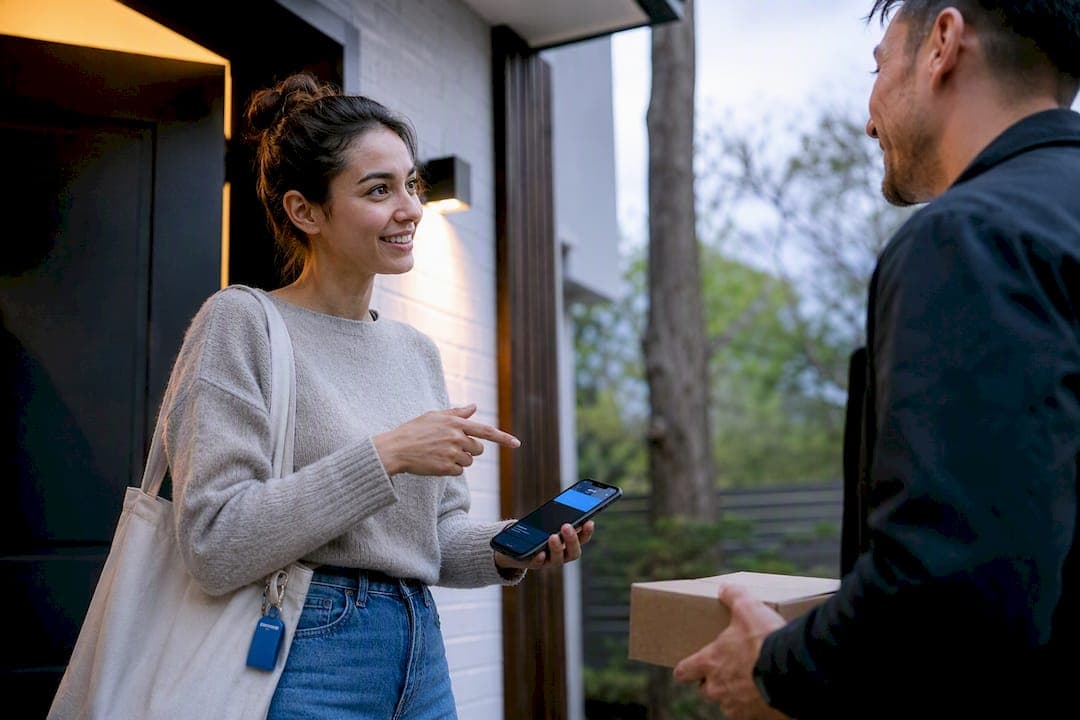
Make one specific offer, name your pickup window, and mention you're paying cash or ready to buy today. That single message does more for your success rate than any amount of back-and-forth haggling. Once a seller agrees, restate the price and pickup time in chat and screenshot it, so nobody's memory "changes" an hour before you show up.
TL;DR:
- Making a specific offer with a clear pickup window and payment method increases the likelihood of closing the deal quickly.
- Offering 10% to 20% below the asking price is typical, but should be adjusted based on listing age and comparables; lowballing aggressively can damage reputation.
- Confirming all details in writing, including price, pickup time, and location, and screenshotting the conversation, protects both parties from last-minute changes.
- Respecting seller signals such as "firm" or "cash only" prevents wasting time on non-negotiable listings or risking being ignored.
- Using data tools like listing analyzers and profit calculators helps craft defensible offers tailored to market value, increasing success rates for frequent resellers.
Table of Contents
- Action Checklist: What To Do Before You Message
- How To Craft The First Message: Short Templates That Work
- How Much Should You Offer On Facebook Marketplace?
- Logistics, Payment, And Safety: Making Deals Easy And Safe
- Handling Counters And Closing The Deal
- When Not To Haggle: Reading Seller Signals
- How DealFlipAI Data Turns Into A Defensible First Offer
- Cultural Differences And Norms In Negotiation Etiquette
- Common Phrases And Language To Avoid To Maintain Politeness
- Understanding Buyer Versus Seller Perspectives In Marketplace Negotiations
- Techniques For Building Rapport And Trust During Negotiation
- Handling Emotions And Conflict Resolution In Negotiations
- Legal And Platform Policy Considerations Affecting Negotiations
- Why Etiquette Pays Off Over Time
- Try DealFlipAI To Back Your Offers With Real Data
- Sources
Action Checklist: What To Do Before You Message
Good negotiation etiquette marketplace shoppers use starts before you ever type a word. Rushing a message to a seller you haven't researched is how you end up looking clueless or, worse, insulting.
Run through this before hitting send:
- Check three to five similar listings so you know the real going rate, not the asking price.
- Set a private walk-away number in your head. Never reveal it to the seller.
- Reread the listing for words like "firm," "price is set," or "cash only." These are boundaries, not suggestions.
- Decide your exact offer amount and a real pickup window before you write anything.
- Plan to confirm the final price and time in writing and screenshot that exchange.
This last habit matters more than most buyers realize. A 10-step negotiation checklist built from common marketplace guides puts price checks, comparables, and pre-payment inspection right at the top, and confirming details in chat right near the bottom, for good reason: it's the step people skip when they're excited to close the deal.
How To Craft The First Message: Short Templates That Work
Your opening message sets the tone for everything that follows. Vague, emotional, or lazy messages get ignored. Specific, polite ones get answered.
Structure it in four parts:
- Name the item and show genuine interest. "Hi, I'm interested in the mountain bike you listed" beats "Is this still available?" nine times out of ten.
- Give one number. Skip "What's your lowest?" entirely. Asking a seller to do your negotiating for you puts the emotional labor on them and often gets you silence instead of a discount.
- Include a real pickup window and payment method. "I could grab it Thursday between 5 and 6 PM with cash" removes friction and answers the seller's biggest unspoken question: is this buyer actually going to show up?
- Leave the door open. A line like "Totally fine if that doesn't work for you" costs nothing and keeps the seller from feeling cornered.
Put together, it reads like this: "Hi, I'm interested in the mountain bike. Would you take $80? I can pick up Thursday between 5 and 6 PM with cash, but no worries if that doesn't work for you." That kind of specific message structure consistently outperforms vague or emotional appeals.
Pro Tip: Save two or three message templates in your notes app so you're never typing a first offer from scratch while standing in a parking lot.
How Much Should You Offer On Facebook Marketplace?
The seller has leverage, other buyers are likely messaging too, and a bigger cut just signals you haven't done your homework. For stale listings, items sitting for weeks, or anything priced well above what comparable listings show, 15% to 20% below asking is fair game.
By the numbers: Practical haggling guidance built from marketplace behavior recommends aiming for 10% to 20% below asking price as your baseline, adjusting based on how old the listing is and how it compares to similar items nearby.
Skip the flat-percent rule entirely when you have better evidence. If three similar items sold for less than the seller's asking price, cite that. A market-value benchmark beats a guessed percentage every time. And resist the urge to lowball for sport. Offering half the asking price on a fairly priced, week-old listing doesn't just fail. It gets you blocked and burns your reputation with a seller you might want to buy from again.
Logistics, Payment, And Safety: Making Deals Easy And Safe
Price isn't the only lever you have. Convenience often closes deals that a lower number alone won't.
Sellers deal with flaky buyers constantly. Someone who commits to a specific time, brings cash, and can meet at a location that works for the seller frequently gets a better price than someone who negotiates hard but stays vague on logistics. Offering that kind of convenience often earns concessions that pure haggling doesn't.
Safety still comes first, on both sides of the deal:
- Meet in public, well-lit places, ideally during daylight hours.
- Bring a friend for higher-value items, or at least tell someone where you're going.
- Check the other person's profile, join date, and mutual friends before committing to a meeting spot.
- Inspect the item in person before you hand over any money.
- Be wary of anyone who insists on payment before you see the item, or who pushes an unusual payment app you've never used.
Watch for red flags like sellers who go vague about pickup details, request gift cards or wire transfers, or keep changing the meeting location at the last minute. Any one of these is reason enough to walk away.
Handling Counters And Closing The Deal
A counteroffer isn't a rejection. It's the seller telling you where they actually stand. How you respond determines whether the deal closes cleanly or drags into an awkward back-and-forth.
- Reply with one clear counter, not a slow crawl upward. If they counter your $80 offer with $110, don't creep up $5 at a time. Offer $95 once, and mean it.
- State your final number plainly. "I can do $95, and that's the most I can go" reads as respectful and final, not pushy.
- Confirm everything once you agree. Price, pickup time, exact location, and payment method should all appear in the same chat message. Screenshot it.
- Renegotiate only for real problems. If you show up and the item has damage the listing never mentioned, it's fair to revisit price. Reopening negotiation over cosmetic nitpicks after you've already agreed is not.
This is also where counter-offer strategy separates smooth transactions from ones that fall apart at pickup. Confirming details in writing before you travel anywhere protects both sides from a last-minute price change or a "someone else already came by" excuse.
When Not To Haggle: Reading Seller Signals
Not every listing is an invitation to negotiate, and pushing on a firm price wastes your time and the seller's patience.
- Watch for words like "firm," "price is set," or "cash only, no lowballs" right in the listing text.
- Listings posted within the last hour or two usually have plenty of interest already; a lowball here just gets ignored.
- Small-business and professional sellers who list inventory regularly often price closer to market value and have less room to move than a casual seller clearing out a garage.
Recognizing these firm signals protects your reputation with sellers you may want to buy from again. If you still want the item, offer close to asking with a polite note, or wait a few days and check whether the price drops before trying again.
How DealFlipAI Data Turns Into A Defensible First Offer
A specific offer works because it's backed by something real, not because it sounds confident. A listing score built from price history, condition, and comparable sales removes the guesswork of picking a number.
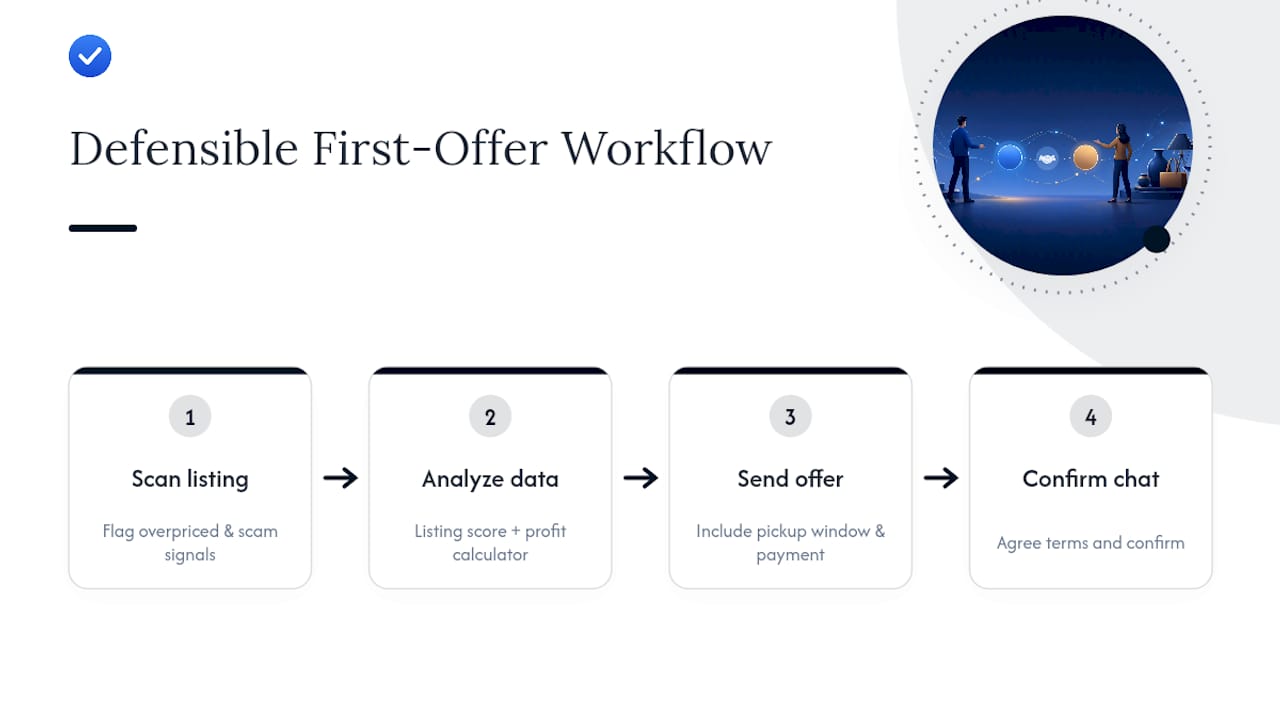
DealFlipAI's listing analyzer flags overpriced items and scam signals before you ever message a seller. Pair that with a profit calculator to see what a purchase price means for your margin. The workflow is simple: scan the listing, let the data suggest a defensible first offer, message with a real pickup window and payment method, then confirm everything in chat once you agree.
Cultural Differences And Norms In Negotiation Etiquette
Haggling carries different weight depending on where you grew up shopping. In parts of the world where street markets and open-air bazaars are the norm, negotiating is expected, almost ritualized, and sellers price items assuming a back-and-forth will happen. In much of the United States and Canada, retail pricing has trained buyers to treat the listed number as close to final, which is part of why a lowball offer on Facebook Marketplace can feel jarring to sellers who aren't expecting to haggle at all.
That gap in expectations is exactly why marketplace etiquette matters more online than it might at a flea market. You can't read someone's tone of voice or body language in a text message. A number that would land as a friendly opening bid in person can read as rude or dismissive in a chat window, especially without any context around it.
The fix isn't complicated: be specific, be brief, and let your logistics offer do some of the talking. Cultural bargaining research on digital platforms points to the same core finding regardless of region: courteous, evidence-based, and specific messages consistently outperform aggressive or vague ones. Tone matters more than the discount you're asking for.
If you're negotiating with someone whose norms you don't know, default to the more formal end of polite. A little extra courtesy costs you nothing and rarely backfires, while an offer that reads as brusque can end a conversation before it starts. Marketplace messaging etiquette, at its core, is about not making the seller do emotional work to figure out what you actually want.
Common Phrases And Language To Avoid To Maintain Politeness
Certain phrases show up constantly in marketplace messages, and sellers have learned to wince at most of them.
"What's your lowest?" tops the list. It sounds harmless, but it forces the seller to negotiate against themselves, and plenty of them simply won't respond. "Would you take half?" without any context or reasoning reads as a reflexive lowball rather than a real offer, even when it's not intended that way.
Avoid demanding language too. "I need this by tomorrow" or "You have to meet me at X location" reads as an order, not a request. Sellers are doing you a favor by considering your offer at all. Frame requests, don't issue them.
Skip guilt-based appeals as well. "I'm a broke student" or "This would really help me out" puts pressure on the seller to feel bad for negotiating firmly, which tends to backfire and comes across as manipulative rather than sympathetic.
Also avoid vague enthusiasm with no substance: "Still available??" with no offer attached, sent to a dozen listings at once, is the fastest way to get ignored. Sellers can tell a mass message from a genuine one almost instantly.
What works instead is plain, direct language: state your interest, name your number, name your pickup time, and leave room for the seller to say no. That's the entire formula. Politeness in bargaining isn't about softening every sentence with extra words. It's about giving the seller exactly the information they need to say yes with as little friction as possible.
Understanding Buyer Versus Seller Perspectives In Marketplace Negotiations
Buyers and sellers are usually solving two different problems, and most negotiation friction comes from each side assuming the other cares about the same thing.
Buyers are optimizing for price and certainty. You want the best deal you can get without wasting a trip on an item that turns out to be damaged or misrepresented. Time matters too, but usually less than getting a fair number.
Sellers are optimizing for something different: getting the item gone with the least hassle. A seller who's fielded fifteen messages asking "is this still available" with zero follow-through cares far more about a buyer who shows up than one who negotiates hard but flakes. That's why a firm pickup time and cash in hand often beats a lower offer from someone who sounds less committed.
This difference explains a lot of marketplace friction. The seller, who's already had three no-shows this week, reads that same offer as one more person who isn't serious. Neither party is wrong. They're just weighing different variables.
The practical takeaway: address both sides in your message. Give the seller a number that shows you've done your research, and pair it with details that answer their real concern, which is usually reliability, not price. "I can pay $95 and pick up tomorrow at noon with cash" tells a seller you're solving their problem, not just trying to win a discount. That combination is why data-backed offers with logistics sweeteners close more deals than negotiating on price alone.
Techniques For Building Rapport And Trust During Negotiation
A little context goes further than most buyers expect. Mentioning why you want the item, briefly, humanizes the exchange. "This would be perfect for my apartment" or "My kid's been asking for one of these" gives the seller something to respond to beyond a number.
Response speed builds trust fast. Sellers juggling multiple conversations tend to prioritize whoever replies quickly and clearly. If you disappear for six hours after they respond, don't be surprised if the item sells to someone else in the meantime.
Consistency matters just as much. If you say you'll pick up at 5 PM, be there at 5 PM, or message ahead if something changes. Sellers remember buyers who follow through, and that reputation, informal as it is, follows you across future interactions with the same person or their network.
Small courtesies add up too. Thanking a seller for their time, even in a negotiation that doesn't end in a sale, costs nothing and keeps the relationship open for next time. Marketplace communities, especially in smaller towns or tight-knit local groups, are smaller than they feel. The same seller you're messaging today might have the next great deal you want in three months.
Avoid over-explaining your reasoning, though. One sentence of context is enough. A paragraph justifying your offer starts to feel like pleading, and pleading rarely earns a discount. Confidence paired with brevity reads as more trustworthy than a long, apologetic message ever will.
Handling Emotions And Conflict Resolution In Negotiations
Negotiations occasionally go sideways, usually when one side feels disrespected rather than when the numbers are genuinely far apart. Recognizing that distinction early keeps a minor disagreement from becoming a dead conversation.
If a seller responds sharply to your offer, resist matching their tone. A calm reply like "No problem, thanks for considering it" costs you nothing and leaves the door open, even if this particular deal doesn't happen. Escalating with sarcasm or frustration guarantees the conversation ends badly and burns a bridge you might need later.
The same logic applies in reverse if you're the one feeling frustrated. If a seller ghosts you after agreeing to a price, or tries to raise it right before pickup, it's fair to be annoyed. It's not fair to let that frustration turn into a hostile message. A simple "I thought we agreed on $95, is that still the plan?" gets you further than an accusatory one.
When a deal genuinely falls apart, disengage cleanly. "Sounds like this isn't going to work out, thanks anyway" ends things on a neutral note rather than a sour one. That matters more than it might seem, because marketplace platforms often show mutual history or shared groups, and a burned interaction can resurface in ways you don't expect.
The broader point: price disagreements are rarely personal, even when they feel that way in the moment. Treating every negotiation as a transaction rather than a confrontation keeps your reputation intact and your options open for the next listing.
Legal And Platform Policy Considerations Affecting Negotiations
Facebook Marketplace negotiations happen inside a platform with its own rules, and ignoring them can cost you more than a bad deal.
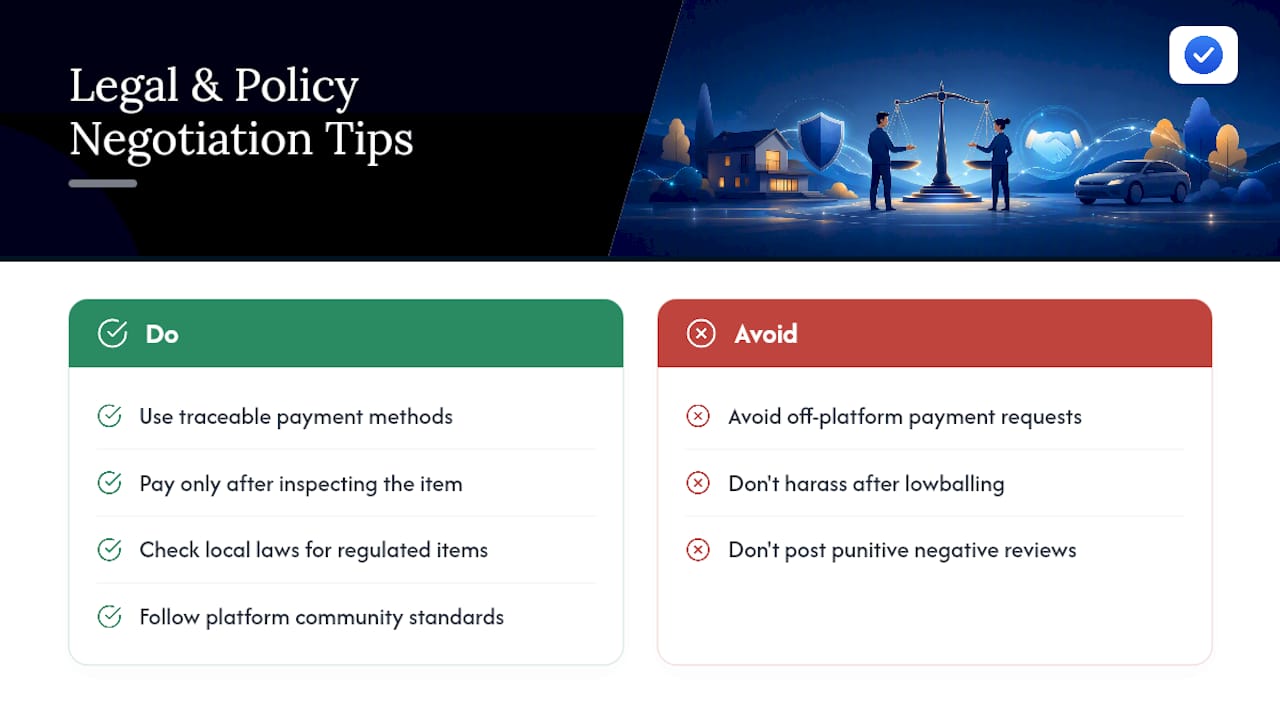
Off-platform payment requests are one of the biggest risk areas. Sellers or buyers asking you to pay through unusual apps, wire transfers, or gift cards before you've even seen the item sit outside normal buyer protections and are a common scam pattern on peer-to-peer marketplaces generally. Sticking to well-known, traceable payment methods, and paying only after inspecting the item, protects you far more than any negotiation tactic.
Local laws matter for certain categories too. Items like firearms, prescription medication, and some regulated goods face restrictions on marketplace resale that vary by state and locality; check your jurisdiction's rules before assuming a listing is legal to buy or sell. Vehicle sales often carry their own paperwork requirements, including title transfer rules that differ by state.
Platform policy also shapes what counts as acceptable negotiation behavior. Harassing a seller with repeated lowball messages after they've declined, or posting negative reviews purely because a negotiation didn't go your way, can violate marketplace conduct guidelines and get your account flagged. Staying within a platform's stated community standards isn't just about avoiding etiquette missteps. It protects your ability to keep using the platform at all.
None of this replaces legal advice for a specific transaction, especially for high-value items like vehicles. When in doubt, a quick check of your state's consumer protection resources beats guessing.
Why Etiquette Pays Off Over Time
Protecting a seller's dignity isn't just polite, it's a sourcing strategy. Sellers remember buyers who negotiated fairly, and that goodwill often means first access to future listings. My habit: always leave a graceful exit line, even when a deal falls through. It costs nothing and keeps every door open.
— Walsh Pex
Try DealFlipAI To Back Your Offers With Real Data
If you're negotiating on Facebook Marketplace once or twice a year, a good message template gets you most of the way there. If you're doing it weekly or sourcing inventory to resell, guessing at a fair offer stops scaling fast. That's the gap DealFlipAI is built to close: it turns comparable sales, condition, and seller signals into a specific number you can message with confidence, instead of a percentage pulled from a general rule of thumb.
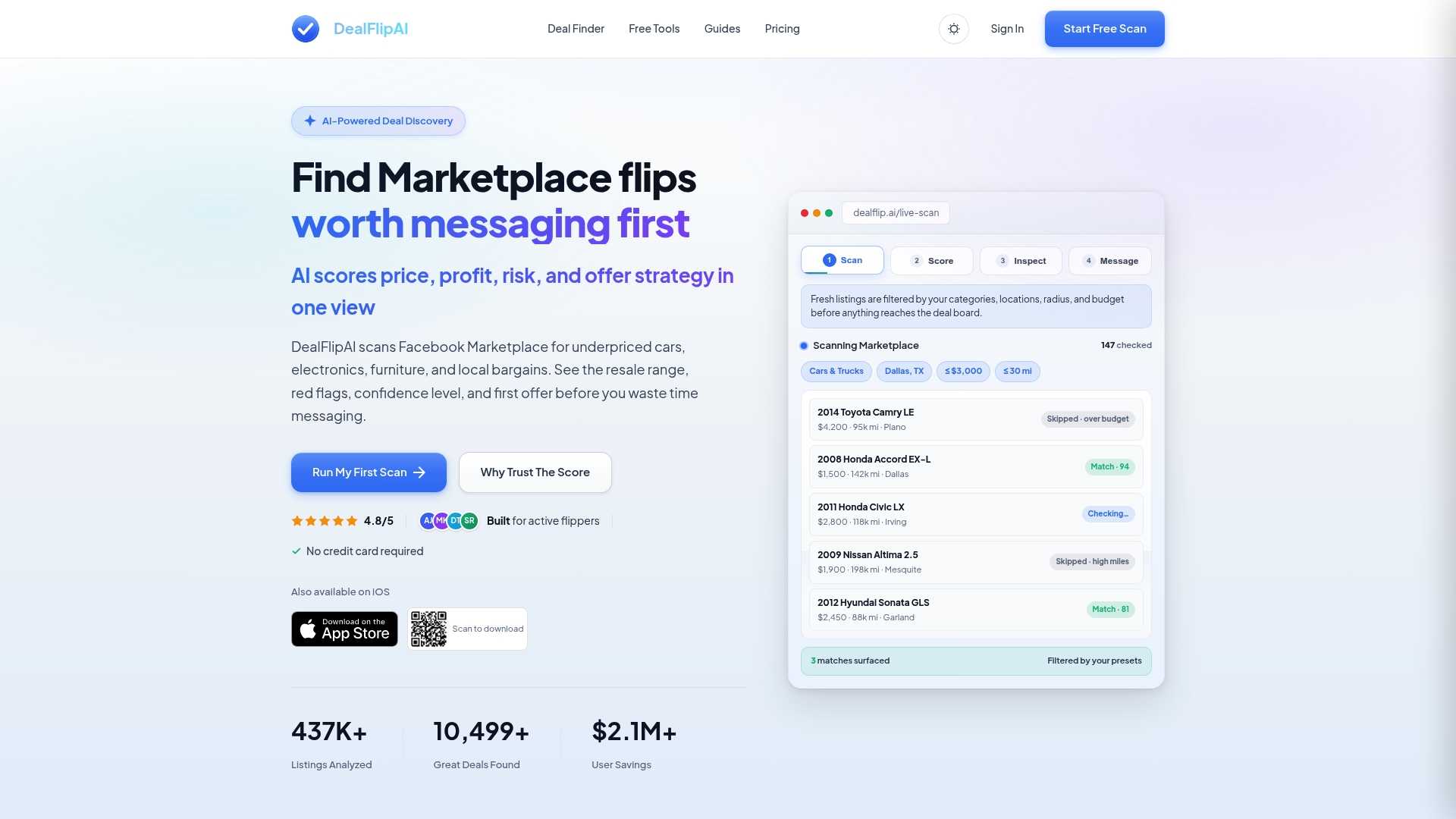
The listing analyzer flags scam risk and overpricing before you ever type a message, and the flip profit calculator shows what your offer actually means for your margin once fees and pickup costs are factored in. Sellers who list regularly, including small-business accounts and frequent flippers, also lean on tools like the ones covered by AmmarAI's work on AI for e-commerce to price listings more precisely, which makes a data-backed offer even more likely to land well on the other end of the chat.
Start with a free scan on a listing you're considering right now, and see what a defensible first offer actually looks like before you send your next message.
Sources
- How to Negotiate on Facebook Marketplace (2026) | Spottable
- Facebook Marketplace Selling Etiquette (First Come, First Serve?) - Improve Workspace
- The Art of Haggling Online: Cultural Bargaining Tips for Digital Marketplaces - Copfo